


The Ultimate Guide to the Rigid Box Machine: Revolutionizing the Packaging Industry (2026 Updated)
In a world where consumer experience is paramount, packaging has evolved from a mere protective shell to a powerful branding statement. For luxury goods, electronics, cosmetics, and high-end gifts, the unboxing experience is the first tangible interaction a customer has with a brand. At the heart of this premium experience is the rigid box, and the key to producing it efficiently and flawlessly is the rigid box machine.
For companies in the printing and packaging sector, staying competitive means embracing technology that delivers quality, speed, and cost-effectiveness. This comprehensive guide — fully updated for 2026 — covers everything you need to know: machine types, 2026 model specifications, buying criteria, production benchmarks, and an expanded FAQ targeting the most common questions from packaging buyers worldwide.
Looking for the complete production line setup? See our Rigid Box Production Line: Complete Buyer’s Guide 2026 for a step-by-step breakdown of every machine in the workflow.
What Exactly Is a Rigid Box?
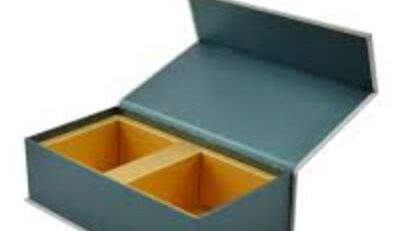
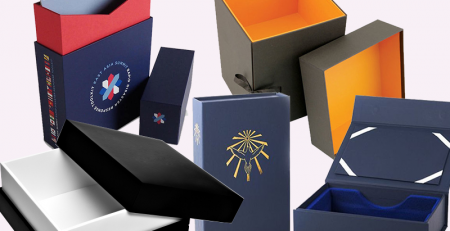
Rigid boxes — also called set-up boxes or luxury boxes — are constructed from thick, sturdy greyboard (typically 1.5–3 mm chipboard) wrapped in decorative paper, fabric, or leatherette. Unlike folding cartons, they are delivered pre-assembled and do not collapse. Think of the boxes used for iPhones, high-end watches, board games, or luxury chocolates. Their durability, premium feel, and structural integrity make them the go-to choice for products that require sophisticated presentation and superior protection.
What Is a Rigid Box Machine?
A rigid box machine is industrial equipment designed to automate the process of forming, wrapping, and finishing rigid boxes. Without a machine, producing rigid boxes is a slow, labour-intensive process prone to inconsistencies — corner misalignment, glue bleed, uneven wrapping. A semi-automatic or fully automatic rigid box machine eliminates these issues, allowing small teams to produce hundreds or thousands of consistent, high-quality boxes per shift.
How Does a Rigid Box Machine Work? Step-by-Step
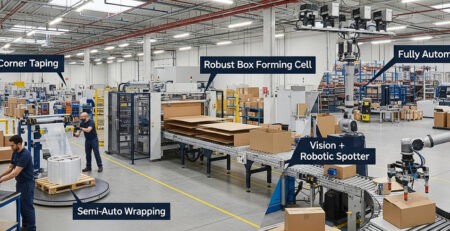
The standard rigid box production workflow involves the following stages:
- Cardboard V-Grooving: Flat chipboard sheets are scored with V-shaped channels so they fold cleanly at precise 90° angles — producing sharp corners without cracking.
- Corner Taping: The scored chipboard is folded and taped at all four corners, forming the rigid box shell.
- Paper Gluing: A roller-based glue machine applies a thin, even layer of water-based adhesive to the wrapping paper.
- Box Forming / Wrapping: The box shell is placed on the forming machine, which wraps the glued paper around all four sides, folds the flaps into the interior, and presses the surface smooth.
- Quality Inspection: Finished boxes are checked for alignment, corner sharpness, and surface defects before packing.
Watch a complete rigid box production workflow in action:
Types of Rigid Box Machines
Manual / Tabletop Machines
Single-station tools (glue machines, groove cutters) requiring full operator involvement. Suitable for sample making and very small batch production (<50 boxes/day).
Semi-Automatic Rigid Box Machines
The most popular choice for small-to-medium producers. The operator feeds the box shell by hand; the machine handles wrapping, folding, and pressing automatically. Output: 12–24 pcs/min. Ideal for 50–5,000 boxes/day with 1–3 operators.
Fully Automatic Rigid Box Lines
Integrated systems that handle board feeding, V-grooving, gluing, wrapping and stacking in one continuous flow. Output: 30–80+ pcs/min. Suitable for large-scale manufacturers producing millions of boxes annually. Investment typically starts at USD 150,000+.
2026 Rigid Box Machine Model Comparison
The table below compares the most widely used semi-automatic and automatic rigid box machine models available in 2026, including Kylin’s flagship lineup:
| Model | Type | Max Box Size | Min Box Size | Speed | Power | Best For |
|---|---|---|---|---|---|---|
| KY-550C | Semi-Auto | 550×400×120 mm | 40×40×10 mm | 18–24 pcs/min | 1.2 kW | Small-medium batch, mixed SKU, sample making |
| KY-600DS | Auto Robot | 600×500×150 mm | 50×50×15 mm | 20–30 pcs/min | 2.5 kW | Automated spotting, reduced operator dependency |
| KY-Full Auto | Full Auto Line | 600×500×200 mm | 60×60×20 mm | 35–60 pcs/min | 8–15 kW | High-volume production, minimal labour |
| KY-800A V-Groover | Grooving | 800 mm length | — | Manual feed | — | Board scoring for all box types |
| KY-500G Glue Machine | Gluing | 500 mm width | — | 0–28 m/min | 120 W | Paper gluing for wrapping |
Key Specifications to Evaluate Before Buying
| Specification | What to Look For | Why It Matters |
|---|---|---|
| Box Size Range | Min & max L×W×H that covers your full product range | A machine that can’t run your smallest or largest box is useless for those SKUs |
| Production Speed | 18–24 pcs/min (semi-auto); 40+ (full-auto) | Determines whether you can hit daily output targets |
| Changeover Time | <10 min with PLC program storage | Critical for short-run, mixed SKU production |
| Wrapping System | Brush roller (preferred over blade) | Brush rollers prevent scratching delicate paper surfaces |
| Flap Bending | Pneumatic (preferred over mechanical) | Cleaner interior tuck on small and thin-sided boxes |
| Control System | PLC touch panel with saved programs | Reduces training time and operator error |
| Warranty | Minimum 1 year; Kylin offers 3 years | Protects your investment; reveals supplier confidence |
| After-Sales Support | Video/phone support + spare parts <48h shipping | Minimises downtime when issues arise |
Production Capacity Planning: How Many Machines Do You Need?
| Monthly Volume | Daily Output Needed | Recommended Setup | Operators |
|---|---|---|---|
| Under 5,000 boxes | <250 pcs/day | 1× KY-550C + 1× Glue Machine | 2 |
| 5,000–20,000 boxes | 250–1,000 pcs/day | 1× KY-550C + V-Groover + Glue Machine | 2–3 |
| 20,000–80,000 boxes | 1,000–4,000 pcs/day | 2× KY-550C or 1× KY-600DS + full prep line | 3–5 |
| 80,000+ boxes | 4,000+ pcs/day | Fully automatic line | 2–4 supervisors |
For a detailed breakdown of each machine in a complete production line, see: Rigid Box Production Line: Complete Buyer’s Guide 2026 →
The Benefits of Investing in a Rigid Box Machine
- 10–30× higher output vs. fully manual production with the same number of workers
- Consistent quality — eliminates human variation in corner sharpness, glue coverage, and paper alignment
- Reduced scrap rates — from 3–8% (manual) down to <1% (machine)
- Lower labour dependency — 2–3 semi-skilled operators can run a full semi-auto line
- Scalability — add machines as volume grows without rebuilding the whole line
- Fast ROI — most mid-size operations recoup machine investment within 12–24 months
Rigid Box Machine Applications by Industry
- 🎁 Gift & Luxury: Jewellery boxes, watch boxes, perfume packaging, premium gift sets
- 📱 Electronics: Smartphone boxes, earphone packaging, laptop accessories
- 💄 Cosmetics: Foundation sets, skincare gift boxes, makeup palettes
- 🍫 Food & Beverage: Chocolate boxes, tea gift sets, moon cake boxes, wine boxes
- 👓 Eyewear: Glasses boxes, sunglasses sets, optical retail packaging
- 📚 Publishing & Stationery: Hardcover book slipcase boxes, photo albums, calendar boxes
Video: See the Full Rigid Box Machine Range
Watch Kylin’s semi-automatic and automatic rigid box forming machines in action across different box types and sizes:
Frequently Asked Questions (2026 Edition)
What is the difference between a semi-automatic and a fully automatic rigid box machine?
A semi-automatic machine requires an operator to feed the box shell by hand at the start of each cycle; the machine then wraps, folds, and presses automatically. A fully automatic machine feeds, positions, wraps, and ejects the box without operator intervention between cycles. Semi-automatic machines cost USD 5,000–30,000 and produce 12–24 pcs/min. Fully automatic lines cost USD 150,000+ and can produce 40–80+ pcs/min.
How much does a rigid box machine cost in 2026?
Entry-level semi-automatic rigid box forming machines (like the KY-550C) are priced from approximately USD 8,000–18,000 depending on configuration and accessories. A complete semi-auto production line (forming machine + glue machine + V-groover + corner taper) typically ranges from USD 15,000–35,000. Fully automatic lines start at USD 150,000 and can reach USD 500,000+ for high-speed integrated systems. Contact Kylin Machine for a current quote.
How long does it take to learn to operate a rigid box machine?
For a semi-automatic machine with a PLC touch panel, most operators achieve basic proficiency within 1–3 days of hands-on training. Full mastery of size changeover and troubleshooting typically takes 2–4 weeks of regular operation. Kylin provides factory-based and on-site training as part of its after-sales support.
Can one machine make both the lid and the base of a rigid box set?
Yes. The same forming machine produces both the lid and the base — they are simply different box sizes. The machine is adjusted (or a saved PLC program is loaded) between runs. For high-volume lid-and-tray production, some factories run two machines in parallel — one dedicated to lids and one to bases — to eliminate changeover downtime.
What wrapping materials can a rigid box machine handle?
Standard semi-automatic forming machines handle paper-based wrapping materials including coated art paper, kraft paper, embossed paper, foil-laminated paper, and thin book-binding cloth. For thicker materials like PU leather, microfiber, or velvet, a purpose-built machine with higher clamping pressure is required.
What is V-grooving and why is it necessary for rigid boxes?
V-grooving is the process of cutting a V-shaped channel into chipboard along the intended fold lines. Without grooving, the thick board will crack or produce rounded corners when folded. V-grooving removes material at the fold point, allowing the board to bend cleanly at exactly 90° — producing the sharp, professional corners that define a quality rigid box. See the KY-800A V-Grooving Machine for details.
How many workers are needed to run a rigid box production line?
A complete semi-automatic line (glue machine → V-groover → corner taper → forming machine) can be operated by 2–3 people. Typically one person handles paper gluing and V-grooving prep, while one or two operators run the corner taping and forming machines.
What is the minimum order quantity for Kylin machines?
There is no minimum order quantity. Single machines can be purchased individually. Kylin supplies both individual units and complete production line packages.
How do I choose between different rigid box machine brands?
Key evaluation criteria: (1) machine build quality and component brands (motors, sensors, bearings); (2) warranty terms — look for at least 1 year, Kylin offers 3 years; (3) after-sales support responsiveness and spare parts availability; (4) reference customers you can verify; (5) factory visit or video call to see the machine running before purchase.
Can a rigid box machine produce round or unusual-shaped boxes?
Standard rigid box machines are optimised for rectangular boxes. Round tubes, oval boxes, and custom-profile shapes require specialised equipment. See our guide on Rigid Box Making Machines for Different Shapes for a complete overview.
Why Choose Kylin Machine?
- ✅ 10,000+ machines installed in 30+ countries across Asia, Middle East, Africa, Europe
- ✅ 3-year machine quality warranty — one of the longest in the industry
- ✅ Lifetime technical support via WhatsApp, video call, and on-site visits
- ✅ Factory-direct pricing — no middlemen, transparent quotes
- ✅ On-site installation and training available worldwide
- ✅ Spare parts shipped within 48 hours from Guangdong, China
Get Your Free Quote Today
Whether you are setting up your first rigid box production line or upgrading an existing one, our engineering team will help you select the right machines for your box range, production volume, and budget.
WhatsApp: +86-138-0982-0550
Contact form: https://kylinmachines.com/contact-us/
Related reading: Rigid Box Production Line: Complete Buyer’s Guide 2026 | How to Make Rigid Boxes Efficiently Using Machines | Rigid Box Machines for Different Shapes



Leave a Reply