


Sustainable Packaging Revolution
Sustainable Packaging Revolution:
How Green Printing Is Reshaping
the Industry in 2026

Kylin Machine
Published · May 5, 2026 | 10 min read
$326B
Sustainable Pkg Market 2026
7.3%
Global CAGR to 2031
73%
Consumers Pay More for Eco Pkg
63
Countries with EPR Regulations
The global printing and packaging industry is undergoing its most dramatic transformation in decades. Sustainability is no longer a buzzword confined to corporate responsibility reports — in 2026, it is the single most powerful force reshaping how brands design, print, manufacture, and deliver their packaging. From boardrooms in New York to factory floors in Shenzhen, every stakeholder in the value chain is asking the same urgent question: How do we get greener, faster?
Driven by tightening government regulations, an unprecedented wave of consumer demand, and rapid advances in materials science and digital printing technology, the sustainable packaging market is on an explosive growth path — valued at USD 325.94 billion in 2026 and projected to surpass USD 463 billion by 2031 (Mordor Intelligence, 2026). This is not a niche movement. This is the new industrial mainstream.

1. From Option to Obligation: The Regulatory Earthquake
Perhaps nothing is accelerating the sustainability transition faster than government policy. The European Union’s Packaging and Packaging Waste Regulation (PPWR) now mandates recyclable-by-design packaging across all product categories, directly affecting how printers and converters specify substrates, coatings, and inks. Extended Producer Responsibility (EPR) frameworks now operate across 63 countries, creating a truly global compliance landscape that eliminates the regulatory arbitrage brands once enjoyed.
In the United States, PFAS (per- and polyfluoroalkyl substances) bans in food-contact packaging are now enacted in 11 states, with federal action widely anticipated. Japan’s recycled-plastic mandate, effective 2024, and China’s evolving supervision policies are transforming Asia-Pacific into one of the fastest-growing sustainable packaging markets, with an expected 11.05% CAGR through 2031.
“Sustainability has moved beyond plain brown boxes and earthy clichés. Material choice is now as strategic as brand identity — and regulation ensures it must be.”
For packaging manufacturers and print houses, compliance is no longer optional — it is a prerequisite for doing business with major retailers and global brands. Procurement teams now receive RFPs specifying 30–50% post-consumer recycled fiber for corrugated board and verified recyclability for paper mailers and label stock. Operational costs are directly tied to how recyclable a package is, making sustainable design a financial, not just ethical, imperative.
Global Sustainable Packaging Market Snapshot (2026)
| Segment / Region | 2026 Market Share / Value | CAGR (2026–2031) | Key Driver |
|---|---|---|---|
| Global Market Total | USD 325.94 Billion | 7.29% | EPR regulations, brand pledges |
| North America | USD 130.59 Billion | ~6.5% | Consumer demand, e-commerce |
| Europe | 34.18% market share | ~7.1% | PPWR, EPR compliance |
| Asia-Pacific | Fastest growing region | 11.05% | E-commerce boom, new regulations |
| Paper & Paperboard | 41.38% material share | ~8.2% | Recyclability, cost-effectiveness |
| Compostable / Biodegradable | Niche but surging | 12.32% | Single-use plastic bans |
| E-Commerce Packaging | Growing fastest by end-use | 12.63% | Right-sizing, unboxing experience |
Source: Mordor Intelligence, Fortune Business Insights, 2026

2. Digital Printing: The Engine of the Green Transition
Digital printing has long promised agility. In 2026, it is delivering on that promise with an environmental edge that legacy analog methods cannot match. The global digital packaging printing market is growing at 9.1% CAGR through 2030, and it is becoming the backbone of sustainable production for one compelling reason: it generates dramatically less waste.
2a. Short Runs, Zero Waste Philosophy
Plants switching from traditional offset or flexographic printing to digital for short runs report 30–60% less make-ready waste, directly cutting both cost and carbon footprint. As brands multiply SKUs and shorten product life cycles — adding 20–40% more product variants per season — the old economics of long-run analog printing break down. Digital’s elasticity wins.
LED-UV curing, increasingly standard in modern digital presses, uses 15–25% less energy than conventional mercury UV systems. Water-based inks reduce VOC emissions by up to 80% compared to solvent-based alternatives. Soy-based inks, now an industry standard for many converters, also deliver significant environmental gains. The carbon math is becoming undeniable.
Key Digital Printing Sustainability Gains
2b. Personalization as a Competitive Weapon
Digital printing has unlocked mass personalization at scale. Brands can now produce regionally tailored, culturally resonant, or individually named packaging without the cost penalties of traditional plate changes. Research shows that personalization in packaging can increase customer conversion rates by 20%, and campaigns like Coca-Cola’s “Share a Coke” have demonstrated how packaging-as-media can drive measurable sales growth.
Variable data printing, serialized QR codes (ISO/IEC 18004 compliant), and AR-enabled packaging are turning the physical package into a digital touchpoint — connecting consumers to origin stories, authenticity verification, and immersive brand experiences. The package is no longer just a container. It is a channel.
3. Material Innovation: Beyond the Recycling Bin
Material science is delivering a remarkable pipeline of alternatives to fossil-fuel-based plastics. Mycelium-based packaging (grown from mushroom roots), seaweed films, and substrates derived from agricultural waste are entering commercial production, offering the protective properties of traditional polymers while biodegrading completely without leaving microplastics.
3a. Paper & Paperboard Leads the Charge
Paper and paperboard dominate the sustainable packaging material mix, commanding a 41.38% market share in 2026 (Fortune Business Insights). The reasons are clear: it is renewable, widely recyclable, FSC-certifiable, and increasingly sophisticated in its performance. Paper-based flexible packaging is growing 2× faster than its plastic equivalent. FSC-certified paper packaging has grown 20% in the past three years.
For printers, adapting machinery and inks to work with new substrates — from ultra-thin recycled boards to textured natural fiber sheets — is both a challenge and a major opportunity. Brands that invest in flexible production capabilities now will be positioned to capture the market’s fastest-growing segments.
3b. Smart Packaging: Where Physical Meets Digital
Smart packaging is no longer a gimmick reserved for luxury goods. In 2026, embedded QR codes, NFC chips, and AR-ready print markers are mainstream across food, pharma, cosmetics, and e-commerce categories. Consumers want transparency — and smart packaging delivers it: a scan reveals the product’s supply chain, carbon footprint, recycling instructions, and even exclusive digital content.
Counterfeit goods cost the packaging industry an estimated $200 billion annually. Smart authentication packaging — serialized labels, holographic elements, and tamper-evident digital seals — is now a rapidly growing sub-category that combines brand protection with consumer engagement.
Printing Technology Comparison for Sustainable Packaging
| Technology | Best For | Waste Level | Eco-Ink Compatibility | Personalization |
|---|---|---|---|---|
| Digital Inkjet / Laser | Short runs, variable data | Very Low | Excellent (water-based) | High |
| Flexographic Printing | High-volume corrugated & labels | Moderate | Good (water-based available) | Low |
| Offset Printing | Premium cartons, books | Moderate–High | Good (soy-based inks) | Low |
| Gravure Printing | Flexible films, long runs | High | Limited | Very Low |
| Hybrid (Digital + Flexo) | Mid-run labels, mixed SKUs | Low | Excellent | High |
4. Consumer Power: Demand Is Driving Supply
The business case for sustainable packaging is no longer speculative — it is consumer-validated. A staggering 73% of consumers say they are willing to pay a premium for sustainably packaged products. 85% of Gen Z consumers actively prefer eco-friendly materials. And 40% of consumers report actively avoiding brands that use excessive or non-recyclable packaging.
The sensory unboxing experience has become a key competitive differentiator in e-commerce. A DS Smith consumer survey found that US shoppers specifically want minimized empty space, zero styrofoam, and QR-linked digital content in their deliveries. Mondi’s e-commerce report confirms that 90% of European consumers prefer brands using correctly-sized recyclable packaging — yet only half trust brands’ sustainability claims, underscoring the growing importance of verified, transparent communication.
“66% of consumers actively look for social responsibility cues on product packaging. Your package is your sustainability handshake.”
This creates an enormous opportunity for brands and manufacturers willing to invest in authentic eco-messaging, verified recyclability claims, and genuinely circular packaging formats. The 60–80% return rates seen in urban packaging take-back pilot programs show that consumers will participate — when participation is made convenient and credible.
5. Automation & AI: The Smart Factory Advantage
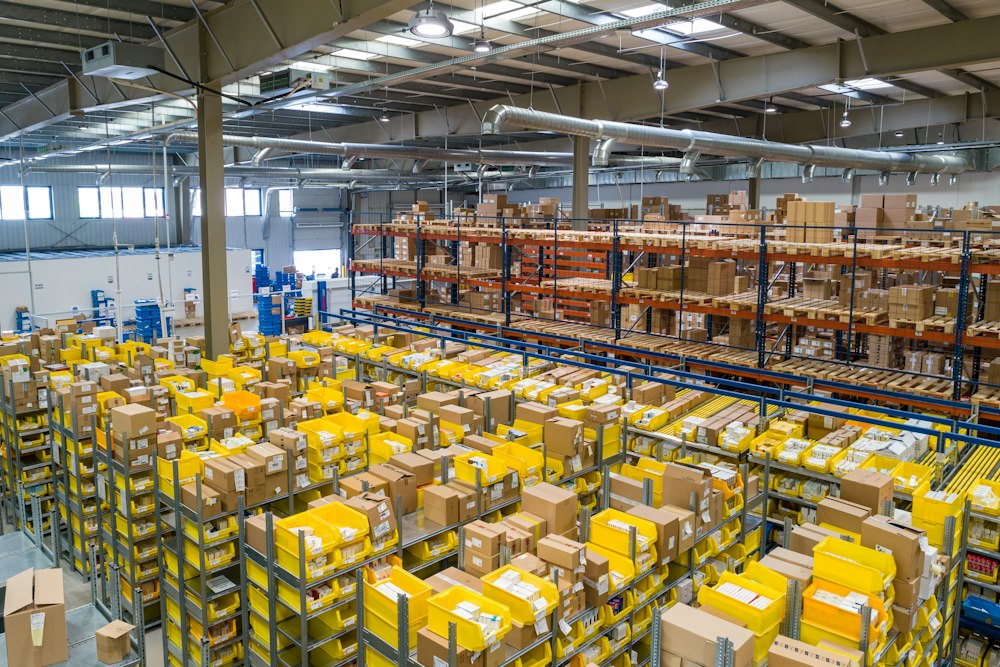
The push for sustainability is also transforming the factory floor. Automated packaging systems that scan product dimensions and build custom-sized boxes in real-time are eliminating the “shipping air” problem — reducing void fill, cutting materials usage, and allowing more packages per delivery truck. AI-powered sortation improves recycled material yields, narrowing the cost gap between virgin and recycled feedstocks.
In print production, AI is accelerating design iteration, generating packaging variants at speed, and enabling smarter color management across diverse eco-substrates where color drift (ΔE accuracy) can be a challenge. Plants running LED-UV printing and heat-recovery systems report 5–15% lower kWh-per-pack figures compared to conventional baselines.
Labor shortages affecting 65% of US packaging firms are further accelerating automation investment. The result: leaner, faster, greener production lines that can respond to market shifts without the waste penalties of traditional manufacturing.
✅ Key Takeaways for Industry Leaders
- → Sustainability compliance is now a market entry requirement in major retail and B2B procurement chains globally.
- → Investing in digital printing and hybrid press technology delivers measurable sustainability gains alongside cost and speed advantages.
- → Paper, paperboard, and bio-based materials represent the fastest-growing substrate categories — and demand for compatible machinery is surging.
- → Smart packaging (QR, NFC, AR) is transitioning from premium novelty to mainstream consumer expectation across e-commerce and food categories.
- → Automation and AI are compressing the economics of sustainable production, making green manufacturing viable at every scale.
Conclusion: The Race to Green Is the Race for Market Leadership
The sustainable packaging revolution is not on the horizon. It is here, now, in 2026 — reshaping procurement decisions, consumer loyalties, regulatory landscapes, and factory floors simultaneously. The brands and manufacturers that move decisively — investing in the right materials, the right printing technologies, and the right production machinery — will capture disproportionate market share in the decade ahead.
The window for competitive advantage through early adoption is still open. But it is closing rapidly as sustainability becomes the baseline, not the differentiator.
For businesses in the printing and packaging space, the strategic question is clear: Are your machines, materials, and methods ready for the circular economy? The answer will define your position in a USD 463 billion market.
Kylin Machine Solutions
Ready to Upgrade Your Packaging Production?
Explore Kylin Machine’s full range of advanced printing and packaging machinery — engineered for precision, efficiency, and the demands of modern sustainable manufacturing.
📚 Further Reading & Sources
- 🔗 Mordor Intelligence — Sustainable Packaging Market Report 2026–2031
- 🔗 GlobalVision — The Future of Print and Packaging in 2026
- 🔗 Packaging Insights — Top Packaging Trends 2026
- 🔗 Fortune Business Insights — Sustainable Packaging Market Size & Share
- 🔗 Kylin Machine — Packaging & Printing Machinery Solutions


Leave a Reply