
The Sustainable Packaging Revolution: How 85% of Global Consumers Are Reshaping the $257 Billion Industry
The Sustainable Packaging Revolution
How 85% of Global Consumers Are Reshaping the $257 Billion Industry
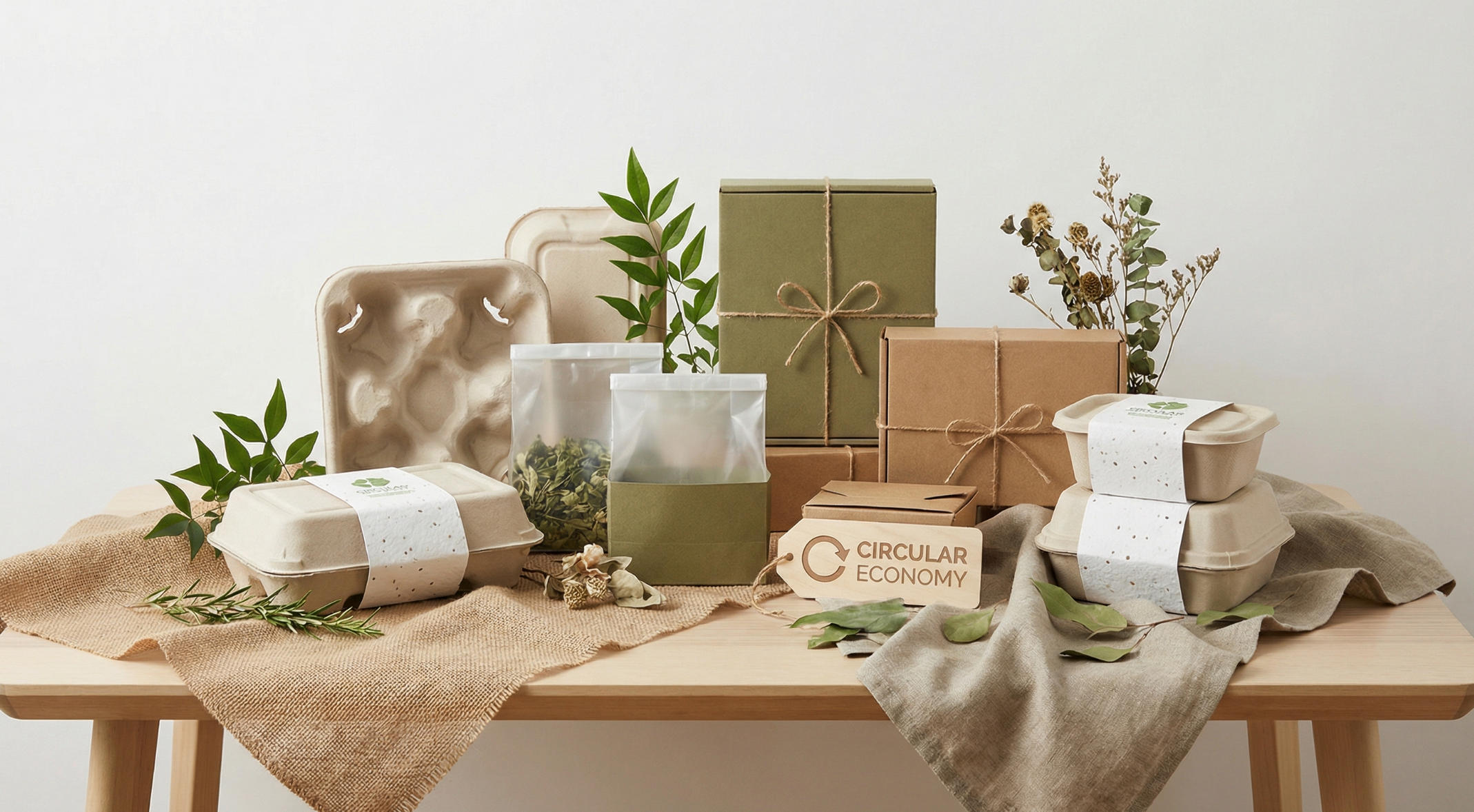
A Sea Change in How the World Packages Its Future
The printing and packaging industry stands at a crossroads unlike any it has faced in decades. While traditional concerns like price, quality, and food safety continue to dominate purchasing decisions, a new force has emerged that is fundamentally reshaping the entire global supply chain: sustainability. In 2025, sustainable packaging is not merely a trend—it has become an imperative that is driving innovation, regulation, and consumer behavior across every continent.
The numbers tell a compelling story. The global eco-friendly packaging market has reached an estimated value of $257.73 billion in 2025, and industry analysts project this figure will more than double to reach $536.16 billion by 2035, representing a compound annual growth rate of 7.6%. This extraordinary growth trajectory reflects a fundamental shift in how businesses, consumers, and governments approach the materials that protect and present products to the world.
Key Insight
Perhaps more significantly, McKinsey’s comprehensive 2025 global consumer survey—spanning over 11,000 respondents across 11 countries—revealed that 85% of consumers now prioritize products with sustainable packaging when making purchasing decisions. This isn’t a niche preference confined to environmentally conscious consumers; it has become a mainstream expectation that is forcing companies across every sector to rethink their packaging strategies from the ground up.
The Consumer Revolution: Why Sustainability Has Gone Mainstream
Understanding the sustainable packaging phenomenon requires examining the changing priorities of consumers worldwide. The McKinsey research provides crucial insights into this behavioral transformation, revealing that while price and quality remain the primary drivers of purchasing decisions, the environmental impact of packaging has ascended to unprecedented importance in consumer consciousness.

The survey data shows that 51% of consumers now rank the environmental impact of packaging as “extremely” or “very” important—a figure that has remained remarkably stable since 2020, suggesting this isn’t a temporary fad but rather a permanent shift in consumer values. What has changed dramatically is the willingness to act on these preferences, particularly among younger demographics and higher-income groups.
Generational Differences in Sustainability Preferences
Among high-income German millennials, for instance, 25% indicated they would pay “a lot more” for sustainable packaging options, compared to just 1% of high-income German Generation X consumers. This generational divide represents not merely a difference in attitude but a fundamental restructuring of market priorities that will only intensify as millennials and Generation Z accumulate greater purchasing power.
Business Impact
The business case for sustainability has become impossible to ignore. Products with sustainability claims have averaged 28% cumulative growth over five years, compared to just 20% for products without such claims. This performance differential has caught the attention of corporate boardrooms worldwide, transforming sustainability from a peripheral corporate social responsibility initiative into a core business strategy.
The Four Pillars of Sustainable Packaging Excellence
The sustainable packaging landscape in 2025 rests on four interconnected pillars that together represent a comprehensive approach to reducing environmental impact while maintaining or enhancing product protection and consumer appeal. These pillars—recyclability, recycled content, reusability, and renewable materials—have emerged as the primary focus areas for innovation and investment across the industry.
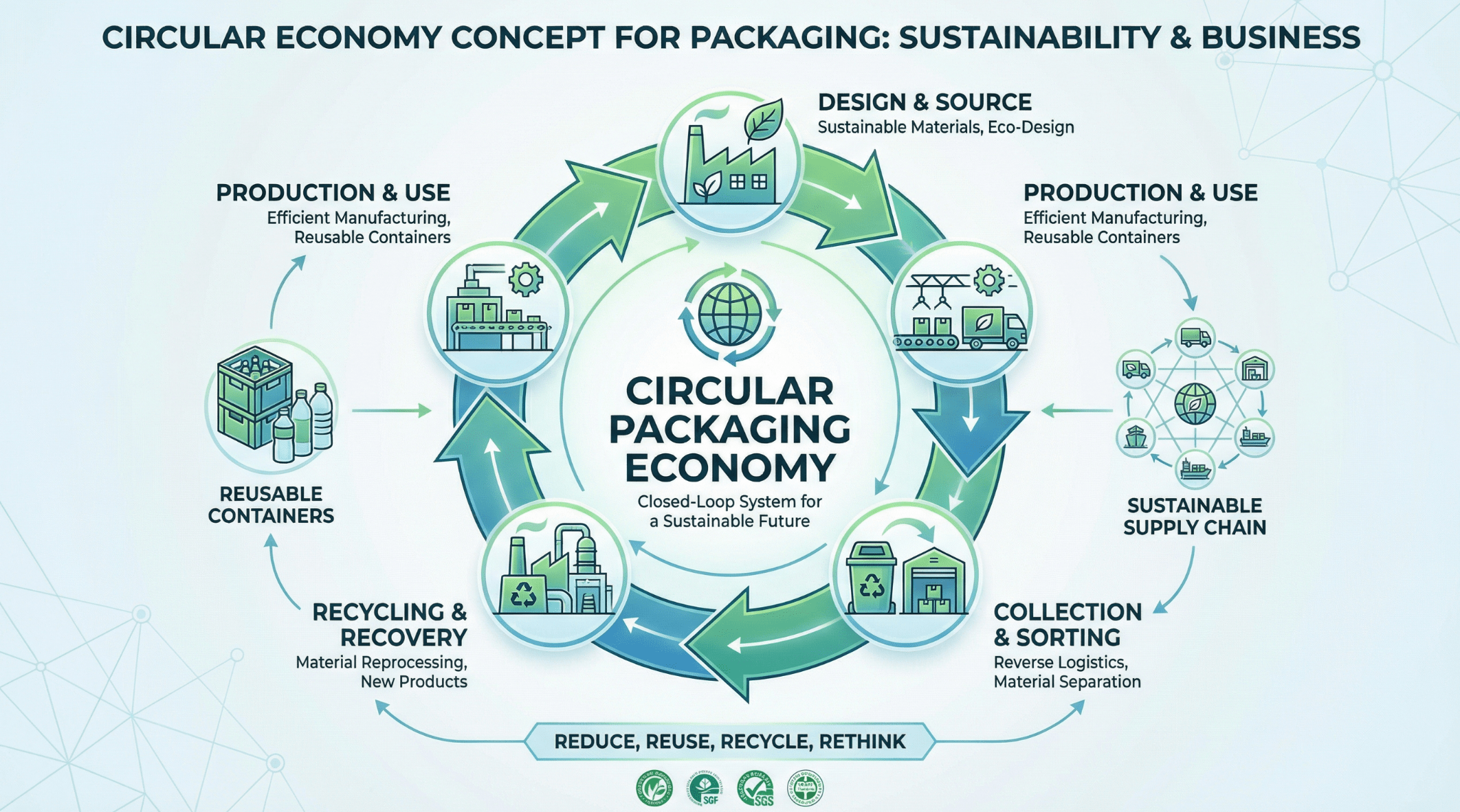
1. Recyclability: The Foundation of Sustainable Packaging
Recyclability has emerged as the most critical sustainability trait globally, ranking number one across all eleven countries surveyed in McKinsey’s research. This finding underscores a fundamental truth about consumer expectations: people want packaging that can easily re-enter the circular economy rather than accumulating in landfills or polluting natural environments.
The industry has responded with innovations in mono-material packaging—designs that use a single type of material, such as all-polyethylene (PE) or all-polypropylene (PP), rather than multi-layer laminates that are extremely difficult to recycle. This seemingly simple change requires sophisticated engineering to maintain the barrier properties and shelf-life protection that consumers and regulations demand, but the result is packaging that can actually complete the recycling loop.
2. Reusable Packaging: The New Frontier
The reusable packaging market represents one of the most dynamic segments of the sustainable packaging revolution. Industry analysts project this market will exceed $214.3 billion by 2032, with the plastic segment alone projected to surpass $100 billion during the same period.
| Packaging Type | Market Value 2025 | Projected 2032 | Key Benefit |
|---|---|---|---|
| Reusable Packaging Total | $180B | $214.3B | 62% lower GHG emissions |
| Reusable Plastic | $85B | $100B+ | 100+ usage cycles |
| Biodegradable Packaging | $527.51B | $561.27B | Natural decomposition |
Environmental Impact
Research shows that reusable packaging containers (RPCs) can extend fresh produce shelf life by up to four days compared to single-use alternatives, while generating 62% lower greenhouse gas emissions over their lifecycle. When designed for durability, a single reusable container can complete over 100 usage cycles, dramatically reducing per-use environmental impact.
Regulatory Landscape: Government Action Shapes Industry Direction
The sustainable packaging revolution is not being driven solely by consumer demand or corporate initiative—government regulation has emerged as a powerful catalyst for change, establishing frameworks that are reshaping packaging design, production, and end-of-life management across the global industry.
EU PPWR Regulation
The European Union has positioned itself at the forefront of this regulatory transformation with the Packaging and Packaging Waste Regulation (PPWR), effective from 2025, which represents the most comprehensive packaging regulation ever enacted by any major economy.
| Regulation Target | Deadline | Impact |
|---|---|---|
| Transport Packaging Reuse | 40% by 2030 | Major shift from single-use |
| Transport Packaging Reuse | 70% by 2040 | Industry transformation |
| Recyclability Requirements | Ongoing | Design standards |
| Recycled Content Minimums | Phased | Material specifications |
Beyond the reuse targets mentioned earlier, the regulation establishes requirements for recyclability, recycled content minimums, and restrictions on certain packaging formats that are difficult to recover and process. Single-use plastic bans have proliferated across jurisdictions worldwide, with India implementing significant restrictions in 2022 and the European Union progressively expanding its list of prohibited single-use plastic items.
Market Leaders and Competitive Landscape
The transition to sustainable packaging is creating winners and losers across the packaging industry, with established players making strategic moves to strengthen their positions while new entrants disrupt traditional business models.
| Company | Market Share | Strategic Focus |
|---|---|---|
| Smurfit WestRock | 8.6% | Paper & Paperboard Packaging |
| Amcor | 6.0% | Recyclable & Recycled Content Solutions |
| International Paper | 5.4% | E-commerce & Consumer Goods |
| Mondi | 4.6% | Sustainable Paper Packaging |
| DS Smith | 4.1% | Fiber-based Innovations |
| Tetra Pak | 3.8% | Food & Beverage Packaging |
The competitive landscape is being reshaped by material science breakthroughs and manufacturing innovations. Berry Global’s partnership with Mars to switch M&M’S and SKITTLES pantry jars to 100% recycled plastic represents the kind of major brand conversions that are driving market growth. Companies that can deliver sustainable packaging solutions at scale while maintaining quality and cost competitiveness are capturing disproportionate share of the market.
Technological Innovation: AI, Smart Packaging, and the Digital Transformation
The sustainable packaging revolution is being supercharged by technological innovation that is enabling entirely new approaches to packaging design, production, and consumer engagement. Artificial intelligence, smart packaging technologies, and digital systems are transforming packaging from a passive container into an active component of the product experience.
AI-Driven Automation
Artificial intelligence is revolutionizing multiple aspects of the packaging value chain. AI-powered systems are being deployed for inventory control, logistics optimization, and demand forecasting, enabling more efficient packaging production and distribution. Machine learning algorithms analyze vast datasets to optimize packaging design for both protection and sustainability, identifying opportunities to reduce material usage while maintaining performance.
Smart Packaging Technologies
Smart packaging technologies have moved from demonstration projects to commercial deployment in 2025. Internet of Things (IoT) sensors now monitor temperature, humidity, and handling conditions throughout the supply chain, providing real-time visibility into product status and enabling proactive intervention when conditions deviate from acceptable ranges.
Digital Integration
QR codes and near-field communication (NFC) tags are being integrated into packaging at an accelerating pace, providing consumers with instant access to sustainability information, authentication features, and interactive experiences. These technologies enable brands to demonstrate their sustainability commitments transparently while enhancing consumer experience and building loyalty.
Regional Variations: A Global Phenomenon with Local Characteristics
The sustainable packaging revolution manifests differently across regions, reflecting variations in consumer preferences, regulatory frameworks, infrastructure development, and market maturity.
| Region | Market Status | Key Drivers | Growth Projection |
|---|---|---|---|
| Asia Pacific | Largest Market | Manufacturing strength, regulations | Continued dominance |
| North America | Fastest Growing | Consumer demand, ESG commitments | Highest CAGR |
| Europe | Most Regulated | PPWR, consumer preferences | Steady growth |
Asia Pacific has established itself as the largest regional market for sustainable packaging, while North America represents the fastest-growing regional market, propelled by strong consumer demand and ambitious corporate sustainability commitments.
Ready to Transform Your Packaging Strategy?
Discover cutting-edge sustainable packaging solutions that combine innovation with environmental responsibility.
Explore Our ProductsRelated Resources & External Links
Kylin Machines Products
Explore our sustainable packaging solutions
📊McKinsey Research
Global consumer insights on sustainable packaging
🌱IFCO Packaging Trends
Top 6 sustainable packaging trends for 2025
📈Towards Packaging
Eco-friendly packaging market analysis
🔮PlanetTogether
Future of printing and packaging trends
📰Packaging Dive
2025 packaging industry review by numbers




发表回复