


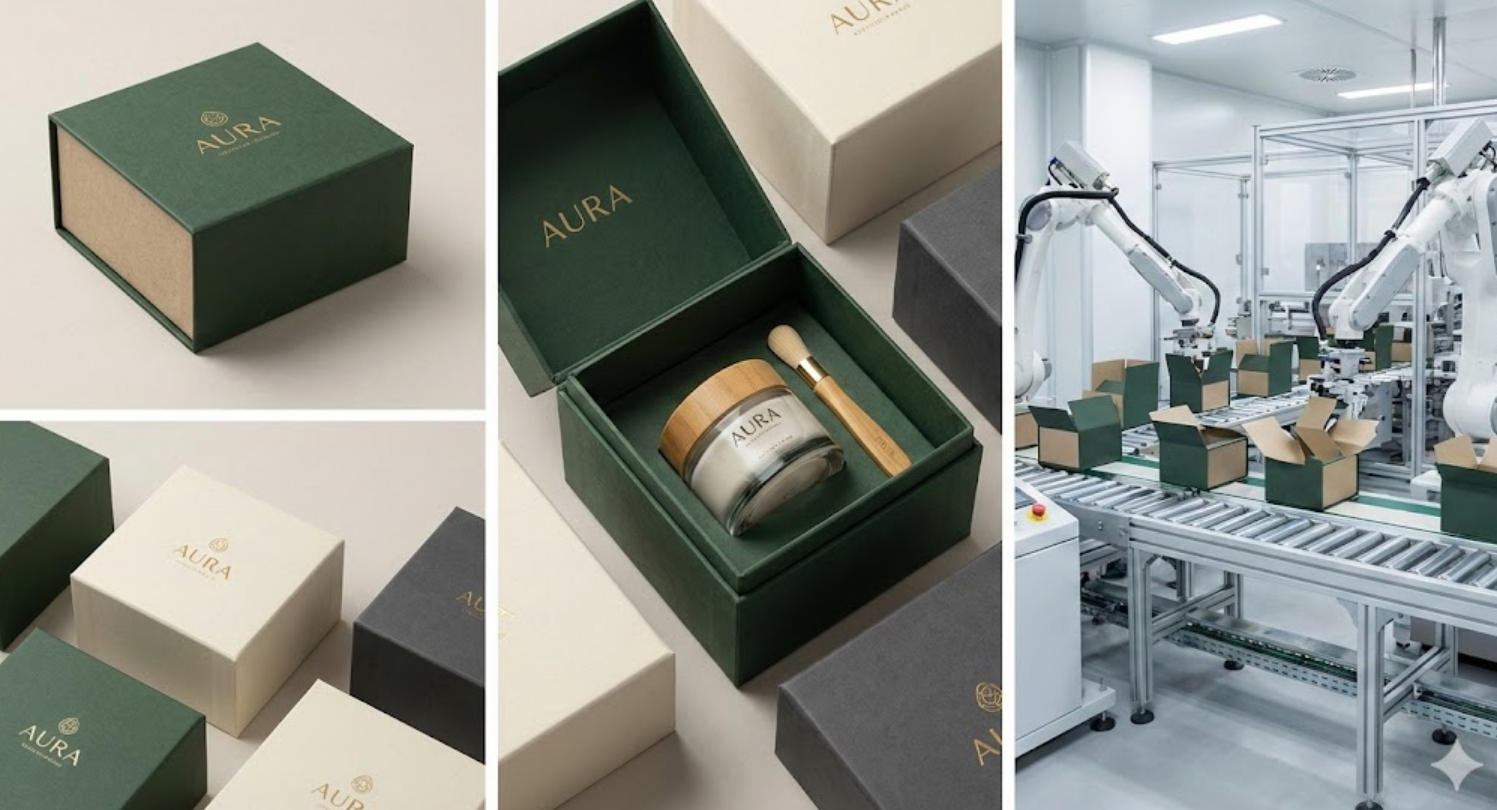
The Future of Rigid Box Manufacturing

The global rigid box packaging market is undergoing its most dramatic transformation in decades. Valued at over $8.2 billion in 2026, the industry stands at the intersection of two powerful megatrends: environmental sustainability and intelligent automation. From luxury brands in Paris to e-commerce giants in Shenzhen, every stakeholder in the printing and packaging supply chain is rethinking how rigid boxes are designed, produced, and delivered.
As consumer demand for premium unboxing experiences continues to surge — driven by sectors like cosmetics, electronics, spirits, and luxury fashion — manufacturers face an urgent question: How can we produce more exquisite rigid boxes, faster, at lower cost, with less environmental impact?
in 2026
Rate (CAGR)
Sustainable Packaging
Smart Automation
1. Global Rigid Box Market Overview 2026
The rigid box market has experienced remarkable growth over the past five years. According to Smithers Pira’s latest market analysis, the global rigid box packaging segment is projected to reach $12.1 billion by 2030, growing at a compound annual growth rate (CAGR) of 6.8%.
Several key factors are propelling this expansion: the luxury goods boom across Asia-Pacific, the premiumization trend in consumer electronics, and the relentless growth of global e-commerce that demands packaging capable of protecting high-value products while delivering unforgettable brand experiences.

The traditional strongholds of rigid box demand — luxury fashion, jewelry, and spirits — are now joined by fast-growing segments including premium cannabis packaging, subscription box services, and high-end consumer electronics. Apple, for instance, has long been recognized as a pioneer in rigid box packaging design, and its influence continues to cascade across industries worldwide.
| End-Use Segment | Market Share 2026 | Growth Rate | Key Drivers |
|---|---|---|---|
| Luxury Fashion & Accessories | 28.5% | +7.2% | Brand premiumization, gifting culture |
| Consumer Electronics | 22.3% | +8.1% | Product protection, unboxing experience |
| Cosmetics & Fragrance | 19.7% | +6.5% | Instagrammable packaging, sustainability |
| Food & Beverages (Spirits) | 14.2% | +5.8% | Gift packaging, limited editions |
| Healthcare & Pharma | 8.1% | +9.3% | Regulatory compliance, tamper-proofing |
| Others (Cannabis, Subscription) | 7.2% | +12.4% | Emerging markets, D2C brands |
Table 1. Global Rigid Box Market Segmentation by End-Use Industry (Source: Industry Reports 2026)
2. Sustainability: The #1 Force Driving Change
If there is one word that defines the rigid box industry in 2026, it is sustainability. The global push toward carbon neutrality, reinforced by regulations such as the EU Circular Economy Action Plan and EU Packaging and Packaging Waste Regulation (PPWR), is fundamentally reshaping how rigid boxes are manufactured.

♻️ Recycled & FSC-Certified Materials
Over 68% of rigid box manufacturers now use FSC-certified paperboard or post-consumer recycled content as their primary substrate.

🌱 Zero-Waste Production
Advanced rigid box machines now achieve material utilization rates exceeding 97%, dramatically reducing factory waste.
The Three Pillars of Sustainable Rigid Box Manufacturing
- Material Innovation: Bio-based adhesives, soy-based inks, water-soluble coatings, and mono-material designs are replacing traditional petroleum-derived chemicals. Leading brands now mandate that their rigid boxes be 100% recyclable in standard municipal waste streams.
- Energy-Efficient Production: Modern rigid box machine systems are equipped with servo-driven motors that consume up to 40% less energy than pneumatic predecessors, while intelligent sleep modes further reduce standby power consumption.
- Circular Design Principles: Packaging engineers are designing rigid boxes for disassembly and recyclability from the start — eliminating mixed materials, reducing lamination layers, and incorporating biodegradable magnetic closures.
3. Smart Automation & AI-Powered Rigid Box Machines
The second seismic shift in rigid box manufacturing is the rapid adoption of intelligent automation. The era of labor-intensive, manually operated rigid box production is drawing to a close. In its place, a new generation of AI-powered, robotic rigid box forming machines is setting new benchmarks for speed, precision, and consistency.
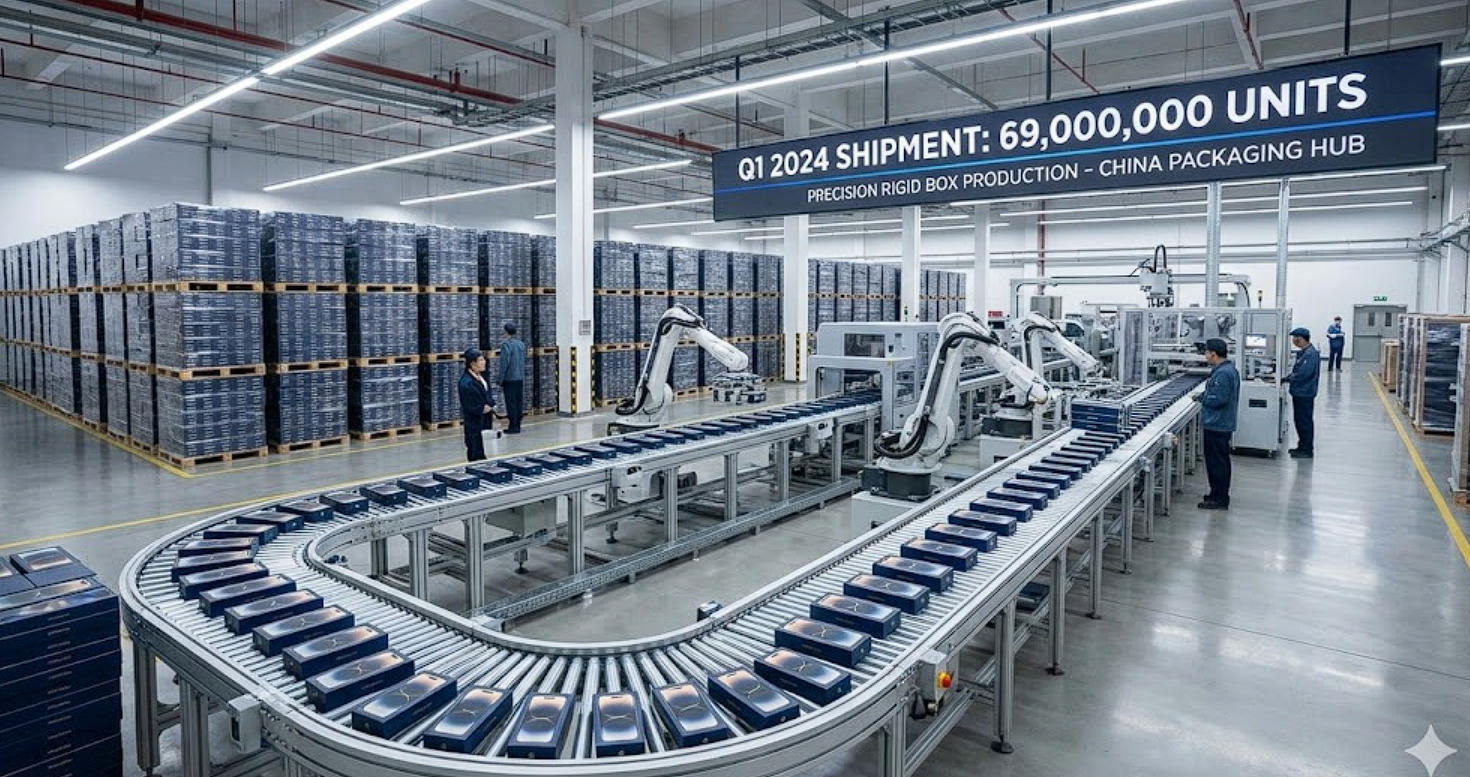
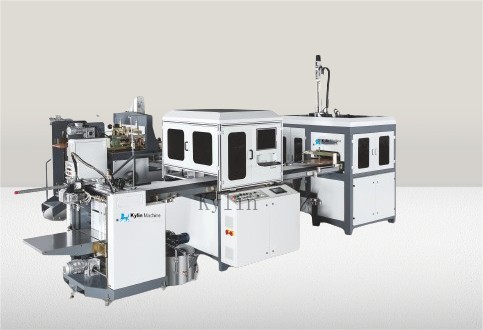
At the forefront of this revolution are manufacturers like Kylin Machine, whose KY-600DS Auto Rigid Box Forming Robot Machine represents the cutting edge of rigid box automation. This fully automatic system integrates paper feeding, gluing, positioning, and forming into a single seamless workflow — achieving production speeds of up to 25–35 boxes per minute with ±0.5mm precision.
Key Features of Modern Rigid Box Machines
| Feature | Benefit | Impact on ROI |
|---|---|---|
| Servo Motor Control | Ultra-precise paper feeding & positioning | Reduces waste by 35% |
| AI Vision Inspection | Real-time defect detection at full speed | Quality rejection rate < 0.3% |
| Automatic Size Changeover | Switch box sizes in under 15 minutes | Increases uptime by 28% |
| Robotic Arms Integration | Automated stacking and palletizing | Cuts labor costs by 60% |
| IoT Connectivity | Remote monitoring & predictive maintenance | Reduces downtime by 45% |
| Energy Recovery System | Regenerative braking on servo motors | Saves 25% on energy bills |
Table 2. Key Features of Next-Generation Rigid Box Machines and Their Impact on Manufacturing ROI
The KY-600DS rigid box machine exemplifies this transformation. Designed for both high-volume production and flexible short-run manufacturing, it enables packaging companies to serve luxury brands demanding exquisite quality while maintaining the throughput needed for mass-market orders.
🚀 Ready to Upgrade Your Rigid Box Production Line?
Discover how the KY-600DS Auto Rigid Box Forming Robot Machine can transform your manufacturing efficiency, reduce costs by up to 45%, and deliver unmatched precision.
Explore the KY-600DS Rigid Box Machine →4. Traditional vs. Automated Rigid Box Manufacturing: A Head-to-Head Comparison
To truly appreciate the magnitude of the automation revolution, let’s compare traditional manual rigid box production with modern automated systems side by side.
| Parameter | Traditional Manufacturing | Automated (e.g., KY-600DS) | Improvement |
|---|---|---|---|
| Production Speed | 8–12 boxes/min | 25–35 boxes/min | +200% |
| Positioning Accuracy | ±2.0mm | ±0.5mm | 4× Better |
| Labor Required | 6–8 operators | 1–2 operators | -75% |
| Material Waste | 8–12% | 2–3% | -75% |
| Size Changeover Time | 45–90 minutes | 10–15 minutes | -80% |
| Defect Rate | 3–5% | < 0.3% | -94% |
| Energy per Box | 0.15 kWh | 0.08 kWh | -47% |
| 24/7 Operation Capability | Limited (fatigue issues) | Full 24/7 autonomous operation | Enabled |
Table 3. Traditional vs. Automated Rigid Box Manufacturing — Performance Comparison
The data speaks for itself. Companies investing in modern rigid box machine technology are achieving payback periods of 12–18 months, while simultaneously improving their sustainability credentials and product quality.
5. Top 5 Rigid Box Industry Trends to Watch in 2026
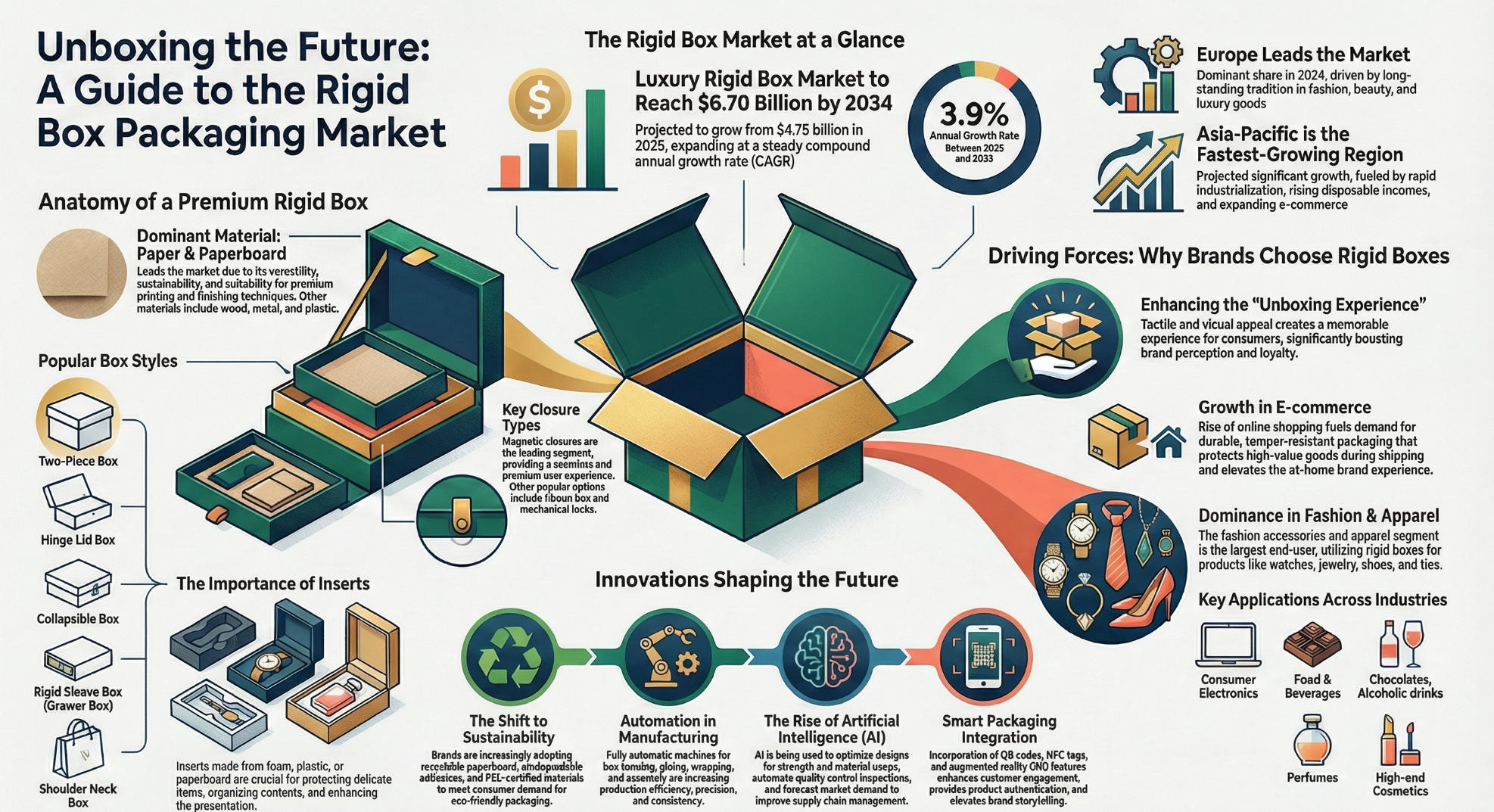
Trend #1: Digital Twin Technology in Production
Leading rigid box manufacturers are now deploying digital twin simulations of their entire production lines. By creating virtual replicas of their rigid box machine setups, engineers can optimize workflows, predict bottlenecks, and test new box designs before committing physical resources. This approach has been shown to reduce new product development cycles by 40–60%.
Trend #2: Smart Packaging Integration
Rigid boxes are evolving beyond static containers. The integration of NFC chips, QR codes, and even embedded LED lighting is transforming rigid boxes into interactive brand communication platforms. According to Packaging Digest, the smart packaging market embedded within rigid boxes is expected to grow by 23% annually through 2030.
Trend #3: Hyper-Personalization at Scale
Digital printing technology combined with automated rigid box forming allows manufacturers to produce personalized rigid boxes in batch sizes as small as one unit — without sacrificing production speed. This capability is particularly valuable for luxury brands, wedding favors, corporate gifting, and limited-edition product launches.
Trend #4: Reshoring & Nearshoring Production
Global supply chain disruptions have accelerated the trend toward reshoring rigid box production closer to end markets. Highly automated rigid box machine systems make it economically viable to operate in higher-cost regions by dramatically reducing labor dependency.
Trend #5: Carbon-Neutral Manufacturing Commitments
Major packaging groups including DS Smith, WestRock, and Graphic Packaging have set ambitious targets to achieve net-zero carbon emissions across their rigid box operations by 2035. These commitments are driving massive investments in energy-efficient machinery, renewable energy, and sustainable material sourcing.
6. Regional Market Insights & Growth Data
The rigid box market’s growth trajectory varies significantly across regions, influenced by local economic conditions, regulatory environments, and consumer preferences.
| Region | Market Size 2026 | CAGR 2024–2030 | Key Growth Drivers | Leading Countries |
|---|---|---|---|---|
| Asia-Pacific | $3.4B | +8.5% | Luxury demand, manufacturing hub | China, India, Japan |
| Europe | $2.1B | +5.8% | Sustainability regulations, luxury brands | Germany, France, Italy |
| North America | $1.8B | +6.2% | E-commerce, cannabis packaging | USA, Canada |
| Middle East & Africa | $0.5B | +9.7% | Luxury retail expansion, tourism | UAE, Saudi Arabia |
| Latin America | $0.4B | +7.1% | Cosmetics growth, retail modernization | Brazil, Mexico |
Table 4. Global Rigid Box Market — Regional Breakdown & Growth Projections
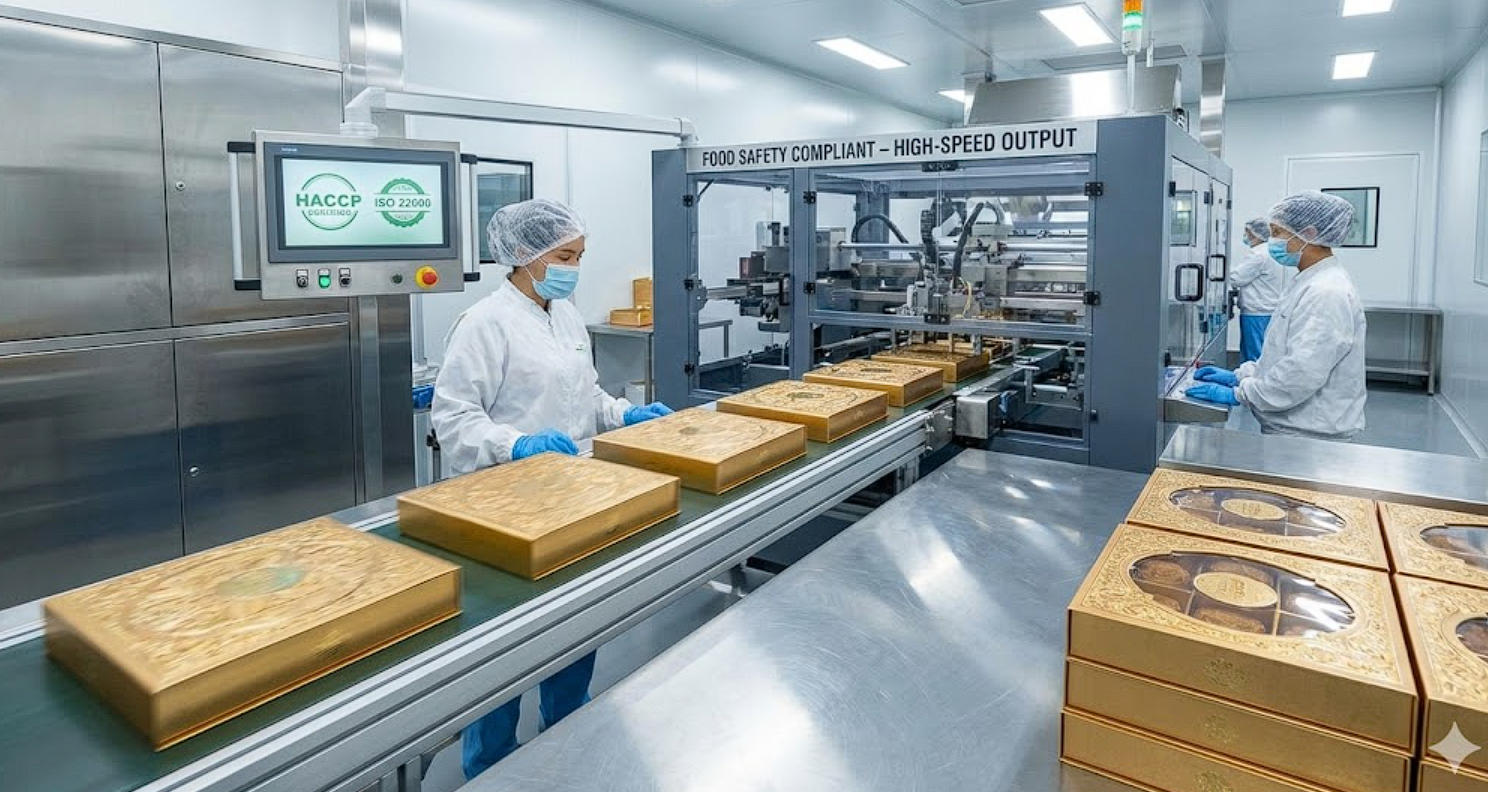
🌏 Asia-Pacific Dominance
China alone accounts for over 40% of global rigid box production, with an increasing shift toward high-value automated manufacturing.
🇪🇺 European Sustainability Leadership
EU PPWR regulations are the strictest globally, pushing manufacturers toward recyclable mono-material rigid box designs.
7. What’s Next for Rigid Box Manufacturing?
As we look toward the second half of 2026 and beyond, several emerging developments will continue to reshape the rigid box landscape:
- AI-Driven Design Optimization: Machine learning algorithms will generate optimal box structures based on product dimensions, shipping requirements, and material constraints — reducing engineering time from days to minutes.
- Collaborative Robot (Cobot) Integration: Lightweight cobots will work alongside human operators for complex finishing tasks like ribbon insertion, magnetic closure installation, and specialty embellishment — combining human dexterity with robotic consistency.
- Blockchain Supply Chain Transparency: From FSC-certified forest to finished rigid box, blockchain technology will provide end-to-end material traceability that brands can share with increasingly eco-conscious consumers.
- 3D-Printed Tooling & Prototyping: Additive manufacturing will slash the cost and lead time of creating custom molds and forming tools for rigid box machines, enabling faster innovation cycles.
- Closed-Loop Material Systems: Advanced rigid box manufacturers will implement take-back programs where used rigid boxes are collected, deconstructed, and reprocessed into new premium packaging substrates.

Conclusion: The Time to Act Is Now
The global rigid box industry is at a pivotal inflection point. The companies that move decisively — adopting sustainable materials, investing in automated rigid box machine technology, and building data-driven production systems — will capture disproportionate market share in the years ahead.
Whether you’re a startup entering the premium packaging space or an established manufacturer seeking to modernize your operations, the technology and strategies outlined in this article provide a clear roadmap for success. The future of rigid box manufacturing is smart, sustainable, and spectacularly efficient.
For manufacturers ready to take the next step, exploring state-of-the-art solutions like the KY-600DS Auto Rigid Box Forming Robot Machine is an excellent starting point. With its combination of robotic precision, energy efficiency, and production flexibility, it represents the future of rigid box manufacturing — available today.
📩 Get Expert Guidance on Rigid Box Automation
Contact Kylin Machine’s engineering team for a free consultation on how to optimize your rigid box production line with cutting-edge automation technology.
Request a Free Consultation →📚 References & Further Reading
- Smithers Pira — Global Packaging Industry Forecasts
- EU Packaging and Packaging Waste Regulation (PPWR)
- McKinsey & Company — Packaging Industry Insights
- Packaging Digest — Industry News & Trends
- drupa — Global Trade Fair for Printing & Packaging Technologies
- Kylin Machine — KY-600DS Auto Rigid Box Forming Robot Machine
Customers said
Customers visitation
ADDITIONAL SERVICES
Customers Meeting&Machines Training
 Meeting in India
 Meeting in Dubai
 Trip to Turkey


To help you master the installation and operation of your equipment, Kylin provides authorized training programmes led by surface preparation specialists.
- How to set up your machine and optimize performance levels for your process.
- Key trouble-shooting tips that keep your machine(s) in prime condition to minimize downtime, minimize maintenance, and prevent future problems.
- How to optimize performance levels to maintain consistent quality and minimize waste
- The latest legislation and how to keep the machine safe.
We offer three years machine quality warrantty, we want You to be satisfied with the work we do and our Machine,
Every time. We Guarantee to perform all good services to your complete satisfaction at the agreed upon price.
If at any time within 30 days after completion of the job you're not completely satisfied, we will Re-Clean all required areas to your satisfaction.
If you 're still not satisfied we will refund the money paid.
Help from technician is only a phone call away.
We offer free over the phone tech support to help you troubleshoot any issue you may be having.
If you require onsite help we are able to send our technicians to you! Whether it’s for training or support we can meet your needs.
Our experienced factory technicians are eager for you to get the most from your Kylin Machine.
We also offer to do regular maintenance to your machinery to make sure it stays in the best condition throughout the lifetime of the product.
This will help guarantee that your machines will work well for as long as possible.
Initially one of our experienced operators will try and help you resolve the problem over the telephone.
If that is not successful then we would send a field engineer out to site.
Our engineers carry the most common spare parts so that most problems can be repaired on site.
In the unlikely event that the machine could not be repaired on site, we would either arrange another on site visit if appropriate,
or take the machine in to our state of the art workshop where we can deal with all types of repairs and refurbishments
10,000 customers in 30 countries using KYLIN MACHINES, meet our customers














What Client’s Say
Dear Jacob,
l am writing to thank you for the recent delivery of spare parts that we ordered
from your company.We have received the shipment in good condition and are pleased with the quality of the products you provided.26 Mar 2023
Boris BoguslavskiyCEO - Taropack
The machine is working now fine , beautiful … thank you so much and maybe if we need other kind of box making machines I will contact you
Nadine KodsyCEO - bassil bookbinding
Hi Jacob, thanks and i let you know…
Bit until now everythimg is perfect!Mit den besten Grüßen,
28 April 2023
Armin AkbarzadehCEO - X-PRESS Grafik & Druck GmbH
We had purchased two paper bag machines from Kylin last 3 year, untill now, the machines is using very well, and help us a lot in making luxury paper bag. Thanks Kylin DEM IMPEX PRIVATE LIMITED

John SmithCEO & Founder - SAP print
We have purchased case maker Ky-450 last year 2013, right now the machine is running very stable, we are going to order one more machine from Kylin.
EVER OLIVIA ENTERPRISE CO.,LTD
ALBERTO RINALDICEO & Founder - MEM company
We are the Agent of Kylin machine in UK, ky-40 Box stay machine and Ky-500 is very good comments, choose Kylin machine, choose the good quality Thanks

VIKAS TAWARCEO & Founder - Impack company
Good Morning JacobBusiness is going well!Your box corner taper has been running like a champion saving us time and money!!As we continue to grow we will definitely keep in touch and see if we can continue to our relationship with Kylin MachinesAll the best!!Jason
Jason HopkinsPrint & marketing execution experts - Ampersand




Leave a Reply