


Rigid Box Production Line Configuration: A Machine-by-Machine Selection Guide for 2026
Building a rigid box production line is like assembling a precision orchestra. Each machine plays a specific role, and if one station underperforms, the entire line suffers. A factory-grade V groover paired with an undersized corner taping machine produces bottlenecks. A high-speed forming station fed by an inaccurate gluing system generates waste, not output. The line is only as strong as its weakest link.
This configuration guide walks through every machine in a modern rigid box production line — from board preparation to final pressing — and explains how to select each one based on your box styles, output targets, material types, and budget. Whether you are building a new line from scratch or upgrading an existing setup, this machine-by-machine approach helps you invest where it counts.
The Six Stations of a Rigid Box Production Line
A complete rigid box production line typically includes six functional stations. Some factories combine stations into integrated units; others keep them modular for flexibility. The right configuration depends on your production profile, but every line needs to address each of these functions:
- Board Grooving (V Grooving) — Creates fold lines on greyboard or chipboard
- Corner Taping — Reinforces box corners before wrapping
- Glue Application — Applies adhesive to board or wrapping paper
- Box Forming & Wrapping — Aligns board with paper, folds edges, forms the box
- Pressing & Shaping — Applies pressure for bond strength and dimensional accuracy
- Finishing (Optional) — Magnet insertion, edge gilding, inspection
Below, we evaluate each station with selection criteria, key specifications, and practical configuration advice based on real factory experience at Kylin Machines.
Station 1: V Grooving Machine — The Foundation of Box Quality
If your grooves are inaccurate, every downstream station produces defective boxes. The V grooving machine cuts precise channels into greyboard so it folds cleanly into box walls, lids, and bases. Groove depth, angle consistency, and positional accuracy directly determine corner sharpness and edge alignment in the finished box.
Key Selection Parameters
| Parameter | Entry-Level | Mid-Range | High-End |
|---|---|---|---|
| Groove Angle | Fixed 90° | Adjustable 85°–130° | Programmable multi-angle |
| Board Thickness | 0.8–2.0 mm | 0.5–3.0 mm | 0.3–4.0 mm |
| Positioning | Manual stop | Semi-auto ruler | Servo/CNC programmable |
| Max Board Size | 600 × 600 mm | 900 × 600 mm | 1200 × 900 mm |
| Typical Price | $2,000–$5,000 | $6,000–$12,000 | $15,000–$30,000 |
Configuration tip: If your line produces boxes across multiple sizes daily, invest in a CNC programmable groover with recipe storage. The time saved on setup changes — often reducing changeover from 30 minutes to under 5 minutes — pays for the price difference within months in a mixed-SKU environment.
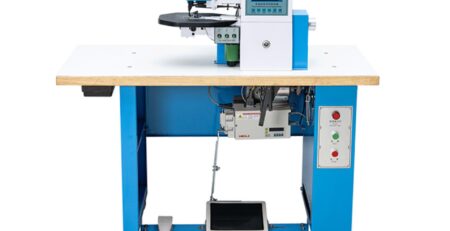
Station 2: Corner Taping Machine — Structural Integrity Before Wrapping
After grooving and folding, the box corners need reinforcement tape to hold their shape through the wrapping and pressing stages. A corner taping machine applies adhesive tape to all four corners simultaneously, ensuring the box maintains its geometry before the wrapping paper is applied. Skipping or underinvesting in this station leads to corner separation, visible gaps, and high rejection rates downstream.
Key Selection Parameters
| Parameter | Manual/Semi-Auto | Fully Automatic |
|---|---|---|
| Taping Speed | 3–6 pcs/min (single corner) | 15–25 pcs/min (all 4 corners) |
| Tape Width | 12–25 mm | 15–30 mm (adjustable) |
| Box Size Range | Limited by manual handling | Auto-adjusting within range |
| Operators | 1–2 | 0–1 (auto-feed option) |
| Typical Price | $1,500–$4,000 | $8,000–$18,000 |
Configuration tip: For lines producing more than 3,000 boxes per day, a fully automatic quad-corner taping machine is non-negotiable. The labor savings alone — replacing 1–2 operators — recovers the investment within 12–18 months in most markets. For smaller volumes or sampling lines, a semi-automatic unit paired with manual feeding can be a practical starting point.
Station 3: Glue Machine — The Hidden Quality Driver
Glue application is the station where most invisible defects originate. Uneven coating causes bubbling under the wrap paper. Excess glue seeps through thin materials and stains the surface. Insufficient glue leads to peeling corners and customer returns. A well-specified glue machine for packaging eliminates these problems at the source.
Key Selection Parameters
| Parameter | Roller Type | Spray Type | Servo-Controlled |
|---|---|---|---|
| Glue Application | Full-surface roller | Targeted spray nozzle | Programmable pattern |
| Glue Type | Cold glue (PVA/white) | Hot melt or cold | Both + specialty adhesives |
| Coating Uniformity | Moderate | Good | Excellent (±5% variance) |
| Glue Waste | 10–15% | 5–8% | Under 3% |
| Typical Price | $800–$2,500 | $3,000–$6,000 | $7,000–$15,000 |
Configuration tip: Servo-controlled glue systems reduce adhesive consumption by up to 60% compared to simple roller units. For a line running 5,000 boxes per day, that translates to roughly $3,000–$6,000 in annual glue savings — plus a measurable reduction in reject boxes caused by glue marks or bubbling. If your line handles thin wrapping papers (under 120 gsm), servo application is strongly recommended.
Station 4: Box Forming Machine — The Core of the Line
The box forming machine is the centerpiece of any rigid box production line. It takes the grooved, taped board and the glued wrapping paper, positions them with precision, folds the edges, and produces the finished box structure. This station determines your line’s maximum speed, size range, and quality ceiling.
Key Selection Parameters
| Parameter | Semi-Automatic | Fully Automatic | Vision-Positioned |
|---|---|---|---|
| Output Speed | 6–12 pcs/min | 15–25 pcs/min | 20–35 pcs/min |
| Positioning Accuracy | ±0.5 mm (manual) | ±0.2 mm (servo) | ±0.05 mm (AI-vision) |
| Box Size Range | 80–350 mm | 60–500 mm | 40–600 mm |
| Changeover Time | 15–30 min | 5–15 min (recipe-based) | 3–8 min (auto-calibration) |
| Typical Price | $8,000–$18,000 | $25,000–$50,000 | $55,000–$90,000 |
Configuration tip: Match your forming machine to your dominant box format. If 70%+ of your production is standard lid-and-base rigid boxes in the 150–350 mm range, a dedicated rigid box machine like the KY-550C delivers the best speed-to-cost ratio. If you frequently switch between lid-base boxes, book-style cases, and specialty formats, invest in a modular forming platform that supports multiple box styles with quick-change tooling.
Station 5: Pressing Machine — Bond Strength and Dimensional Stability
After forming, boxes need controlled pressure to ensure strong adhesive bonding and consistent dimensions. A pressing station applies uniform force across the box surface for a programmed duration, preventing warping and ensuring every box in a batch has identical external dimensions — critical for automated filling lines at brand customers.
Key Selection Parameters
| Parameter | Manual Press | Pneumatic Press | Automated Press Line |
|---|---|---|---|
| Pressure Control | Manual adjustment | Regulated air pressure | Programmable force profile |
| Cycle Time | 30–60 sec per box | 15–30 sec per box | 10–20 sec per box (conveyorized) |
| Batch Capacity | 1 box | 1–4 boxes | Continuous flow |
| Typical Price | $500–$1,500 | $2,000–$5,000 | $8,000–$20,000 |
Configuration tip: A pressing bottleneck is one of the most common line-balancing mistakes. If your forming station outputs 20 boxes per minute but your pressing station can only handle 4 boxes every 2 minutes, you create a pile-up that forces operators to stack boxes, increasing the risk of deformation. Size your pressing capacity to match or slightly exceed your forming output.
Station 6: Finishing Equipment — Adding Premium Value
Finishing stations differentiate a standard rigid box production line from a premium luxury packaging line. Depending on your product mix, you may need one or more of the following:
- Magnet Insertion: A magnet closure box machine automates milling, gluing, and placing magnets with sub-millimeter precision. Essential if magnet-closure boxes represent more than 20% of your output.
- Edge Gilding: An edge gilding machine applies metallic foil or colored edge paint to box edges, creating the premium finishing touch expected in jewelry, watch, and luxury cosmetics packaging.
- Quality Inspection: Vision-based inspection stations detect alignment defects, glue marks, and surface imperfections before boxes reach your customer. For lines serving luxury brands with near-zero defect tolerance, automated inspection is increasingly becoming standard.
How to Configure Your Line: Three Common Profiles
Based on Kylin Machine’s experience equipping factories across 40+ countries, most rigid box production line configurations fall into three profiles:
Profile A: Starter Line (1,000–3,000 boxes/day)
- Semi-auto V grooving machine
- Semi-auto corner taping machine
- Roller-type glue machine
- Semi-auto box forming machine
- Manual or pneumatic pressing station
- Estimated total investment: $18,000–$35,000
- Operators needed: 3–5
- Best for: New packaging startups, sampling departments, low-volume luxury production
Profile B: Production Line (3,000–8,000 boxes/day)
- CNC programmable V grooving machine
- Fully auto quad-corner taping machine
- Servo-controlled glue machine
- Fully auto box forming machine with recipe storage
- Pneumatic multi-box pressing station
- Estimated total investment: $55,000–$100,000
- Operators needed: 1–2
- Best for: Established packaging converters, mid-volume brand supply programs
Profile C: High-Capacity Integrated Line (8,000–20,000+ boxes/day)
- High-speed CNC grooving with auto-feed
- High-speed automatic corner taping (inline)
- Servo glue system with multi-pattern capability
- Vision-positioned automatic box forming machine
- Automated conveyorized pressing line
- Optional: inline magnet insertion, edge finishing, vision inspection
- Estimated total investment: $120,000–$250,000+
- Operators needed: 1 (supervisory)
- Best for: High-volume converters, dedicated brand packaging programs, multi-shift operations
Frequently Asked Questions
Can I buy machines from different suppliers and combine them into one line?
Yes, but with careful planning. Machines from different manufacturers may have mismatched speed rates, different box size ranges, or incompatible material handling heights. Before mixing suppliers, verify that each machine’s output speed, feeding height, and box format range are compatible with the adjacent stations. Kylin Machines offers complete line configurations where all stations are pre-matched for speed and compatibility, reducing integration risk.
How much factory floor space does a rigid box production line need?
A basic semi-automatic line (Profile A) requires approximately 30–50 square meters. A mid-range production line (Profile B) needs 60–100 square meters including material staging areas. A high-capacity integrated line (Profile C) typically requires 120–200 square meters. Always add 30% extra space for raw material storage, finished goods staging, and operator walkways.
What is the typical ROI timeline for a rigid box production line?
For a Profile B line producing 5,000 boxes per day with 2 operators, the labor savings compared to a manual setup typically recover the equipment cost within 18–24 months. Factoring in reduced material waste (glue, board, wrap paper) and lower rejection rates, the effective payback period often shortens to 12–18 months. Profile C lines serving dedicated brand programs can achieve ROI in under 12 months when running two shifts.
How long does it take to install and commission a complete line?
A single forming machine installs in 3–5 days. A complete 5-station production line typically takes 2–3 weeks for mechanical installation, electrical connection, commissioning, and operator training. Kylin Machines provides on-site technician support and remote video guidance to minimize downtime during installation.
What spare parts should I keep in stock?
At minimum, maintain spare V-grooving blades, glue rollers or nozzles, forming molds for your top 3 box sizes, corner tape rolls, pneumatic seals, and common electrical components (sensors, relays). A well-stocked spare parts inventory worth $1,000–$3,000 can prevent days of downtime waiting for international shipments.
Get a Customized Rigid Box Production Line Configuration
Every factory has a unique combination of box types, order patterns, space constraints, and growth targets. The best rigid box production line is the one configured for your reality — not a generic template. At Kylin Machine, we review your product mix, daily output targets, material specifications, and budget to recommend a station-by-station configuration that balances speed, flexibility, and investment.
Contact us on WhatsApp at +86-13809820550 to start your configuration discussion. Share your typical box dimensions, monthly volume, material types, and any special requirements. We will provide a detailed machine list with specifications, video demonstrations, pricing, and delivery timelines — all tailored to your production goals.
Explore our full equipment range at kylinmachines.com/Machine/ to review individual machine specifications before reaching out.

Leave a Reply