


Spot UV, Reverse Coating & 3D Embossingon 375g Laser Silver Board
Spot UV, Reverse Coating & 3D Embossing
on 375g Laser Silver Board
How a one-step die-cutting and embossing process delivers stunning high-contrast finishes on metallic substrates — without sacrificing registration accuracy.
In the fiercely competitive world of premium packaging, the difference between a product that sits on a shelf and one that commands attention often comes down to a handful of critical finishing decisions. Recently, our team at Kylin Machine completed a technically demanding packaging run that pushed the boundaries of post-press finishing — combining Spot UV, reverse frosted coating, and precision 3D embossing on a 375g laser silver board, all executed in a single, highly efficient workflow.
Why This Substrate Changes Everything
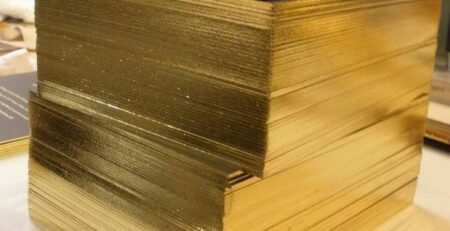
Not all substrates are created equal. Plain laser silver board — sometimes called metallic mirror board — is one of the most challenging materials in commercial print finishing. Its highly reflective surface demands exacting ink adhesion, precise coating control, and careful press management to avoid hickeys, delamination, or mottle effects that would be invisible on standard coated stocks.
At 375 gsm, the board brings a premium tactile weight that signals quality the instant a consumer picks it up. But that weight comes with a trade-off: thicker, stiffer substrates are less forgiving during die-cutting and embossing. Any misregistration — even by half a millimetre — becomes immediately visible on a mirror-finish surface.
⚡ Substrate Profile: 375g Plain Laser Silver Board
Laser silver board (also called pearlescent mirror board) achieves its metallic finish through a vacuum-metallized coating layer bonded to a high-quality cardstock base. This reflective layer is sensitive to heat and pressure — which is why post-press equipment calibration is critical for achieving clean, sharp results without crazing or cracking the metallic surface.
The 375 gsm weight sits in the “heavyweight premium” category used primarily for high-end cosmetic packaging, luxury gift boxes, premium alcohol labels, and collector-edition product packaging.
The Full Production Workflow: From Offset Press to Finished Sheet
This particular job required a carefully sequenced, multi-pass production workflow. Each step had to be completed and cured or set before the next process could begin — yet the overall design goal was to achieve a rich, high-contrast premium look that no single technique could deliver alone.
Step 1 — Offset Printing with Electro-White
The base print was a 4-color offset job with the addition of an electro-white (opaque white) pass. On metallic silver substrates, electro-white is essential: it creates the opaque ink foundation that prevents the silver base from bleeding through and desaturating the CMYK colors. Without it, colours printed directly onto laser silver can appear washed out or translucent.
Step 2 — Spot UV Coating
Once the offset print was dry and cured, selected areas of the design received Spot UV coating — a thick, glossy, UV-cured clear layer applied only to specific graphic elements. In this case, the Spot UV was used to highlight the central water drop logo, giving it a glass-like, three-dimensional gloss in contrast to the surrounding surface.
Spot UV on metallic board creates a uniquely dramatic high-contrast effect: the glossy UV layer reflects light differently to the surrounding metallic surface, creating visible depth even under flat lighting. For brand logos and key product details, this is one of the most effective premium finishing techniques available.
Step 3 — Reverse Frosted Coating
A reverse frosted coating was then applied across the non-UV areas. This is where the job became particularly sophisticated. Reverse frosting creates a soft, velvet-matte surface that sits in stark visual and tactile contrast to the Spot UV gloss zones. The result is a “gloss-on-matte” interplay that reads as both luxurious and modern.
“The reverse frosted finish against the high-gloss Spot UV created exactly the high-contrast premium look we were targeting — the kind of finish that makes a consumer reach for a product before they’ve even consciously processed what they’re looking at.”
— Kylin Machinery Team, ColorPrintingForumThe Engineering Challenge: 3D Embossing Over Spot UV
The most technically demanding element of this job was the 3D bulging emboss applied directly over the Spot UV zone on the central water drop logo. Embossing over UV-coated surfaces is challenging for several reasons: UV coatings, once cured, are rigid and can crack if flexed aggressively during the embossing process. Getting the pressure, plate tolerance, and paper temperature right is critical.
For this application, our team used a combination of copper and resin dies. Copper dies provide the precision and edge sharpness needed for fine logo detail, while the resin component allows for controlled flex and pressure distribution — reducing the risk of cracking the UV surface during the emboss stroke.
One-Step Efficiency: Grooving, Die-Cutting & Embossing Combined
Perhaps the most significant efficiency gain in this workflow was the decision to combine grooving (scoring), die-cutting, and embossing into a single press pass using Kylin Machine post-press equipment. In traditional workflows, these would often be separate steps requiring separate setups, separate plate-mounting operations, and separate quality checks — multiplying both time and error risk.
Grooving / Scoring
Clean fold lines are pressed into the heavy board, ensuring precise, crack-free folding on the finished box.
Die-Cutting
The outer shape of each panel is cut cleanly with steel rule dies, maintaining perfect edge definition on the metallic surface.
3D Embossing
The copper/resin die combination raises the water drop logo into a precise 3D relief simultaneously — no re-registration required.
Single-Pass Output
All three operations complete in one machine cycle, dramatically reducing handling time, registration risk, and labor cost.
Technique Comparison: Finishing Options for Premium Metallic Packaging
Understanding the trade-offs between different premium finishing combinations helps both print buyers and production managers make better decisions at the specification stage. The table below summarises the most common approaches applied to metallic board substrates.
| Finishing Combination | Visual Effect | Tactile Impact | Production Complexity | Best For |
|---|---|---|---|---|
| Spot UV Only | High-gloss selected zones | Raised gloss feel | Low–Medium | Logo highlight, text pop |
| Flood Matte + Spot UV | Gloss-on-matte contrast | Velvety + gloss contrast | Medium | Cosmetics, spirits labels |
| Reverse Frosted + Spot UV | Premium matte-gloss interplay | Soft matte with sharp UV raise | Medium–High | Luxury boxes, gift packaging |
| Spot UV + 3D Emboss (separate pass) | 3D sculptural logo relief | Strong raised tactile element | High | Brand identity pieces |
| Reverse Frost + Spot UV + 3D Emboss (one-step) | Maximum premium contrast + depth | Multi-layer tactile richness | Optimised (Kylin Method) | Ultra-premium packaging |
Registration Accuracy on Heavy Metallic Boards: Key Technical Tips
Maintaining perfect registration across multiple finishing passes on a heavy metallic substrate is one of the most discussed challenges in commercial print finishing circles. After running numerous premium jobs on laser silver board, our team has developed a set of best practices worth sharing with the wider print community.
- Allow full UV cure time before embossing. UV coatings continue to harden (post-cure) for up to 24 hours after initial lamp exposure. Running embossing too soon risks micro-cracking at high-detail emboss edges. We recommend a minimum 12-hour rest period before die-cut/emboss operations.
- Use combined copper-resin dies for UV-over-emboss applications. Pure copper dies generate high peak pressure at emboss edges, which can crack rigid UV films. The resin backing distributes pressure more evenly, resulting in cleaner emboss relief without surface crazing.
- Pre-condition the stock. Metallic boards are more sensitive to ambient humidity than standard coated stocks. Running stock through the pressroom environment for 24 hours before printing and finishing significantly reduces dimensional instability and registration drift across multiple passes.
- Combine operations wherever possible. Each additional handling pass introduces registration risk. Using post-press equipment capable of one-step grooving + die-cutting + embossing (as demonstrated in this workflow) dramatically reduces the number of independent setup and registration operations required.
- Check emboss depth over UV zones carefully. The UV coating adds material thickness in selected zones, which changes the effective caliper the emboss die is working against. Calibrate die pressure settings separately for UV-coated areas vs. uncoated board to ensure consistent emboss depth.
Industry Context: Why Premium Finishing Is Growing in 2026
The push toward ultra-premium packaging finishing is not merely aesthetic — it is a commercially driven response to significant market forces reshaping the global packaging industry.
E-commerce growth has fundamentally changed how premium brands differentiate their products. When a consumer can no longer experience a product on a physical retail shelf, the unboxing moment becomes the critical brand touchpoint. Tactile finishes — embossing, soft-touch coatings, Spot UV — communicate brand premium-ness in a way that flat print simply cannot replicate in a photograph or screen image.
📊 Market Context: Premium Packaging Trends
The global premium packaging market is forecast to exceed USD $450 billion by 2027, driven by luxury goods, premium cosmetics, and high-end food & beverage brands. Tactile and multi-texture finishing techniques are among the fastest-growing segments within this market.
Studies consistently show that consumers attribute higher perceived product value to packaging with tactile elements — with embossing and soft-touch coatings ranking among the highest-impact premium cues. For brand owners, this translates directly into measurable uplift in willingness-to-pay and perceived product quality.
For print service providers, the ability to execute complex multi-finish workflows — like the one documented here — represents a significant competitive differentiator and a pathway to higher-margin contract work.
Post-Press Equipment: What Makes the Difference
The ability to execute this kind of complex multi-technique workflow efficiently depends critically on the quality and capability of the post-press machinery being used. A machine that cannot maintain consistent pressure calibration across a full sheet, or that lacks the rigidity to hold tight registration under the forces involved in simultaneous die-cutting and embossing, will produce reject rates that make the job commercially unviable.
At Kylin Machine, our post-press equipment is engineered specifically for demanding applications like this: heavy-weight metallic boards, multi-technique simultaneous operations, and the precision tolerances required for brand-quality output. Our machines are in production use across 30+ countries, handling jobs from commercial print finishing to luxury packaging production.
| Kylin Machine Capability | Specification / Feature | Production Benefit |
|---|---|---|
| One-Step Die-Cut + Emboss | Simultaneous operations in single press cycle | Eliminates re-registration, reduces labor & time |
| Heavy Stock Handling | Engineered for boards up to 400gsm+ | Clean cuts & emboss on premium metallic boards |
| Copper + Resin Die Compatibility | Accepts mixed die configurations | Optimised pressure for UV-over-emboss applications |
| Precision Registration System | Tight tolerance sheet positioning | Consistent results across long production runs |
| Factory Direct Support | Direct engineer access, 3-year warranty | Fast resolution of setup and calibration issues |
Conclusion: Efficiency Without Compromise
The project documented here demonstrates what becomes possible when workflow thinking is applied to premium packaging finishing. By planning the sequence carefully — from offset and electro-white through Spot UV and reverse frosting, and into a single-pass die-cutting and 3D embossing operation — our team delivered a genuinely spectacular result on a technically demanding substrate, without sacrificing production efficiency.
For print service providers looking to move upmarket into premium finishing work, or for brand packaging managers evaluating what’s possible with current post-press technology, this workflow stands as a practical proof point: you don’t have to choose between quality and efficiency. With the right equipment and the right production planning, you can have both.
“The most significant insight from this project is that one-step die-cutting and embossing isn’t just an efficiency play — it’s actually a quality play. Fewer handling passes means fewer opportunities for registration error, sheet damage, or coating disturbance.”
— Kylin Machine Engineering Team, 2026Explore Kylin Machine Post-Press Equipment
Ready to bring Spot UV, 3D embossing, and one-step die-cutting capability to your production floor? Explore our full range of post-press and packaging machines — factory direct, CE certified, and backed by a 3-year warranty.
🏭 View All Machines →
Leave a Reply