
Why are rigid boxes the top choice for high-end products today?
Premium buyers want trust. Delays and damage kill trust fast. I learned that the best fix is the right box, made right, every time.
Rigid boxes lead for luxury because they look rich, feel solid, and survive handling while elevating unboxing. This is why many premium brands pick them first.
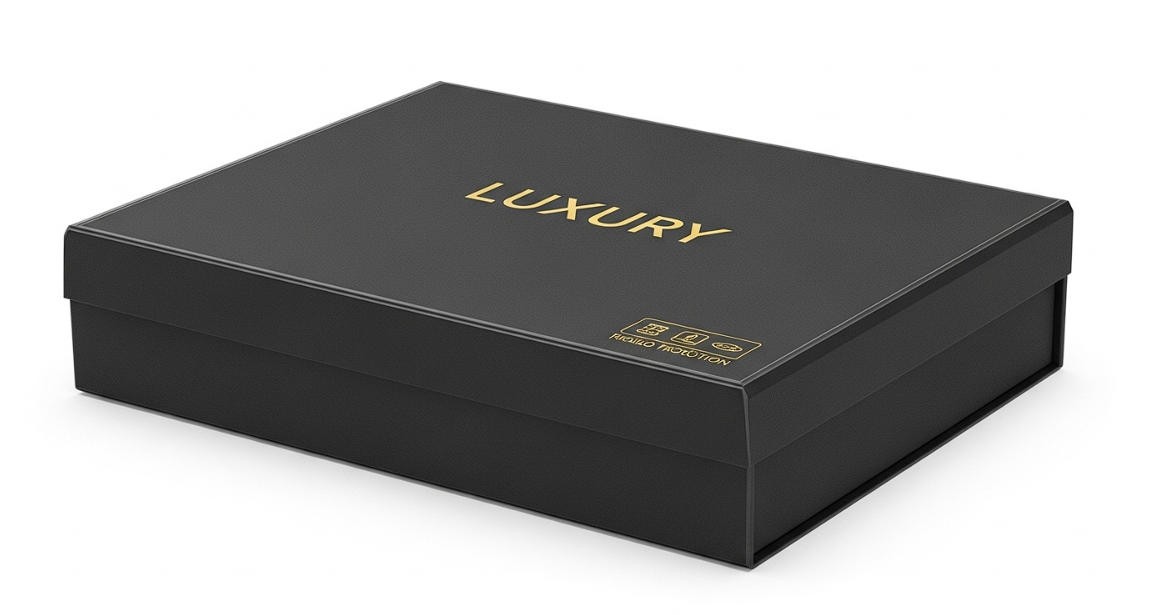
I will show why rigid boxes win for high-end items. I will share simple ways to get the look without waste. I will also show how I use Kylin machines to scale quality with control.
Do rigid boxes really signal luxury more than other boxes?
Luxury buyers judge fast. I have seen this in launches where the box makes or breaks the moment.
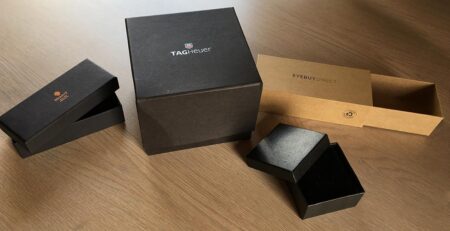
Yes. Rigid boxes hold shape, carry weight, and support rich wraps and finishes that make a brand look top tier at first touch. They also stage a clean, slow unboxing that feels premium. The Half Price Packaging blog frames this same question and highlights why high-end brands turn to rigid formats for presentation and perceived value. 1 2

Dive deeper: value signals, structure, and finish choices that matter
What the buyer sees first
- Clean edges, tight corners, and a smooth wrap look premium.
- Magnetic lids and shoulder-and-tray styles slow the reveal.
- Heavier board calipers add “weight,” which feels like quality.
- Soft-touch, foil, and blind emboss guide the eye and the hand.
What the brand gains each time
- Higher perceived value at shelf and online.
- Better protection for fragile SKUs and gifts.
- Longer in-home life due to reuse, which keeps the logo visible.
- More room for inserts that support premium storytelling.
| Signal | How it shows up | Brand effect |
|---|---|---|
| Shape stability | Box stays crisp after handling | “High quality” first impression |
| Tactile wrap | Soft-touch, linen, or coated papers | Longer hand feel and recall |
| Weighted lid close | Magnetic or shoulder styles | Slow reveal, drama, and trust |
| Clean corner finish | No fray, tight fold, even pressure | Craft and detail cues |
I learned to choose one hero finish and one support finish. It keeps costs in line and makes the brand story clear. I also standardize a few rigid structures and wrap stocks so my team can run faster with fewer errors.
Do materials and lining choices change premium performance?
Teams often debate paper types for weeks. I used to do that too. I now start with the product, then pick the wrap and lining.
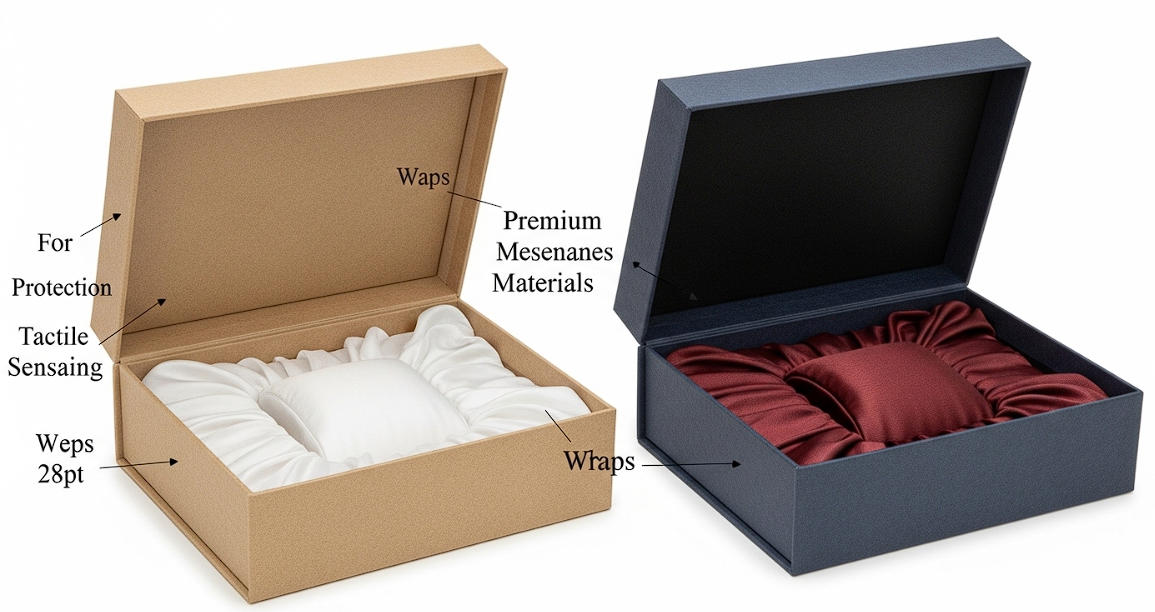
Yes. The base is rigid paperboard for structure, then wraps and linings tune look and feel. Satin-lined rigid boxes work for jewelry, cosmetics, and watches, and thickness ranges like 8pt–28pt affect durability and aura. 3
Dive deeper: how to pick board, wrap, and inserts with fewer mistakes
Start from the product
- Weight: Heavy items need thicker chipboard and firm inserts.
- Surface: Coated or delicate items need soft-touch or fabric wraps.
- Risk: Fragile items need tight tolerances and precise grooving.
Tune the wrap and lining
- Paper wraps print well and carry foil and emboss cleanly.
- Fabric wraps read boutique but need stricter QC and clean rooms.
- Satin linings add a gift feel and protect polished surfaces.
| Choice | What it gives | What to watch |
|---|---|---|
| Rigid paperboard | Shape stability and stack strength | Accurate caliper, square boards |
| Satin lining | Soft touch and gift cue | Lint, stretch, and alignment |
| Soft-touch film | Warm feel and reduced glare | Scuff resistance and wiping |
| Foil on logo | High-contrast brand mark | Die heat, dwell, and register |
I run quick pre-production tests. I foil a small logo on the chosen wrap, fold corners on a sample shell, and press the lid. If scuffs or fray show, I switch to a tougher wrap or add a better topcoat. This saves time, rework, and post-run complaints.
Can I scale quality and cut waste at the same time?
Costs creep when hand work drifts. I used to see it in every launch. I fixed it with clear specs and better machines.
Yes. You can standardize dielines, focus on one hero finish, and move key steps onto machines. This cuts labor variation, improves edge quality, and stabilizes yield. I use Kylin machines to keep results tight as volumes rise.
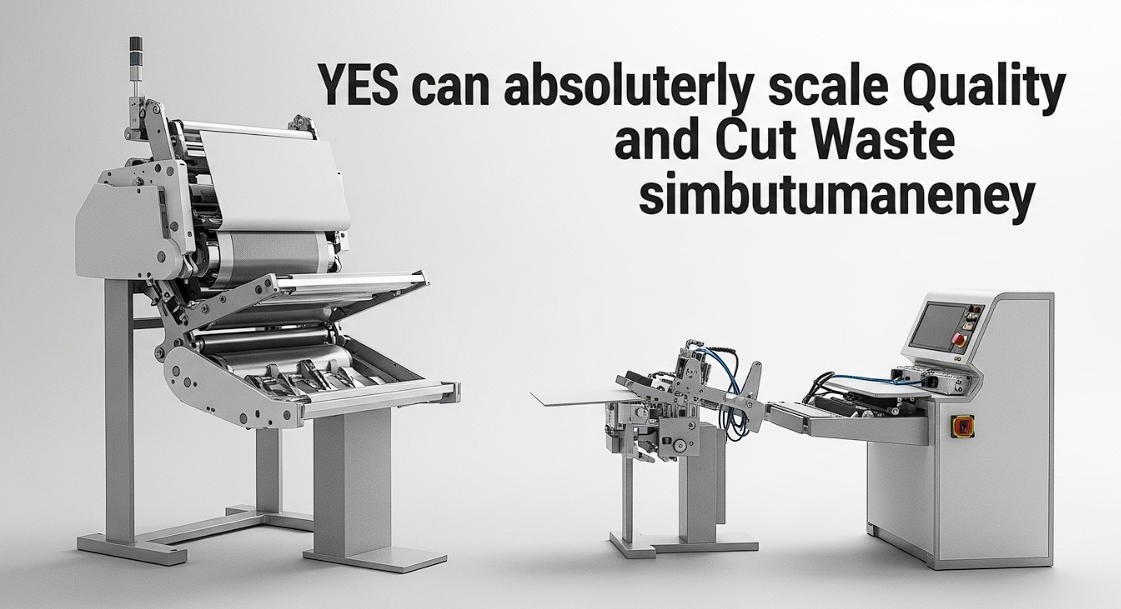
Dive deeper: where I automate, and why it protects quality and margin
Lock specs before scale
- Freeze a standard shoulder-and-tray and a book-style spec.
- Fix a house foil block for the logo and a default emboss depth.
- Approve one wrap per colorway with a known topcoat.
Move work to the right machines
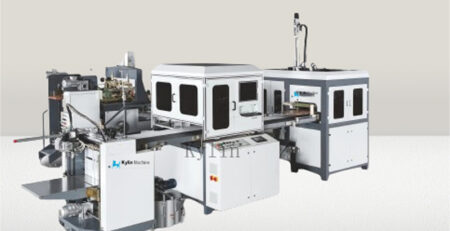
- Box forming: I form rigid boxes reliably with the semi auto Rigid Box Machine KY‑550C and our automatic rigid box machinery for steady corners and square shells.
- Wrapping: I wrap cleanly with a semi auto rigid box machine so glue, fold, and press land the same way each time.
- Grooving: I groove boards true with a V grooving machine to stop edge cracking and keep lids flush.
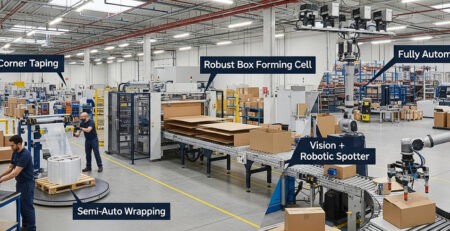
- Magnets and corners: I add magnets with an auto magnet insert machine and tape corners with a box staying machine for speed and repeatability.
- Books and sets: I handle casing and sets with a book casing‑in machine, a book spine cutter, and a slip case making machine to finish gift sets cleanly.
- Standard work: I use manual tape application machines for predictable hand assists and training.
| Step | Risk without machines | Machine I use |
|---|---|---|
| Shell forming | Out-of-square shells | Rigid Box Machine KY‑550C |
| Wrapping | Frayed corners and bubbles | Semi auto rigid box machine |
| Grooving | Cracked edges | V grooving machine |
| Magnet set | Misaligned closures | Auto magnet insert machine |
| Corner stay | Weak corners | Box staying machine |
I keep a short checklist at each station. I measure lid-sleeve friction, corner pressure marks, and magnet click. When a metric drifts, I pause, adjust heat, dwell, or pressure, and run three proofs. This habit saves full pallets from rework.
Conclusion
Rigid boxes win trust at first touch. Choose the right board, wrap, and one hero finish. Lock specs and use the right machines. Then scale luxury without waste.
My Role
My Name: Jacob
Link to my website: www.kylinmachines.com
Brand Name: Kylin Machine
Country: China
Products: Post-press machines
Business Model: B2B, Wholesale only
Status:
- Focus Area: I specialize in Robotic Spotter and Hybrid technology for rigid box and hard book cover solutions.
- Company Profile:
- Name: Kylin Packaging Machinery Factory (later referred to as Kylin Machinery Limited)
- Establishment: Founded in May 2003
- Location: Dongguan, Guangdong Province, China (near HK and Guangzhou city), factory area is 5,000 square meters.
- Business Scope: Specialized in manufacturing, designing, and selling machinery for making rigid boxes, round box machines, collapsible box machines, and book cover packing craft.
- Company Characteristics:
- We serve the Graphic Arts, Paper Converting, and Bookbindery industries.
- We offer advanced machines, technology, and service to over 10,000 users in more than 20 countries worldwide.
- We have distributors in the Middle East, India, Turkey, Korea, Portugal, UK, USA, Canada, Italy, etc.
- We have more than 120 workers and a monthly capacity of about 60 sets.
- Our R&D and QC teams ensure product quality.
Explore our machines and solutions (product keyword links):
- Kylin Machine
- Rigid box machine KY‑550C
- Automatic rigid box machinery
- Semi auto rigid box machine
- V grooving machine
- Auto magnet insert machine
- Box staying machine
- Book casing‑in machine
- Book spine cutter
- Manual tape application machines
- Slip case making machine
- How to make rigid boxes efficiently
References for context and credibility about rigid boxes and luxury usage:
- Half Price Packaging’s blog topic on why rigid boxes are popular for high-end products. 1
- Half Price Packaging’s product page describing rigid boxes for luxury applications and high-end unboxing. 2
- Satin-lined rigid boxes page mentioning rigid paperboard structure and typical use cases like jewelry, cosmetics, and watches, with thickness guidance. 3


发表回复