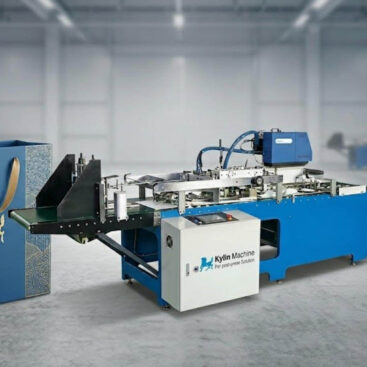
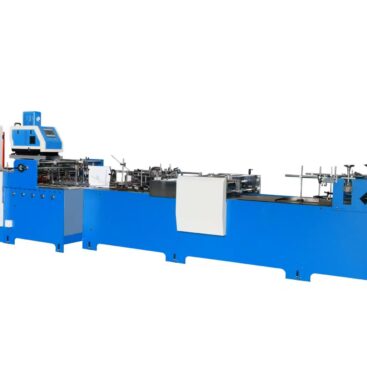
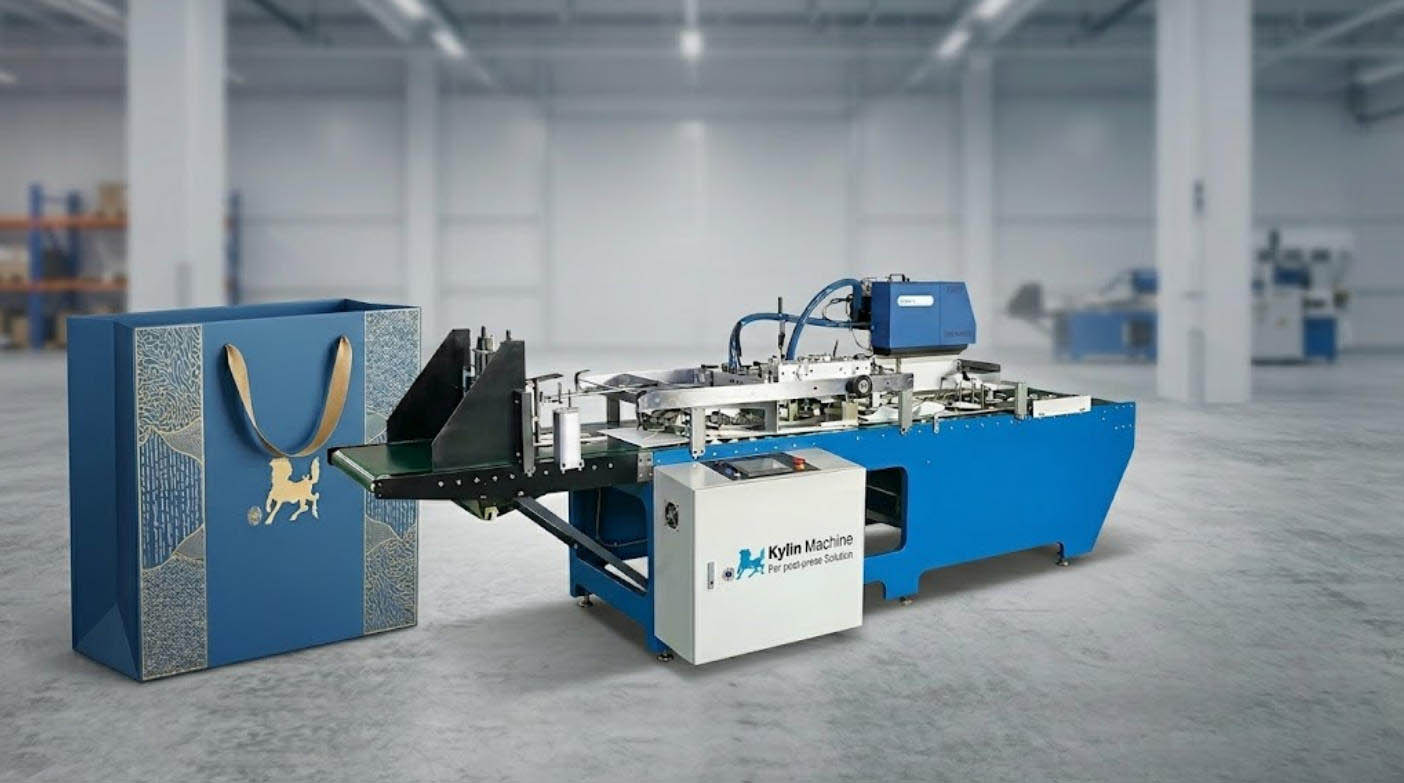
Semi Auto
Paper Bag Machine
Built for Precision
Dual cold & hot melt glue systems. Wide-format gusset folding. Rapid changeover for multi-SKU production — engineered for converters who cannot afford downtime.
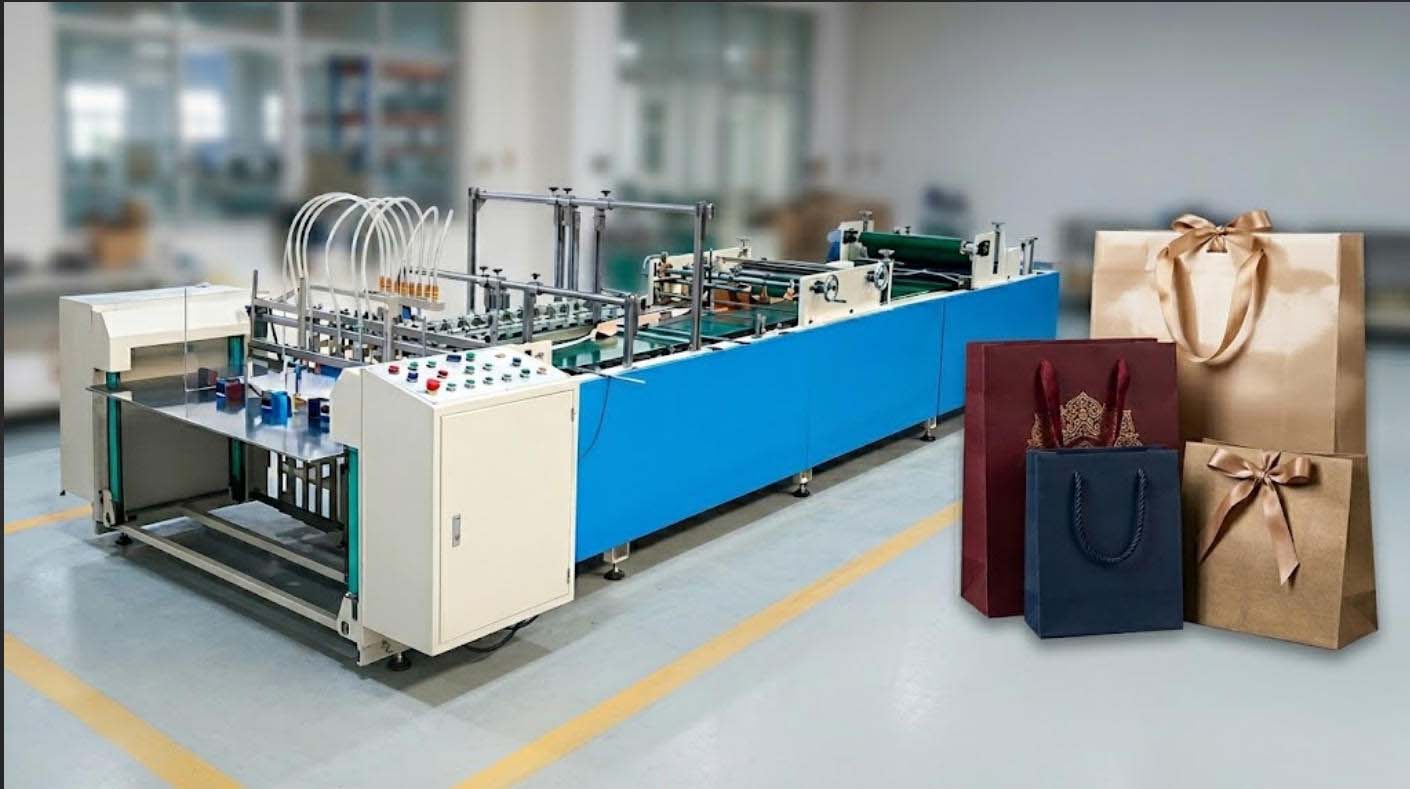
From Production Bottleneck
to Competitive Advantage
Interactive ROI Calculator
Discover how much you can save on labor costs by upgrading from a manual line to our semi-automatic machine.
Is a Semi-Automatic Paper Bag Machine Right for Your Business?
For startup packaging manufacturers and mid-size converters, choosing between manual, semi-automatic, and fully automatic lines is critical for ROI. While fully automatic machines offer massive volume, their high setup times make short-run or custom SKUs unprofitable. A semi-automatic line bridges this gap—drastically reducing labor costs compared to manual production (as seen in the calculator above), while maintaining the agile sub-20-minute changeovers required to serve diverse retail and luxury brand clients.
Read our Complete 2026 Buyer’s Guide: Automatic vs. Semi-Automatic4-Step Production Process
From pre-cut blank to finished gusseted bag in a single continuous pass — no manual intervention required between stations.
Manual or automatic die-cut sheet feeding with adjustable sheet-separation guides for precise stack registration.
Integrated embedded top-fold station creates a consistent, tight upper hem — ready for handle or reinforcement tape application downstream.
The sheet is wrapped into a tube and sealed using the selected glue system (cold PVA or hot melt) with programmable open-time control.
Side gussets are folded to the set width (60–175 mm), the bag is compressed and delivered to the exit conveyor at up to 60 m/min.
Engineered for Versatility
& Uptime
Dual Glue Architecture
Standard-fit water-based cold glue (PVA) and hot melt systems operate independently or in tandem, eliminating the need to source a second machine for different substrates.
Wide Substrate Compatibility
Handles kraft paper, white cardboard, white board, and coated/laminated stocks from 150 to 300 g/m² — all substrates requiring die-cut blanks for optimal fold accuracy.
60 m/min Mechanical Speed
At peak throughput, the machine produces at 60 metres per minute — delivering the volume to meet tight converter deadlines without sacrificing fold accuracy or glue consistency.
Rapid Format Changeover
Adjustable fold plates, glue heads, and gusset bars are repositioned without specialist tooling. Multi-SKU print-finishing operations achieve changeover in under 25 minutes.
Single-Operator Line
Semi-automatic feed with manual or auto sheet loading means one trained operator can manage the entire production line, reducing per-unit labour cost significantly.
CE-Certified & Globally Shipped
Factory Acceptance Test with full video documentation. Sea freight to EU, North America, and Asia-Pacific within 15–35 transit days. Ongoing remote technical support included.
Full Specification Table
All data verified at factory acceptance test. Contact us for custom configuration requirements.
| Parameter | Value / Range | Notes |
|---|---|---|
| Total Voltage | 380 V | 3-phase, 50/60 Hz (adapter available for 220V markets) |
| Total Power | 5 kW | Includes all motors, glue units, and controls |
| Max Mechanical Speed | 60 m/min | Sustained; typical production 45–55 m/min |
| Max Sheet Size | 1100 × 600 mm | Die-cut blanks required for all stock |
| Min Sheet Size | 380 × 210 mm | Suitable for compact retail formats |
| Paper Grammage | 150 – 300 g/m² | Optimised below 300 g/m²; consult for heavier board |
| Finished Bag Width | 180 – 410 mm | Continuously adjustable within range |
| Gusset (Side-Fold) Width | 60 – 175 mm | Adjustable without tools |
| Glue Systems | Cold Glue + Hot Melt | Both systems standard; switchable per job |
| Compatible Paper Types | Kraft · White Cardboard · White Board · Coated | Includes pre-laminated / film-coated stocks |
| Feed Mode | Manual & Automatic | Selectable at HMI; auto feeder option upgradeable |
| Fold Stations | Top-fold (embedded) · Tube · Gusset | Sequential, servo-controlled |
See the Machine in Full Operation
Watch the complete production cycle — from sheet feed through top-fold, tube forming, and gusset delivery — on both kraft and coated paper stock.
Frequently Asked Questions
Common questions from packaging converters, print-finishing operations, and industrial procurement teams.
Semi Auto Paper Bag Machine: A Procurement Guide for Industrial Converters
For packaging converters and print-finishing operations sourcing capital equipment in 2026, the selection of a semi-automatic paper bag machine represents one of the highest-leverage procurement decisions available. The wrong specification — whether in glue-system architecture, substrate range, or format flexibility — translates directly into either stranded capacity or perpetual bottlenecks.
Driven by the global shift towards sustainable packaging, the demand for high-quality paper carriers is exploding. In fact, as highlighted in our recent analysis on how the paper bag market reaches $9.6B by 2032, versatility in production equipment is no longer optional—it is critical for survival in the packaging sector.
“A machine that handles both cold and hot melt glue natively, without retrofitting, is no longer a premium feature — it is a baseline requirement for any operation running more than two paper grades.” — Packaging Technology Review, European Edition, 2024
Dual Glue System: The Competitive Differentiator
Most semi-automatic bag-forming machines in the sub-$150,000 category ship with a single glue system — typically cold PVA — and offer hot melt as a paid upgrade that requires separate service contracts. This machine reverses that equation: both cold glue (water-based PVA) and hot melt are included as standard, factory-calibrated, and immediately operational out of the crate.
The practical consequence is significant. Laminated and film-coated papers — increasingly common in luxury retail and premium food packaging — require hot melt glue for reliable seam strength. Cold glue’s extended open time, conversely, is superior for heavy kraft stock where board absorption rates are high. Having both systems on one machine means your production schedule is never constrained by substrate type.
Format Range and Gusset Flexibility
The machine’s bag-width range of 180 to 410 mm covers the overwhelming majority of retail and industrial paper bag formats — from boutique fashion carriers to heavy-duty grocery sacks. Combined with a gusset range of 60 to 175 mm, the machine can produce everything from flat-bottom wine bags to wide-gusset food-service carriers without a mechanical platform change.
All adjustments are made on calibrated scales with quick-release clamps. There are no specialised tools required and no need to remove major assemblies during changeover. This is the mechanical architecture that makes short-run profitability achievable.
“In our facility, the 20-minute changeover time transformed our short-run economics. We now accept jobs we previously had to decline.” — Production Manager, Mid-Size European Converter
Paper Weight and Substrate Requirements
The machine is rated for 150 to 300 g/m² stock — the range that encompasses the vast majority of premium paper bag applications. Crucially, all substrates must be die-cut before feeding: this is standard practice in professional bag production and ensures consistent fold-line registration at all speeds. The feed system accepts both manual (operator-placed) and automatic (feeder-assisted) sheet presentation modes.
Throughput and Labour Economics
At the mechanical maximum of 60 m/min, a single operator can sustain output rates of 45–55 m/min in continuous production. On an 8-hour shift, this typically yields 18,000 to 24,000 finished bags — a per-unit labour cost that is impossible to achieve with manual or semi-manual alternatives. The machine’s servo-controlled fold stations maintain this quality level throughout the shift without operator adjustment.
International Procurement and Logistics
For buyers outside China, the logistics framework is straightforward: 7–10 days factory production and FAT (Factory Acceptance Test) with full video documentation; 15–35 days sea freight to major EU and North American ports. The machine ships in a single 20ft container (standard), fully assembled and tested. Documentation includes CE Declaration of Conformity, wiring schematics, English-language operation manual, and a 12-month spare parts guarantee.
Installation commissioning can be performed by a local technician following our remote video guidance protocol — a process that has been completed successfully in 35 countries without on-site Kylin engineers.
Conclusion: The Right Machine for Multi-SKU Operations
The semi auto paper bag machine reviewed here targets a specific, underserved market: converters and print finishers who need broad substrate flexibility, rapid changeover, and reliable dual-glue capability in a single mid-range capital investment. Its combination of engineering completeness and operational simplicity makes it the most rational procurement choice for operations running 3 to 15 different bag formats concurrently.
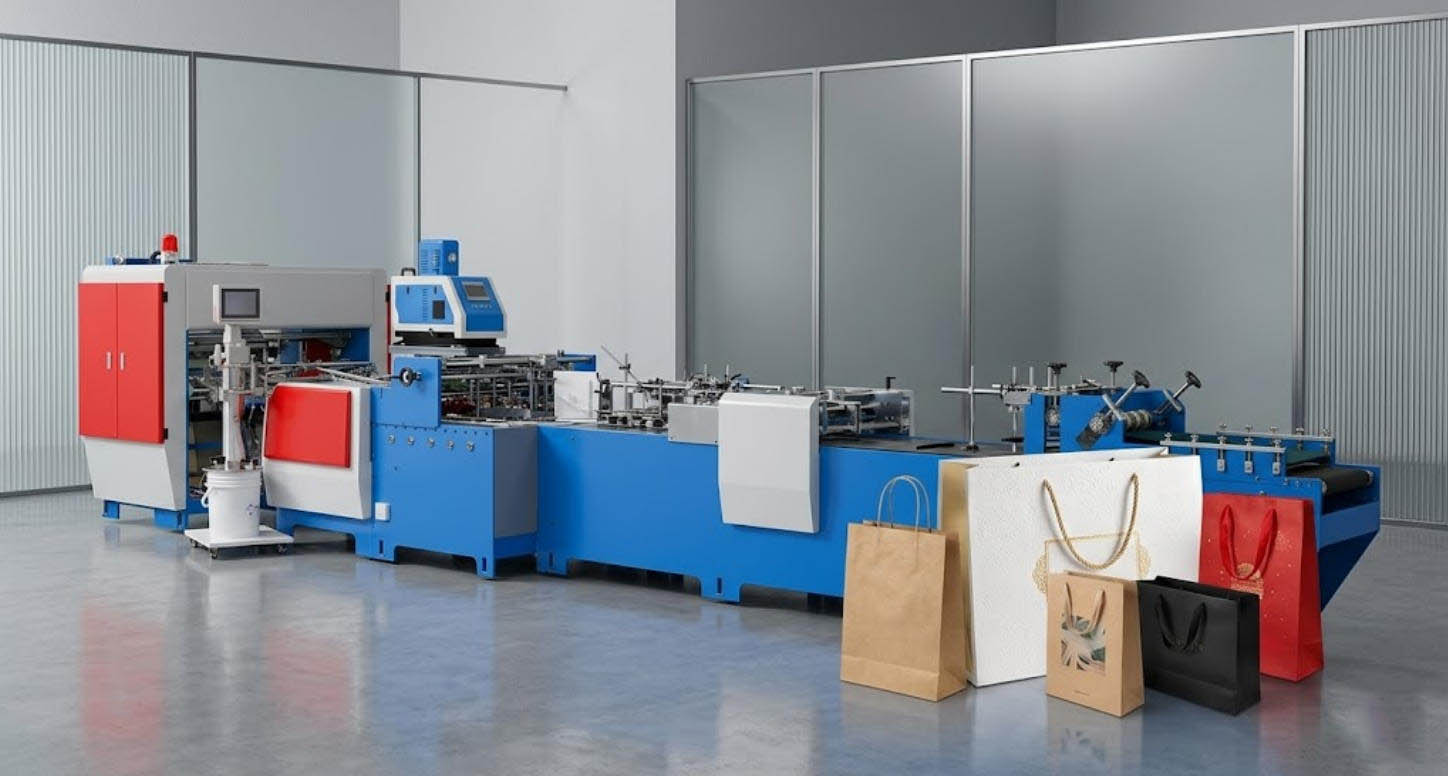
Get Pricing, Lead Times &
Technical Consultation
Our application engineers respond within one business day with a full quotation, FAT video library, and substrate trial report.