


Hybrid Folding Carton Production 2026: Why Digital-Offset Integration Is Now Mainstream
The global folding carton production landscape is undergoing its most significant transformation in decades. In 2026, the conversation has moved beyond whether digital printing belongs in packaging manufacturing to how converters can strategically integrate digital and offset workflows into a single, efficient production model. The recent decision by Polish packaging manufacturer Drukarnia Tamir to install a Koenig & Bauer Durst VariJET 106 — transitioning from a purely offset environment into high-volume digital folding carton production — marks a defining moment for the industry.
The Hybrid Production Model: Digital Meets Offset
For years, digital printing and conventional offset were treated as separate worlds. Offset delivered cost efficiency for long runs; digital offered flexibility for short runs and variable data. But in 2026, the most forward-thinking converters are deploying hybrid models where both technologies operate as complementary assets within a unified workflow.
The hybrid approach addresses a structural shift in packaging demand. Brand owners are launching more SKUs than ever, running regionalized campaigns, and requesting smaller batch sizes with faster turnaround. According to Smithers Pira, 72% of brand owners surveyed increased packaging design spend in 2026, but the average order size continues to shrink. This creates a profitability paradox: converters must manage more jobs with smaller volumes while maintaining margin.
Hybrid production solves this by routing each job to the most cost-effective technology. Offset handles high-volume base runs; digital covers short-run, versioned, and personalized work. The result is higher overall equipment effectiveness (OEE) and dramatically reduced waste across the pressroom.
Tamir’s VariJET 106: A Case Study in Strategic Investment
Drukarnia Tamir, a family-owned Polish packaging producer with over 30 years of offset heritage, is set to begin production with the Koenig & Bauer Durst VariJET 106 at the end of August 2026. The company operates nearly 20,000 square meters of production and warehouse space across two specialized sites, serving customers in pharmaceuticals, cosmetics, food, automotive, and appliances sectors across Europe.
Tamir’s investment was driven by a clear short-to-medium-run business case. The VariJET 106 is expected to replace older offset capacity for more than 3,600 jobs and over 5.6 million sheets annually. Critically, production that previously required two offset shifts is projected to be handled in a single VariJET shift. The investment is forecast to generate six-figure euro annual waste savings and significantly reduce production costs per year.
“From the beginning, I had one key requirement: our digital press had to complement our offset production, not replace it,” said Michal Krywulec, President of the Management Board of Tamir. “It had to be fully compatible with our existing workflow and, most importantly, capable of printing on the same carton substrates that we already use in offset production.”
This substrate compatibility is the defining feature of the hybrid model. Unlike earlier digital presses that required specialized materials, systems like the VariJET 106 can print on standard folding carton substrates, enabling seamless job transfer between offset and digital without compromising quality.
Market Data: The $183.4 Billion Signal
The hybrid production trend is backed by strong market fundamentals. According to Persistence Market Research, the global printed rigid packaging market reached an estimated $183.4 billion in 2026, with a projected CAGR of 4.9% toward $256.3 billion by 2033. Asia-Pacific holds a 47.2% share of global market value, while paper and paperboard materials lead with 38.3% of the segment.
Several converging forces make 2026 a pivotal year for folding carton investment:
- Regulatory acceleration: The EU Packaging and Packaging Waste Regulation (Regulation EU 2025/40), which entered into force in February 2025 and applies from August 2026, compels brands to invest in recyclable, fiber-based packaging structures. This regulatory shift directly benefits folding carton converters equipped with modern, efficient production lines.
- E-commerce durability requirements: The U.S. Census Bureau reported total e-commerce sales of $1,192.6 billion in 2024, representing 16.1% of total U.S. retail. Direct-to-consumer shipping demands rigid, printed packaging that protects products while serving as a brand touchpoint — exactly what premium folding cartons deliver.
- Short-run economics: The average folding carton order size has declined approximately 25% over the past five years, according to industry estimates. This structural shift toward smaller batch sizes erodes the traditional cost advantage of offset-only production and strengthens the business case for digital and hybrid configurations.
Why Converters Are Adopting Hybrid Workflows Now
The business case for hybrid production extends beyond the immediate cost savings on short-run jobs. Three operational factors are accelerating adoption across the industry:
1. Setup Time Reduction Is a Margin Multiplier
When average print runs decrease, the cost of machine setup becomes proportionally larger. A conventional offset press that requires extensive makeready between jobs loses profitability rapidly as order sizes shrink. Modern digital and hybrid systems featuring automated job changeover can reduce setup times by 50% or more, transforming short-run complexity from a margin drain into a competitive advantage. The remaining VariJET 106 capacity at Tamir is expected to relieve nine other offset presses from inefficient short- and medium-run work, further improving overall equipment efficiency.
2. Labor Optimization Addresses the Skills Gap
The packaging industry faces a well-documented skilled labor shortage across mature markets in Europe and North America. Koenig & Bauer’s recent introduction of automated assistance systems — including AutoSet, AutoRun, and JobGuide for its Rapida sheetfed offset presses — reflects a broader industry trend toward reducing operator dependency. Hybrid digital-offset configurations require fewer specialized operators per shift, allowing converters to maintain or increase output with existing staffing levels.
3. Sustainability Compliance Is Now Operational
Environmental regulations are no longer future considerations; they are current operational requirements. The August 2026 enforcement of the EU Packaging Regulation means converters serving European brands must demonstrate recyclability, incorporate recycled content, and minimize production waste. Hybrid digital production inherently reduces waste through elimination of plate-making, lower makeready sheets, and more precise color management. These sustainability gains translate into both regulatory compliance and measurable cost reduction.
Key Technology Considerations for Hybrid Integration
For converters evaluating hybrid investment, several technology factors deserve careful attention:
- Substrate compatibility: The digital press must handle the same range of carton substrates — including recycled grades, coated boards, and specialty materials — that the offset pressroom already processes. Tamir’s emphasis on this requirement highlights its operational importance.
- Color consistency across platforms: Brands expect identical color output regardless of which press produces the job. Hybrid workflows require robust color management systems — often G7 or Fogra-based — supported by spectrophotometry and automated calibration.
- Workflow integration: The digital front end must integrate with existing MIS, prepress, and postpress scheduling systems. The VariJET 106’s compatibility with industry-standard PDF workflows and JDF/JMF connectivity is a key enabler of Tamir’s hybrid strategy.
- Postpress synchronization: Digital print output must flow seamlessly into existing die-cutting, folding, and gluing lines. This requires careful planning of sheet formats, grain direction, and finishing compatibility.
The Road Ahead: Hybrid as the New Baseline
Tamir’s VariJET 106 investment is not an isolated case. It represents a structural shift in how the folding carton industry approaches capital investment. The era of choosing between offset and digital is ending. The new standard is intelligent integration — routing every job through the most efficient production path while maintaining consistent quality and reducing environmental impact.
For packaging converters planning their 2026-2027 capital budgets, the data points in one direction: hybrid production is no longer a future trend. It is the competitive baseline for folding carton manufacturing. The companies that invest early in flexible, integrated digital-offset workflows will be best positioned to capture the $256.3 billion printed rigid packaging opportunity through 2033.
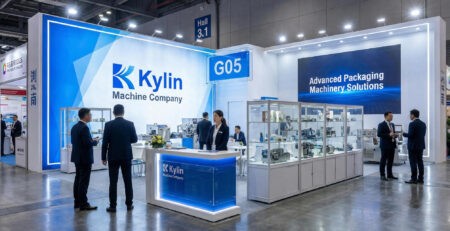
At Kylin Machine, we support packaging converters with automated rigid box production lines, case makers, and book binding machinery that integrate into modern hybrid packaging workflows. Whether you are expanding capacity or upgrading from manual to automated production, our equipment is designed for the precision, flexibility, and efficiency that today’s packaging market demands.

Leave a Reply