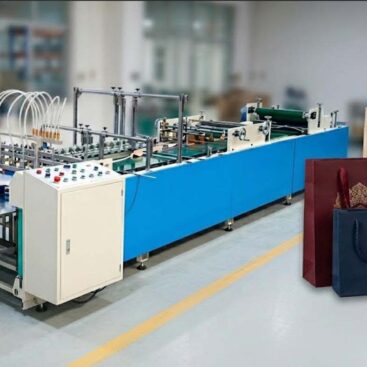
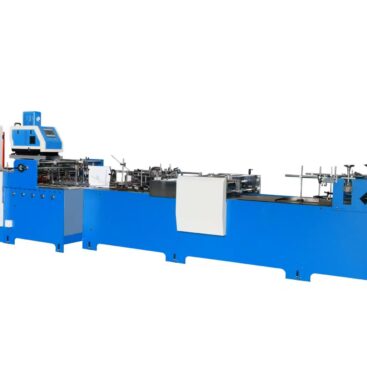
Paper Bag Bottom
Closing Machine
with Hot Melt Glue
Dual manual/automatic bag feed · Integrated hot melt glue system · Up to 60 bags/min · Built for multi-variety, small-batch B2B production lines.
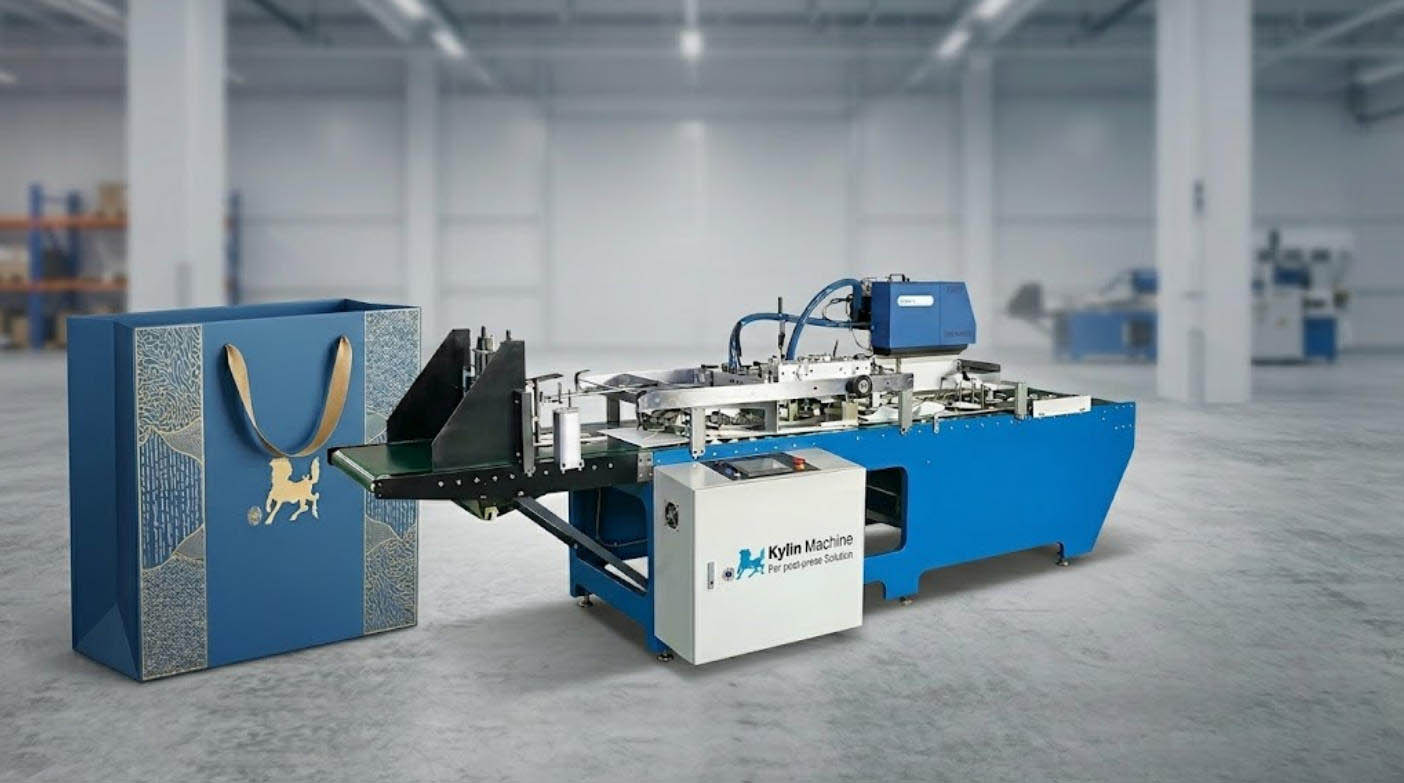
The Real Cost of Outdated Bottom-Sealing Equipment
Most packaging operations tolerate avoidable losses. Here’s what changes when you switch to a fully integrated bottom closing solution.
Common Industry Pain Points
- ✘ Inconsistent manual glue application causes bag failures at the point-of-sale or during transit
- ✘ Single-mode machines require full line stops to switch between bag formats
- ✘ Slow cycle speeds create a production bottleneck when order volumes spike
- ✘ Water-based adhesive systems need lengthy drying time, reducing throughput
- ✘ No integration with existing gluing systems means two separate maintenance schedules
What This Machine Delivers
- ✓ Automated hot melt spray ensures uniform, repeatable glue coverage on every single bottom fold
- ✓ Dual manual/auto feed modes enable fast SKU changeover without full line shutdown
- ✓ 60 bags/min maximum throughput eliminates downstream bottlenecks on high-volume shifts
- ✓ Hot melt adhesive bonds instantly — zero drying time, maximum line efficiency
- ✓ Standard-fit hot melt glue system: single maintenance point, full integration out of the box
How It Works — 4 Precision Steps
Every bag passes through four engineered stations, ensuring structural integrity and a clean, professional finish on every cycle.
Bag Feeding
Manual or fully automatic suction feeding delivers flat or pre-formed bags into the transport system at precise intervals.
Hot Melt Application
The integrated hot melt glue unit sprays a precisely metered adhesive bead across the designated bottom-fold zones.
Bottom Folding
Mechanical folding arms score and fold the bottom flap with consistent tension — compatible with gusset widths 40–220 mm.
Pressing & Discharge
High-pressure rollers compress the bonded base for an instant cure. Finished bags are discharged to the output conveyor.
Engineered for Production-Floor Demands
Six capabilities that separate this machine from conventional bottom-pasting alternatives.
High-Speed Output
Rated at up to 60 bags per minute, this machine keeps pace with upstream printing and folding equipment without acting as a production choke point.
Dual Feed Modes
Switch between manual feeding (for prototyping and changeover) and fully automatic suction feeding (for continuous production) without mechanical retooling.
Integrated Hot Melt System
The standard-fit hot melt glue unit delivers precise, repeatable adhesive patterns — eliminating the need for a separate gluing station and reducing floor footprint.
Wide Format Range
Handles bag widths from 110 to 450 mm, gusset widths from 40 to 220 mm, and bag heights from 180 to 500 mm — covering the majority of commercial packaging formats.
Broad Paper Compatibility
Optimized for 150–300 g/m² stock, including uncoated kraft, coated board, and multi-layer laminated substrates commonly used in food-service and retail packaging.
Compact Industrial Footprint
At 4.1M × 1.1M × 1.5M and 1.2 tonnes, the machine integrates into standard production halls without requiring structural modifications or special lifting equipment.
Full Technical Specifications
All specifications are nominal production values. Contact us for application-specific validation.
| Parameter | Specification |
|---|---|
| Machine Model | Paper Bag Bottom Closing Machine |
| Feed Modes | Manual & Fully Automatic |
| Supply Voltage | 380V / 3-Phase |
| Total Power Consumption | 5 KW |
| Overall Dimensions (L×W×H) | 4,100 × 1,100 × 1,500 mm |
| Machine Weight | 1,200 kg (1.2 T) |
| Maximum Production Speed | 60 bags / min |
| Paper Grammage Range | 150 – 300 g/m² |
| Finished Bag Width | 110 – 450 mm |
| Gusset (Accordion) Width | 40 – 220 mm |
| Finished Bag Height | 180 – 500 mm |
| Adhesive System | Hot Melt Glue (Standard Fitment) |
| Application Type | Multi-variety / Small-batch Production |
See It Running at Full Production Speed
Watch the complete automatic bottom closing cycle — from bag feeding and hot melt application through folding, pressing and discharge.
Frequently Asked Questions
B2B procurement answers on specs, compatibility, logistics and after-sales support.
What paper weights and substrates are compatible with this machine?
What finished bag sizes can this machine produce?
Does the machine support both manual and automatic feeding?
What type of adhesive does the machine use?
What are the power and installation requirements?
What is the lead time and shipping process for international orders?
Is this machine suitable for small-batch and multi-variety production?
The Complete Buyer’s Guide to Paper Bag Bottom Closing Machines
For packaging converters, print finishing houses, and industrial bag manufacturers, the bottom closing station is one of the most mechanically critical points in the entire paper bag production line. A poorly sealed base is not merely a cosmetic defect — it is a structural failure that triggers returns, brand damage, and, in food-service applications, potential liability. This guide examines what buyers in North America and Europe need to evaluate when selecting a bottom closing machine for a contemporary production environment.
“The bottom of a paper bag is not packaging detail — it is the structural engineering of the entire product. Get it wrong and every unit that leaves your facility is a liability.”
— Process Engineering Review, Packaging Technology InternationalWhy Hot Melt Has Become the Industry Standard Adhesive
The shift from water-based (dextrin or starch) adhesives to hot melt EVA systems in paper bag bottom closing is well-documented across European and North American converter operations. The primary drivers are throughput and consistency: hot melt reaches handling strength within seconds of application, while water-based systems require dwell time, forced-air drying, or both — each adding cost and complexity.
For machine buyers, the key advantage of a unit with an integrated hot melt system is the elimination of a secondary gluing station. Instead of separate applicator and closing units with their own controls, maintenance schedules, and floor space requirements, a purpose-integrated machine presents a single validated system. This also simplifies operator training and reduces the number of mechanical failure points on the production line.
Technical Considerations: Paper Weight and Substrate
One of the most common specification errors in machinery procurement is selecting a machine whose feed mechanism and folding geometry are designed around a narrower paper weight range than the actual production substrate. For operations working with packaging papers in the 150–300 g/m² range — the standard window for retail paper bags, grocery sacks, and flat-bottom specialty packaging — the transport and folding system must maintain consistent nip pressure and fold accuracy across the full range of basis weights.
Substrates toward the upper end of this range (260–300 g/m²) require greater mechanical force in the folding station and a higher-viscosity adhesive bead to achieve adequate bond strength at the bottom seal. Buyers should verify that both the folding mechanism and the hot melt unit’s temperature and flow parameters are adjustable across the full substrate range specified.
Key Procurement Checklist
Before issuing a purchase order for any bottom closing machine, confirm: substrate compatibility range, feed mode flexibility, adhesive system integration, format changeover time, and availability of spare parts in your region. These five parameters determine 90% of your total cost of ownership over a five-year operating horizon.
Dual Feed Mode: The Operational Flexibility Argument
Traditional single-mode automatic feeding machines are efficient at scale but operationally inflexible. When a production shift includes four or more bag formats — a common scenario for converters serving retail, food-service, and industrial clients simultaneously — the ability to run short manual batches between automatic runs without a full line changeover is a measurable productivity advantage.
Machines offering both manual and automatic feeding as selectable modes (not as separate machine variants) allow operators to prototype new formats, run sample batches, or bridge a format gap without halting automated production. In multi-SKU environments, this dual capability routinely delivers 15–20% higher overall equipment effectiveness (OEE) compared to fixed-mode machines, according to operational benchmarks from packaging operations in Germany and the United States.
Format Range and Gusset Width: Evaluating Flexibility vs. Specialization
The format envelope of a paper bag bottom closing machine — particularly the gusset (accordion) width range — determines which bag architectures the machine can process. A machine rated for 40–220 mm gusset widths covers virtually the entire commercial range from slim retail boutique bags through to wide-gusset grocery and food-service sacks.
Buyers serving industrial or agricultural markets (where paper sacks may exceed 500 mm in total height) should verify that the machine’s transport and discharge system can handle the longer bag dimension without compromising the alignment of the bottom fold. The combination of a 180–500 mm height range with a 110–450 mm width range covers the majority of EN and ASTM standard commercial bag formats.
Speed, Throughput, and Line Integration
A maximum rated speed of 60 bags per minute is the benchmark for a mid-tier industrial bottom closing machine. In practical terms, sustained production at 50–55 bags/min is a realistic continuous-shift figure when accounting for feed alignment, format variation, and standard operator intervention cycles.
When integrating a bottom closing machine into an existing production line, the critical calculation is whether the closing station’s throughput matches or exceeds the upstream tube-forming and printing stages. An undersized closing station creates a bottleneck that limits the entire line’s output, regardless of how fast the upstream processes run. At 60 bags/min with a 380V, 5KW power envelope, this machine is sized for integration with standard mid-range tube-forming and flexographic printing equipment.
“In our evaluation of bottom closing equipment for our European expansion, the integrated hot melt system and dual feed mode were the two non-negotiable criteria. Everything else was secondary.”
— Senior Process Engineer, Flexible Packaging Manufacturer, Netherlands
Total Cost of Ownership: Beyond the Purchase Price
For B2B procurement teams, the acquisition price of a bottom closing machine is rarely the dominant cost variable over a standard 5–7 year operational life. The more significant factors are:
- Adhesive consumption efficiency: Machines with precisely metered hot melt application use 15–25% less adhesive per bag compared to roller-based systems, generating material cost savings that compound significantly at production volumes above 500,000 bags/month.
- Changeover time: Every hour spent on format changeover is an hour of lost production. Machines that support wide format ranges with minimal mechanical adjustment reduce this loss at the operator level.
- Maintenance parts availability: Machines built on standard industrial components (standardized bearings, motors, and glue modules) significantly reduce maintenance downtime and long-term parts cost.
- Energy efficiency: At 5 KW total consumption, this machine class is competitive with equivalent European-manufactured equipment and well within the energy cost parameters of standard industrial operations.
Logistics and Installation: What B2B Buyers Need to Know
At a shipping weight of 1.2 tonnes and an overall dimension of 4.1M × 1.1M × 1.5M, this machine ships as a standard FCL (full container load) item or can be grouped with other equipment orders in an LCL shipment, depending on the buyer’s procurement schedule. Transit times from the point of manufacture to major European (Rotterdam, Hamburg, Felixstowe) and North American (Los Angeles, New York, Houston) ports range from 15 to 35 days by sea freight.
Installation requires a 380V three-phase supply within 5 metres of the machine position, and no special foundation engineering is necessary for standard reinforced industrial concrete floors. Full installation and commissioning documentation is supplied, and remote video commissioning support is available from our technical team for buyers who do not require on-site service visits.
Request a Quote or Technical Consultation
Our B2B sales engineers are available to validate your application, provide a formal quotation, and arrange a live video demonstration of the machine in operation.
What to Include in Your Enquiry
Our B2B Commitment
© Kylin Machines. All specifications subject to change without notice. All production speed figures are maximum rated values under optimal conditions.
Customers said
Customers visitation
ADDITIONAL SERVICES
Customers Meeting&Machines Training
 Meeting in India
 Meeting in Dubai
 Trip to Turkey


To help you master the installation and operation of your equipment, Kylin provides authorized training programmes led by surface preparation specialists.
- How to set up your machine and optimize performance levels for your process.
- Key trouble-shooting tips that keep your machine(s) in prime condition to minimize downtime, minimize maintenance, and prevent future problems.
- How to optimize performance levels to maintain consistent quality and minimize waste
- The latest legislation and how to keep the machine safe.
We offer three years machine quality warrantty, we want You to be satisfied with the work we do and our Machine,
Every time. We Guarantee to perform all good services to your complete satisfaction at the agreed upon price.
If at any time within 30 days after completion of the job you're not completely satisfied, we will Re-Clean all required areas to your satisfaction.
If you 're still not satisfied we will refund the money paid.
Help from technician is only a phone call away.
We offer free over the phone tech support to help you troubleshoot any issue you may be having.
If you require onsite help we are able to send our technicians to you! Whether it’s for training or support we can meet your needs.
Our experienced factory technicians are eager for you to get the most from your Kylin Machine.
We also offer to do regular maintenance to your machinery to make sure it stays in the best condition throughout the lifetime of the product.
This will help guarantee that your machines will work well for as long as possible.
Initially one of our experienced operators will try and help you resolve the problem over the telephone.
If that is not successful then we would send a field engineer out to site.
Our engineers carry the most common spare parts so that most problems can be repaired on site.
In the unlikely event that the machine could not be repaired on site, we would either arrange another on site visit if appropriate,
or take the machine in to our state of the art workshop where we can deal with all types of repairs and refurbishments
10,000 customers in 30 countries using KYLIN MACHINES, meet our customers












What Client’s Say
Dear Jacob,
l am writing to thank you for the recent delivery of spare parts that we ordered
from your company.We have received the shipment in good condition and are pleased with the quality of the products you provided.26 Mar 2023
Boris BoguslavskiyCEO - Taropack
The machine is working now fine , beautiful … thank you so much and maybe if we need other kind of box making machines I will contact you
Nadine KodsyCEO - bassil bookbinding
Hi Jacob, thanks and i let you know…
Bit until now everythimg is perfect!Mit den besten Grüßen,
28 April 2023
Armin AkbarzadehCEO - X-PRESS Grafik & Druck GmbH
We had purchased two paper bag machines from Kylin last 3 year, untill now, the machines is using very well, and help us a lot in making luxury paper bag. Thanks Kylin DEM IMPEX PRIVATE LIMITED

John SmithCEO & Founder - SAP print
We have purchased case maker Ky-450 last year 2013, right now the machine is running very stable, we are going to order one more machine from Kylin.
EVER OLIVIA ENTERPRISE CO.,LTD
ALBERTO RINALDICEO & Founder - MEM company
We are the Agent of Kylin machine in UK, ky-40 Box stay machine and Ky-500 is very good comments, choose Kylin machine, choose the good quality Thanks

VIKAS TAWARCEO & Founder - Impack company
Good Morning JacobBusiness is going well!Your box corner taper has been running like a champion saving us time and money!!As we continue to grow we will definitely keep in touch and see if we can continue to our relationship with Kylin MachinesAll the best!!Jason
Jason HopkinsPrint & marketing execution experts - Ampersand