


Blind Box Forming Machine Production Line: Setup, Material Selection & Quality Control Guide 2026
The global blind box market — valued at approximately USD 274 million in 2024 and projected to hit USD 497 million by 2031 — is no longer a niche collectible trend. It is now an industrial production category demanding factory-grade repeatability, tight dimensional tolerances, and scalable output. For packaging manufacturers, the question is no longer whether to invest in a blind box forming machine, but how to build a complete, quality-controlled production line that delivers consistent results across thousands of units per shift.
This guide takes you beyond machine specifications and into the practical realities of production line setup, material selection, quality control systems, and maintenance planning — the four pillars that separate profitable blind box operations from those struggling with rework and missed deadlines.
Understanding the Blind Box Production Workflow
A complete blind box production line is not a single machine purchase — it is an integrated system where upstream processes directly determine downstream quality. Understanding this workflow is the first step toward making an informed investment decision.
Stage 1: Board Preparation (V Grooving)
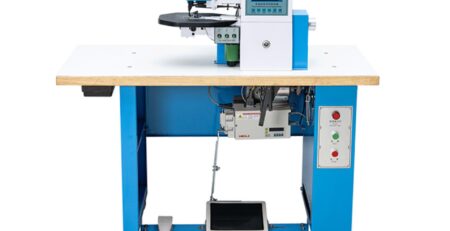
Before any forming happens, greyboard or MDF substrates must be precision-grooved to create clean, sharp fold lines. The V grooving machine is the critical first station: groove depth consistency of ±0.1 mm directly determines whether the final box corners will be tight and square or gapped and irregular. A reliable grooving machine such as the Kylin Manual Groove Machine or an automatic variant should be your first purchase decision, not an afterthought.
Stage 2: Corner Reinforcement
After grooving, the box body corners need structural reinforcement before wrapping. The corner taping machine applies adhesive tape to all four corners, preventing deformation during the forming stage and ensuring the box maintains its shape through shipping and retail handling. For blind box applications where the unboxing experience is part of the brand value, corner integrity is non-negotiable.
Stage 3: Shell Wrapping & Forming
This is where the core blind box forming machine takes over — wrapping pre-printed paper shells onto the rigid board substrate, folding, pressing, and delivering finished boxes. The Kylin KY-C2 Blind Box Forming Machine handles 650-750 pieces per hour with full servo logic, making it the workhorse of mid-to-high-volume blind box production lines.
Stage 4: Quality Inspection & Packing
Even with automation, the final inspection station matters. Operators should check for surface scratches, glue overflow, dimensional deviation, and print alignment. Some factories add inline vision inspection systems for high-volume IP brand contracts with zero-defect requirements.
Material Selection: The Hidden Cost Driver
Material choices directly impact forming quality, machine wear, and per-unit cost. Blind box production involves three material layers, each with its own selection criteria.
Substrate Board (Greyboard / MDF)
| Board Type | Thickness Range | Best Application | Cost Implication |
|---|---|---|---|
| Standard Greyboard | 1.5 – 2.5 mm | Standard collectible boxes, entry-level IP products | Lowest per-unit substrate cost |
| High-Density Greyboard | 2.0 – 3.0 mm | Premium blind boxes with heavier contents, export-grade packaging | 15-25% higher but reduces returns from transit damage |
| MDF Board | 1.8 – 2.5 mm | Luxury blind boxes, cosmetics mystery sets | 30-50% higher; requires different groove blade angles |
Wrapping Paper
The outer shell paper — typically 128 g to 157 g coated art paper — carries the brand’s visual identity. For blind box production, pay attention to:
- Grain direction: Must align with the fold direction; otherwise, paper cracking occurs at corners during forming.
- Surface treatment: Lamination, spot UV, and foil stamping add post-press complexity. Ensure your forming machine’s vacuum suction system is calibrated for treated surfaces.
- Pre-printed registration marks: For servo-driven machines like the KY-C2, paper with registration marks enables automatic position correction.
Adhesive (Glue)
Blind box forming typically uses hot-melt adhesive or water-based white glue depending on production speed and bond strength requirements. Hot-melt systems offer faster curing (2-5 seconds) for high-speed lines, while water-based glues provide stronger long-term bonds at a lower cost per unit. The Kylin glue application systems are compatible with both types.
Production Line Layout Planning
Workshop layout directly impacts throughput, material flow, and worker efficiency. Below are recommended configurations for three common production scales.
| Production Scale | Monthly Output | Recommended Layout | Floor Space | Operators |
|---|---|---|---|---|
| Startup / Pilot | 5,000 – 15,000 boxes | U-shaped semi-auto line: groove → corner tape → form → inspect | 80 – 120 m² | 6 – 10 |
| Growth / Commercial | 15,000 – 50,000 boxes | Linear flow: auto groove → auto corner tape → KY-C2 forming → inline inspection | 150 – 200 m² | 3 – 5 |
| High-Volume Export | 50,000+ boxes | Dual-line parallel: 2× groove → 2× corner tape → 2× KY-C2 → central QC | 250 – 350 m² | 4 – 6 |
The KY-C2 model supports a versatile range of box sizes from 50×50×10 mm to 600×400×150 mm, giving line planners flexibility to handle diverse blind box formats without reconfiguring the entire layout. For operations that also produce standard rigid boxes, the KY-550C Rigid Box Forming Machine can share the same upstream grooving and corner taping stations.
Quality Control Systems for Blind Box Production
QC in blind box manufacturing is unique because the packaging experience is part of the product value. Consumers expect pristine boxes — no scratches, no glue marks, no corner gaps. A defective box can lead to social media complaints and brand damage, especially for licensed IP products.
In-Process QC Checkpoints
- Grooving station: Measure groove depth on every 100th board with a digital caliper. Acceptable tolerance: ±0.1 mm.
- Corner taping station: Visual check for tape alignment on all four corners every 50 boxes. Misaligned tape causes bulging after wrapping.
- Forming station: Measure box squareness (diagonal difference) on first-piece and every 200th piece thereafter. Target: ≤0.5 mm diagonal variance.
- Final inspection: Full surface scan under 5000K lighting for scratches, bubbles, and print defects.
Anti-Leak Technology: Protecting Mystery Box Integrity
A unique QC concern for blind box production is weight-based picking — where individuals try to identify rare items by weighing boxes. The KY-C2 addresses this with an auto ballast insertion system that adds standardized weight inserts during forming, neutralizing weight difference as a picking method. This anti-leak feature is essential for factories serving collectible brands where hidden-figure randomness drives repeat purchases.
Maintenance Schedule & Spare Parts Planning
Unplanned downtime during an IP product launch window can cost tens of thousands in lost revenue. A proactive maintenance plan is essential.
| Interval | Task | Responsible | Estimated Time |
|---|---|---|---|
| Daily | Clean glue nozzles, inspect vacuum cups, wipe belt surfaces | Operator | 15 min |
| Weekly | Lubricate guide rails, check pneumatic fittings for leaks, verify sensor alignment | Operator + Shift Lead | 45 min |
| Monthly | Inspect servo motor couplings, calibrate forming pressure, replace worn belts if needed | Maintenance Technician | 2 hrs |
| Quarterly | Full system calibration, electrical cabinet cleaning, PLC parameter backup | Technician + Kylin Remote Support | 4 hrs |
| Annually | Major overhaul: replace all belts, check bearing play, servo drive diagnostic | Kylin Service Engineer | 1 day |
Recommended spare parts inventory: 2 sets of forming belts, 5 sets of vacuum cups, 3 glue nozzles, 1 set of guide rail bearings, and 1 PLC backup module. Kylin includes a comprehensive spare parts catalog with every machine delivery and offers 3-year warranty with overseas installation support.
Key Technical Specifications: KY-C2 Blind Box Forming Machine
| Parameter | Specification |
|---|---|
| Production Speed | 650 – 750 pcs/hr |
| Box Size Range | Min: 50×50×10 mm | Max: 600×400×150 mm |
| Changeover Time | Under 25 minutes (servo-driven) |
| Motor Architecture | Full servo logic |
| Anti-Leak System | Auto ballast insertion |
| Forming Accuracy | ±0.5 mm |
| Power Requirement | 380V 50/60Hz 3-Phase |
| Air Pressure | 0.6 – 0.8 MPa |
| Warranty | 3 years with overseas installation support |
Frequently Asked Questions
How long does it take to set up a complete blind box production line?
A semi-automatic startup line (grooving + corner taping + forming) typically takes 2-3 weeks from equipment delivery to first production run, including installation, calibration, and operator training. Kylin provides on-site installation support as part of the purchase package.
Can the KY-C2 handle non-standard box shapes?
Yes. While the primary application is rectangular blind boxes, the KY-C2 can be configured for hexagonal, octagonal, and other custom shapes with appropriate mold sets. Consult Kylin’s engineering team with your specific box design for a feasibility assessment.
What is the typical ROI for a blind box forming line?
Most mid-volume factories (15,000-50,000 boxes/month) achieve full ROI within 14-18 months through labor reduction and increased throughput. The calculation depends on local labor costs, utilization rate, and the premium your market places on consistent quality.
How does the anti-ballast system work?
The auto ballast insertion system adds small, standardized weight inserts into each box during the forming process. This neutralizes weight differences between boxes that could otherwise reveal which units contain rare or premium items — a critical feature for maintaining the integrity of mystery box product lines.
What training does Kylin provide for new buyers?
Every machine purchase includes 3-5 days of on-site operator and maintenance training, covering daily operation, size changeover procedures, troubleshooting, and preventive maintenance. Remote video support is also available for ongoing assistance.
Conclusion: Building a Future-Ready Blind Box Line
The blind box market’s 9.0% CAGR trajectory through 2031 signals sustained demand growth, but only factories with reliable, quality-controlled production lines will capture premium contracts from major IP brands. A well-planned blind box forming line — built around a core machine like the Kylin KY-C2, supported by proper material selection, systematic QC, and proactive maintenance — positions your factory to win in this competitive but profitable segment.
Whether you are launching your first blind box project or scaling an existing operation to serve global collectible brands, Kylin Machine’s engineering team is ready to help you plan the right configuration.
Contact Us on WhatsApp: +86-13809820550
Get a custom production line plan, detailed quotation, and ROI analysis — typically within 24 hours.

Leave a Reply