
What does rigid box packaging cost, and how can I control it?
Costs feel unclear, deadlines move, and premium packaging seems risky. I have been there. I needed a simple way to plan costs and still look premium.
Rigid box packaging cost depends on order size, materials, structure, finishes, and supplier location; low-volume luxury boxes can run about $2–$6 per box, then drop with scale. 2
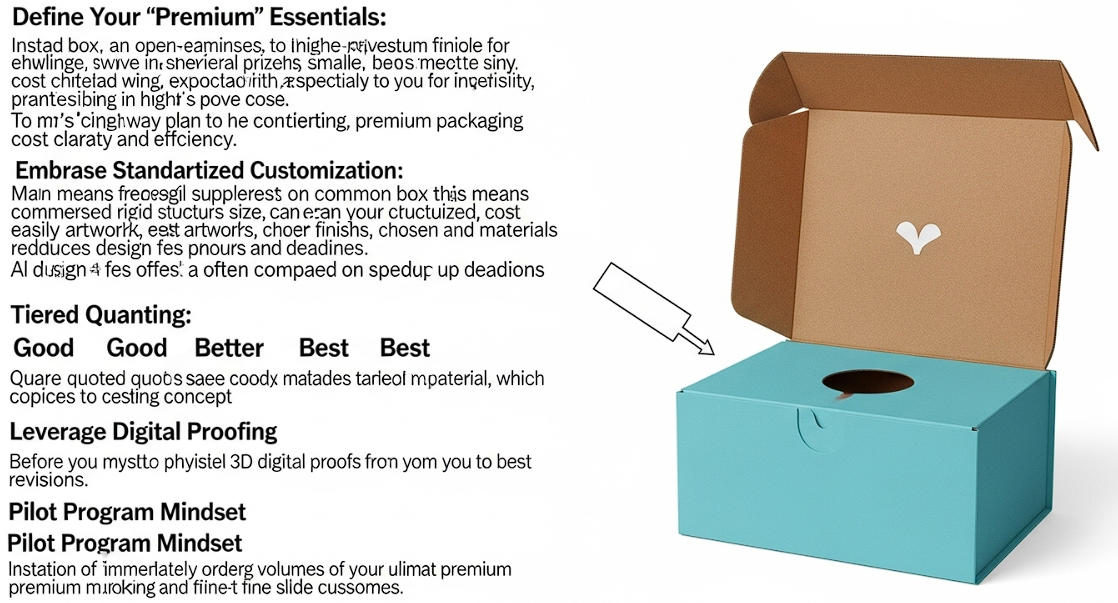
I will break down the cost drivers in plain words. I will show where you can save. I will also show how I use Kylin machines to cut waste, lift quality, and keep margins safe.
What drives the unit cost of rigid boxes the most?
I have seen teams chase finishes and then get shocked by freight and setup. The pain is real when unit cost creeps up after quotes.
The biggest levers are quantity, materials, structure, and finish complexity; rigid boxes do not fold flat, so shipping and handling often run higher than folding cartons. 2 5
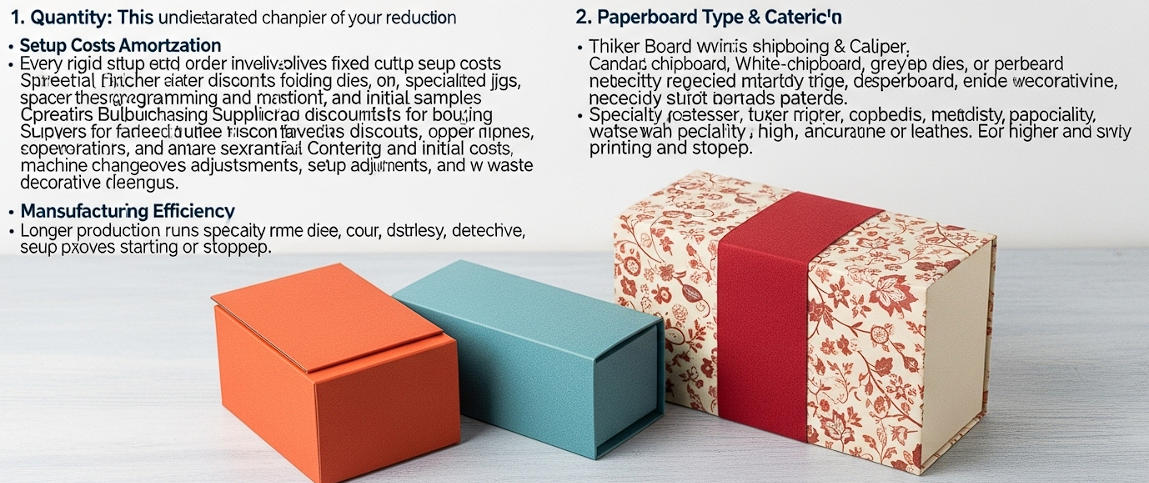
Quantity and setup
Small orders absorb tooling, setup, and quality control into fewer units. This raises unit cost fast. Many luxury projects under 5,000 units see higher per-box prices, often in the $2–$6 range before special finishes. 2
Materials and structure
Chipboard is the standard for rigid boxes because it is robust and sustainable, and it supports sharp edges and high print quality. 4
Rigid boxes ship as set-up boxes and do not fold flat, which can increase logistics and storage costs versus folding cartons. 2 5
Brand impact
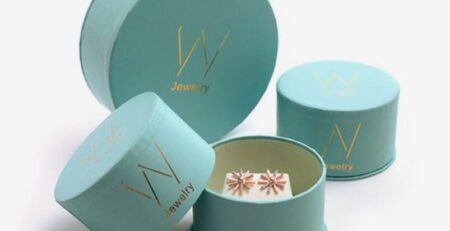
Rigid boxes signal luxury, protect products well, and often get reused, so the brand stays in the home longer. 1 3
Cost drivers and actions
| Cost driver | Why it matters | What I do |
|---|---|---|
| Quantity | Setup spread over units | Lock realistic MOQ early |
| Board and wrap | Weight, quality, look | Pick right chipboard caliper |
| Finishes | Premium feel, adds steps | Prioritize one hero finish |
| Structure | Inserts, lids, magnets | Standardize dielines |
| Freight | Boxes ship set up | Plan ship and storage early |
Do materials and finishes change cost a lot?
I have watched teams add two foils and deep emboss, then hit a wall when the quote doubled. I learned to choose one hero finish first.
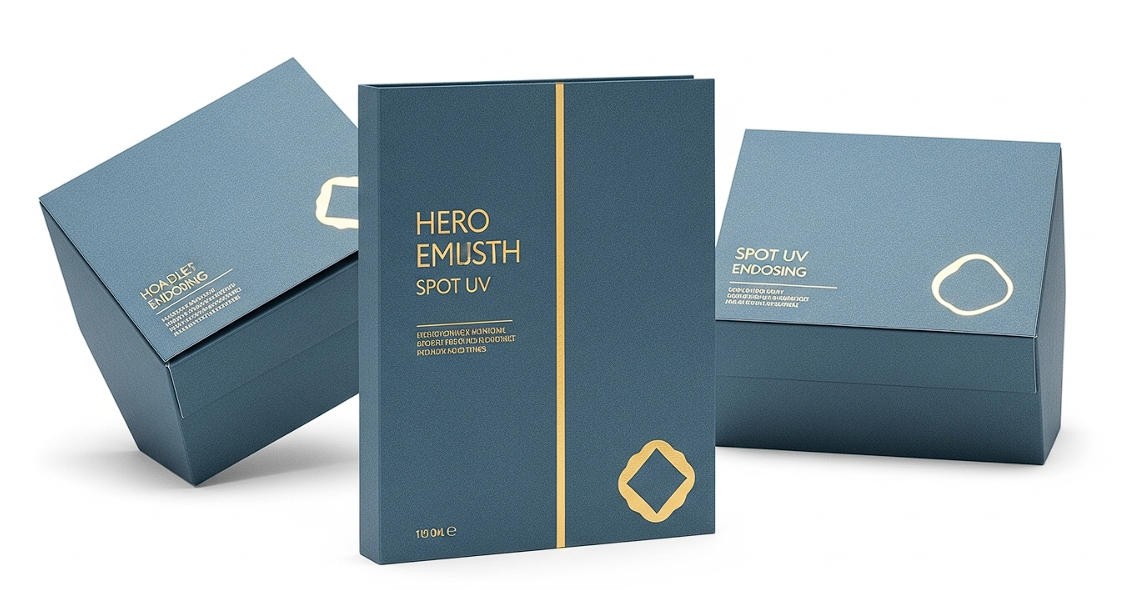
Materials and finishes can push cost up fast; chipboard is common, and options like foil stamping, spot UV, and embossing add labor, time, and price but also lift perceived value. 4 5
Chipboard and wrap
Chipboard is made from layered recycled paper, so it is strong, consistent, and cost-effective for premium work. 4
Wrap choices change look and cost. Paper, fabric, or specialty papers handle foil and emboss differently.
Print colors and inks
Multi-color work and special inks add passes and labor, which often increases cost. 2
I keep core colors tight unless the brand case is strong.
Finishes that move the needle
Foil stamping creates a high-contrast shine; embossing or debossing adds a tactile cue; spot UV adds pop. These choices raise quality and price, so I pick one primary finish and one subtle support. 5
Finish options vs impact
| Finish | Brand effect | Cost impact | My note |
|---|---|---|---|
| Foil stamping | Luxury shine | Medium–High | Use on logo only |
| Emboss/deboss | Tactile feel | Medium | Keep depth moderate |
| Spot UV | Gloss contrast | Low–Medium | Use as accent |
| Soft-touch | Premium touch | Medium | Scuffs need QC |
| Fabric wrap | Boutique look | High | For hero SKUs |
How can I lower cost without hurting the brand?
I dislike false savings that hurt unboxing. I prefer simple moves that protect margin and keep the “wow.”
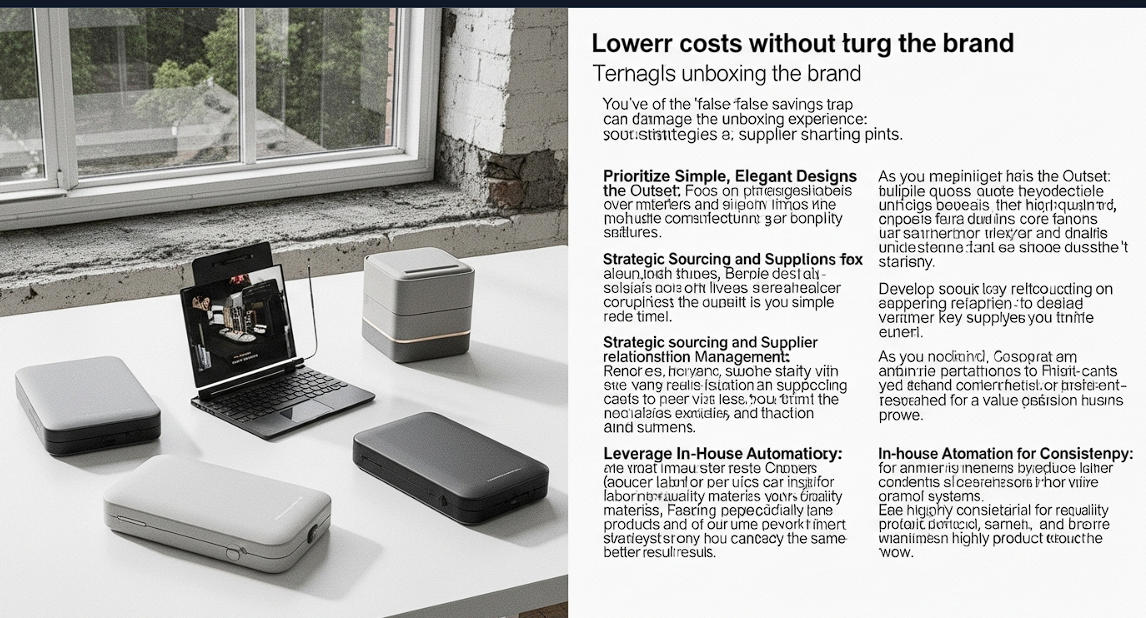
Keep designs simple to save costs, and compare multiple suppliers to find balanced value and quality before you lock specs. 1
I also use automation in-house to cut labor, reduce rejects, and secure steady quality.
Simple design wins
I reduce color count, choose one primary finish, and standardize structures. This keeps setup and make-ready fast. It also improves repeatability. These moves protect brand feel.
Quote smart, then plan logistics
I request apples-to-apples quotes and confirm freight early, since rigid boxes ship set up and take volume. 2
I plan storage to avoid rush fees and damage.
Use machines to cut hidden costs
I bring key steps in-house with machines that raise throughput and consistency. This saves labor and avoids rework. Here is how I do it with Kylin:
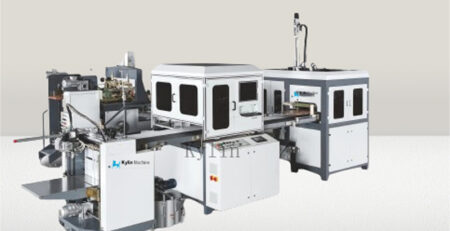
- I form rigid boxes reliably with the semi auto rigid box machine KY‑550C and our automatic rigid box machinery.
- I wrap boxes cleanly with the semi auto rigid box machine.
- I groove boards true with the V grooving machine.
- I add magnets fast with the auto magnet insert machine.
- I tape corners fast with the box staying machine.
- I finish book and set top packaging with the book casing‑in machine and book spine cutter.
- I expand into sets with the slip case making machine.
- I standardize processes with manual tape application machines.
- I follow this full guide to make rigid boxes efficiently using machines.
Tactics that protect cost and brand
| Tactic | Cost effect | Tool or machine |
|---|---|---|
| One hero finish | Lower passes | Foil or emboss only |
| Standard dielines | Less setup | House templates |
| In-house wrapping | Less labor waste | Semi auto wrapper |
| Accurate grooving | Fewer rejects | V grooving |
| Early freight plan | Avoid surcharges | Pallet plan |
| Magnet automation | Faster assembly | Auto magnet insert |
Conclusion
Cost is a system. Control quantity, finishes, and freight. Use the right machines. Then you get premium feel, stable quality, and a safer margin.
My Role
My Name: Jacob
Link to my website: www.kylinmachines.com
Brand Name: Kylin Machine
Country: China
Products: Post-press machines
Business Model: B2B, Wholesale only
Status:
- Focus Area: I specialize in Robotic Spotter and Hybrid technology for rigid box and hard book cover solutions.
- Company Profile:
- Name: Kylin Packaging Machinery Factory (Kylin Machinery Limited)
- Establishment: Founded in May 2003
- Location: Dongguan, Guangdong Province, China (near HK and Guangzhou), factory area 5,000 m²
- Business Scope: Rigid boxes, round boxes, collapsible boxes, and book cover packing craft
- Company Characteristics:
- We serve Graphic Arts, Paper Converting, and Bookbindery industries
- We support over 10,000 users in more than 20 countries worldwide
- We have distributors in the Middle East, India, Turkey, Korea, Portugal, UK, USA, Canada, Italy, and more
- We have 120+ skilled workers and a monthly capacity of about 60 sets
- Our R&D and QC teams keep quality consistent
Explore our machines and solutions:
- Kylin Machine
- Rigid box machine KY‑550C
- Automatic rigid box machinery
- Semi auto rigid box machine
- Book casing‑in machine
- Box staying machine
- V grooving machine
- Auto magnet insert machine
- Book spine cutter
- Manual tape application machines
- Slip case making machine
- How to make rigid boxes efficiently
References used for cost insights and material options: durability, brand perception, reusability, and saving tips; low-volume pricing ranges; rigid box luxury cues and shipping; chipboard benefits; and finish impacts. 1 2 3 4 5




发表回复