
Global Printing and Packaging Industry Outlook: 2025–2035
Packaging 2035
From “Make, Use, Dispose” to “Smart, Circular, Regenerative”
The next decade marks the most significant transformation in industry history. Driven by Generative AI, material science, and Gen Alpha, packaging is evolving from a passive layer into a dynamic digital interface and a core asset of the circular economy.
2035 Financial Forecast
Projected market valuations driving the industry forward.
Total Industry Value
Tripling in value (10.1% CAGR)
A major growth sector
Driven by RFID/NFC Standards
Market Composition
While the total global packaging market is massive ($1.6T), specific high-growth segments like Sustainable Packaging and Digital Printing are carving out significant shares.
The chart illustrates the projected value of these specific high-tech and eco-friendly sectors relative to one another in 2035.
Megatrends Defining the Decade
Three pillars reshaping the industry landscape.
1. Sustainability 2.0
The “Green License”
- ● Regenerative: Materials that actively improve the environment (e.g., seaweed coatings).
- ● No Virgin Plastic: 50-70% recycled content mandated for rigid packaging.
- ● Edible Tech: “Disappearing” packaging for niche markets.
2. Digital Revolution
Printing at Speed
- ● Mainstream: Moving from labels to corrugated & flexible production.
- ● Just-in-Time: Reducing warehousing costs and obsolescence.
- ● Hyper-Personalization: Regional dialects and individual names on FMCG.
3. The “Phygital” Interface
Smart Packaging
- ● Traceability: Embedded electronics for full supply chain visibility.
- ● AR Integration: Gamified experiences and provenance tracking.
- ● Bridge: Connecting physical products to digital ecosystems.
Generative AI in Structural Design
By 2030, Generative AI is forecast to design 40% of all new packaging structures.
Material Reduction
AI optimization will minimize material usage while maximizing integrity, reducing raw material consumption by 20-30%.
Speed to Market
Design cycles shrink from months to days, with pre-validated files for regulatory compliance.
Autonomous Supply Chain
“Lights-Out” factories staffed by cobots and self-healing IoT logistics chains.
Gen Alpha
Born 2010-2024
Dominant Economic Force by 2035
Consumer Demands & Expectations
Radical Transparency
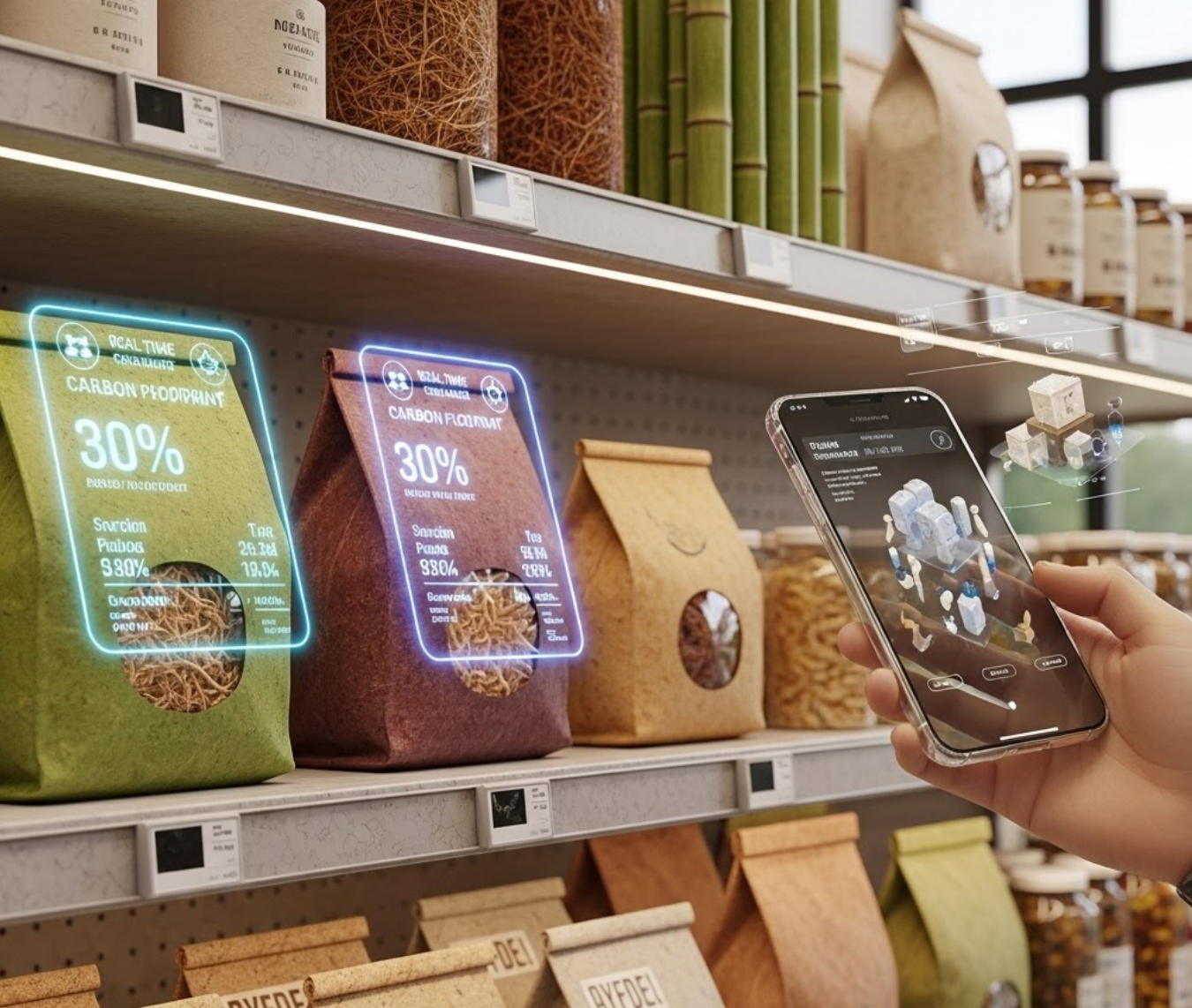
Granular detail on carbon footprint and sourcing, accessible instantly via the pack.
Interaction is Mandatory
Static packaging is “broken.” They expect integration with digital ecosystems (gaming, rewards).
Zero Tolerance for Greenwashing
“Digital Product Passports” will be the required proof of authenticity; vague claims face backlash.
Regulatory Roadmap
Shifting from “Voluntary Guidelines” to “Punitive Enforcement”.
2025-2027
Extended Producer Responsibility (EPR)
Global expansion of EPR fees. Brands begin paying 100% of the net cost of waste management.
2030
EU PPWR Full Implementation
All packaging on the EU market must be recyclable by design. Non-compliant goods are banned from the market.
2030-2032
Carbon Border Adjustment (CBAM)
Import taxes applied to packaging based on embedded carbon, penalizing high-emission production methods.
2035
Global Plastic Treaty Targets
Potential global cap on virgin plastic production. Standardized recycling labels implemented worldwide.
From Make, Use, Dispose
To Smart, Circular, Regenerative
The next decade marks the most significant transformation in the industry’s history. Driven by Generative AI, material science, and Gen Alpha, packaging evolves from a passive layer to a dynamic digital interface.
Global Market 2035
$0T+
Total Projected Value
Digital Printing
$0B+
Expected to Triple
Sustainable Pkg
$0B
Sector Growth
Smart Packaging
$0B
RFID & NFC Adoption
Megatrends Defining the Decade
Three powerful forces are converging to reshape the landscape. Explore the pillars of the 2035 outlook below.
The “Green License”
Sustainability is no longer optional—it is a regulatory license to operate.
Regenerative Materials
Shift from “recyclable” to “regenerative” (e.g., carbon-negative bioplastics, seaweed coatings that nourish soil).
End of Virgin Plastic
EU PPWR and Global Plastics Treaty will tax virgin fossil-based plastics out of competitiveness.
Edible Packaging
Niche markets like hydration pods will mainstream “disappearing” packaging technologies.
Key Insight
By 2030, focus shifts from mitigating harm to active environmental improvement.
Printing Revolution
Digital printing moves from labels to mainstream corrugated and flexible packaging.
Just-in-Time
Brands use on-demand printing to reduce warehousing costs and avoid obsolescence.
Hyper-Personalization
Cost drops allow everyday FMCG goods to feature regional dialects, local events, or individual names.
Agility
Rapid prototyping and short runs become the industry standard, enabling faster product launches.
Key Insight
Packaging is no longer a commodity; it is a dynamic technology product.
Smart Packaging
The primary bridge between physical products and the digital world.
Traceability
Embedded printed electronics & battery-free RFID enable full supply chain visibility.
Augmented Reality (AR)
For Gen Alpha, non-digital packaging is “broken.” AR provides gamification and provenance tracking.
Automated Retail
Smart packaging supports automated checkout systems, eliminating friction in retail.
Key Insight
Static packaging loses shelf appeal. Interactive ecosystems win.
Technology Deep Dive
Innovations driving the structural and material changes.
Generative AI
🤖- ● Structural Design: Will design 40% of all new packaging by 2030.
- ● Optimization: Tests millions of variations to minimize material.
- ● Impact: Potential to reduce raw material consumption by 20-30%.
Nanotech & Materials
🔬- ● Barriers: Nanocoatings replace aluminum/plastic laminates.
- ● Active Preservation: Sensors detect spoilage gases inside packs.
- ● Result: Drastic reduction in food waste and improved recyclability.
Autonomous Supply Chain
⚙️- ● Lights-Out Factory: Cobots handle complex packing tasks.
- ● Self-Healing: IoT pallets autonomously reroute during delays.
- ● Efficiency: Automated lines adapt to demand spikes instantly.
Generation Alpha
Born 2010-2024
The Dominant Force by 2035
They demand Radical Transparency (carbon footprint, labor conditions) instantly via the pack. Brands making vague sustainability claims will face rapid backlash. “Digital Product Passports” will be the required proof of authenticity.
Regulatory Landscape Forecast
Moving from “voluntary guidelines” to “punitive enforcement.” Click on a year to see the impact.
Extended Producer Responsibility (EPR)
Global expansion of EPR fees; brands pay 100% of the net cost of waste management.
2035 Market Projections
Key financial segments and efficiency gains through technology.
Sector Market Size Forecast (USD Billion)
Source: Global Printing and Packaging Industry Outlook 2025-2035
Generative AI Impact: Optimization Gains
Analysis: AI algorithms will test millions of structural variations, shrinking design cycles from months to days and reducing global material consumption by up to 30%.
1. Executive Summary
The decade from 2025 to 2035 will mark the most significant transformation in the history of the printing and packaging industry. We are moving from an era of "Make, Use, Dispose" to an era of "Smart, Circular, and Regenerative."
Driven by the convergence of Generative AI, material science breakthroughs, and the maturation of Gen Alpha consumers, packaging will evolve from a passive protective layer into a dynamic digital interface and a core asset of the circular economy.
Key Forecast Highlights (2035)
-
Global Packaging Market: Projected to exceed $1.6 trillion.
-
Digital Printing for Packaging: Expected to triple, reaching $110+ billion.
-
Sustainable Packaging: Will grow into a $530 billion sector.
-
Smart Packaging: Adoption of RFID/NFC will become standard for FMCG, driving an $88 billion market.
2. Megatrends Defining the Decade
2.1 The "Green License to Operate" (Sustainability 2.0)
Sustainability is no longer a "nice-to-have" but a regulatory license to operate.
-
From Recyclable to Regenerative: By 2030, the focus will shift from simple recyclability to regenerative materials—packaging that actively improves the environment (e.g., carbon-negative bioplastics, seaweed-based coatings that nourish the soil when composted).
-
The End of Virgin Plastic: Regulations like the EU Packaging and Packaging Waste Regulation (PPWR) and the UN Global Plastics Treaty will effectively tax virgin fossil-based plastics out of competitiveness. By 2035, major markets will require 50-70% recycled content in all rigid packaging.
-
Edible & Dissolvable Packaging: Niche markets (hydration pods, instant sauces) will mainstream "disappearing" packaging technologies, eliminating waste entirely at the point of use.
2.2 The Digital Printing Revolution
Digital printing will move from prototyping and labels to mainstream corrugated and flexible packaging production.
-
Speed to Market: The 10.1% CAGR in digital printing is driven by the need for speed. Brands will utilize "just-in-time" printing to reduce warehousing costs and obsolescence.
-
Hyper-Personalization: With costs dropping, personalized packaging will extend beyond luxury goods to everyday FMCG products, allowing regional dialects, local events, or individual names to appear on standard runs.
2.3 The "Phygital" Interface (Smart Packaging)
Packaging will become the primary bridge between the physical product and the digital world.
-
Traceability: Printed electronics and battery-free RFID tags will be embedded in primary packaging, enabling full supply chain visibility and automated checkout in retail.
-
Augmented Reality (AR): For Gen Alpha, packaging without a digital layer will feel "broken." AR triggers on packs will offer gamified experiences, provenance tracking, and immersive storytelling without the need for QR codes.
3. Technology Deep Dive
3.1 Generative AI in Structural Design
By 2030, Generative AI will design 40% of all new packaging structures.
-
Optimization: AI algorithms will test millions of structural variations to minimize material usage while maximizing structural integrity, potentially reducing raw material consumption by 20-30% globally.
-
Speed: Design cycles will shrink from months to days, with AI generating print-ready files that are pre-validated for regulatory compliance in target markets.
3.2 Nanotechnology and Advanced Materials
-
Barrier Properties: Nanocoatings will replace heavy aluminum and plastic laminate layers in paper-based packaging, making complex food packaging fully recyclable/compostable.
-
Active Preservation: Nano-sensors will detect spoilage gases inside meat and produce packaging, changing color to alert consumers, thereby drastically reducing food waste.
3.3 The Autonomous Supply Chain
The "Lights-Out" packaging factory will become a reality.
-
Robotics: Packaging lines will be staffed by collaborative robots (cobots) handling complex packing tasks.
-
Self-Healing Supply Chains: IoT-enabled pallets and shipping containers will autonomously reroute themselves in response to weather delays or demand spikes.
4. Consumer Shifts: The Gen Alpha Impact
By 2035, Generation Alpha (born 2010-2024) will be the dominant economic force.
-
Radical Transparency: This generation demands granular detail—carbon footprint, labor conditions, and material sourcing—accessible instantly via the pack.
-
Interaction: They expect packaging to be "interactive." Static packaging will lose shelf appeal to packaging that integrates with their digital ecosystems (e.g., earning gaming credits by scanning a recycled bottle).
-
Zero Tolerance for Greenwashing: Brands making vague sustainability claims will face rapid backlash. "Digital Product Passports" will be the required proof of authenticity.
5. Regulatory Landscape Forecast
The regulatory environment will shift from "voluntary guidelines" to "punitive enforcement."
| Timeline | Regulation / Trend | Expected Impact |
|---|---|---|
| 2025-2027 | Extended Producer Responsibility (EPR) | Global expansion of EPR fees; brands pay 100% of the net cost of waste management. |
| 2030 | EU PPWR Full Implementation | All packaging on the EU market must be recyclable by design. Non-compliant goods are banned. |
| 2030-2032 | Carbon Border Adjustment Mechanism (CBAM) | Import taxes applied to packaging based on embedded carbon, penalizing high-emission production. |
| 2035 | Global Plastic Treaty Targets | Potential global cap on virgin plastic production; standardized recycling labels worldwide. |
6. Conclusion
The next decade will reward agility. The winners in 2035 will not be the companies with the biggest offset presses, but those who can integrate material science, digital workflows, and sustainability into a seamless service. Packaging is no longer a commodity; it is a technology product.








发表回复