Digital Flatbed
Die Cutting Machine
for Packaging & Labels
Tool-free. Laser-registered. ≤0.1mm precision. The KY 30 Series eliminates traditional die costs — cut card paper, PVC, stickers and corrugated board on demand.
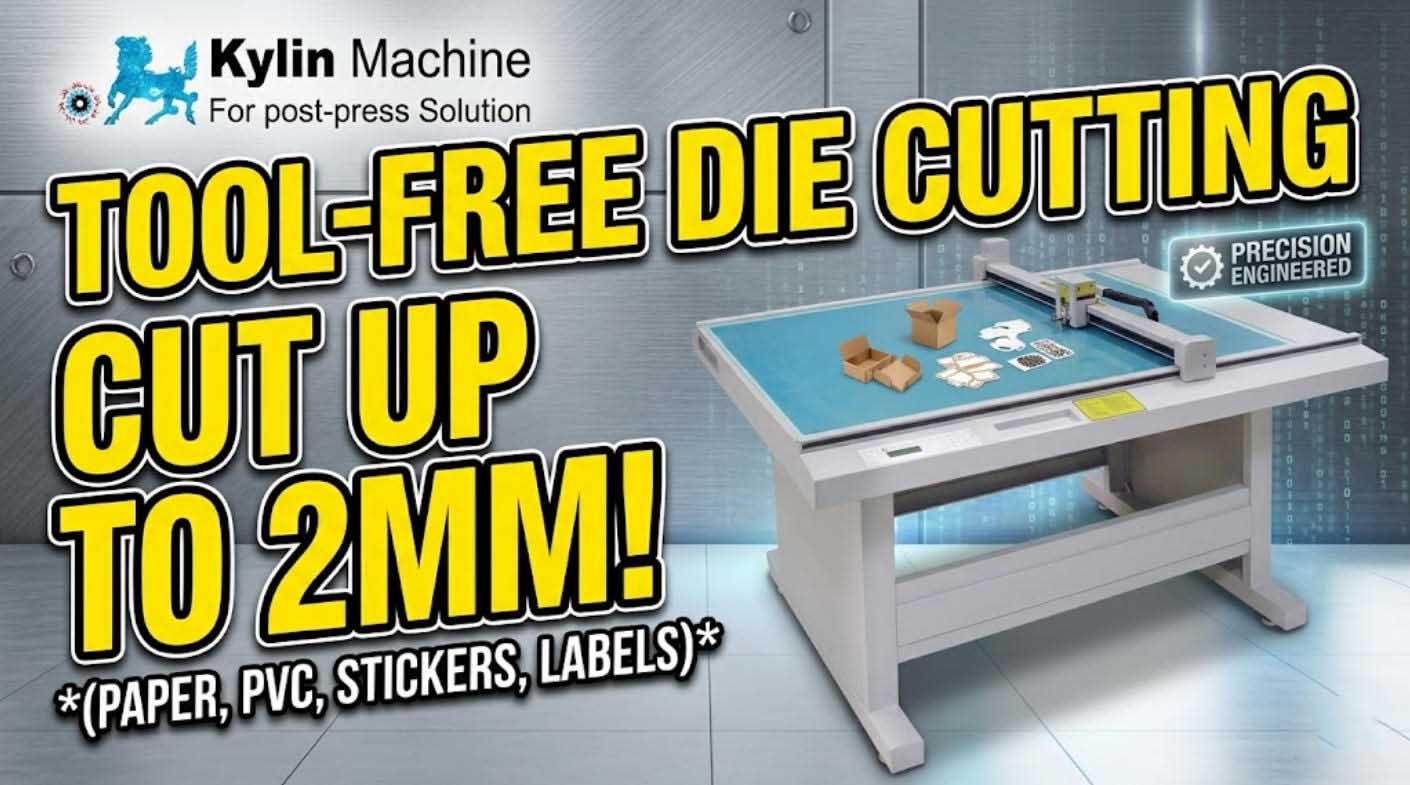
Traditional Die-Cutting vs. Digital Flatbed
Short-run packaging and label production has been held back by high tooling costs and slow turnaround. The KY 30 changes that.
- ✘ Custom steel-rule dies cost $200–$1,200+ per design
- ✘ 3–10 day die manufacturing lead time before you can run a sample
- ✘ Design changes require new dies — wasted tooling cost
- ✘ Minimum order quantities driven by die amortisation
- ✘ Manual registration causes misalignment errors >1mm
- ✘ Multiple operators needed for setup and changeover
- ✓ Zero tooling cost — designs uploaded directly from CAD software
- ✓ Samples ready in minutes, not days — accelerate your time-to-market
- ✓ Modify any design instantly with no penalty or re-tooling cost
- ✓ Run 1–10,000 pieces with equal profitability — true short-run flexibility
- ✓ Laser print-mark registration delivers ≤0.1mm alignment accuracy
- ✓ Single-operator setup in under 5 minutes — vacuum hold-down ready
Engineering Built for Production
Every feature of the KY 30 Series is engineered to deliver industrial-grade output from a compact, tool-free digital platform.
How It Works — 4 Simple Steps
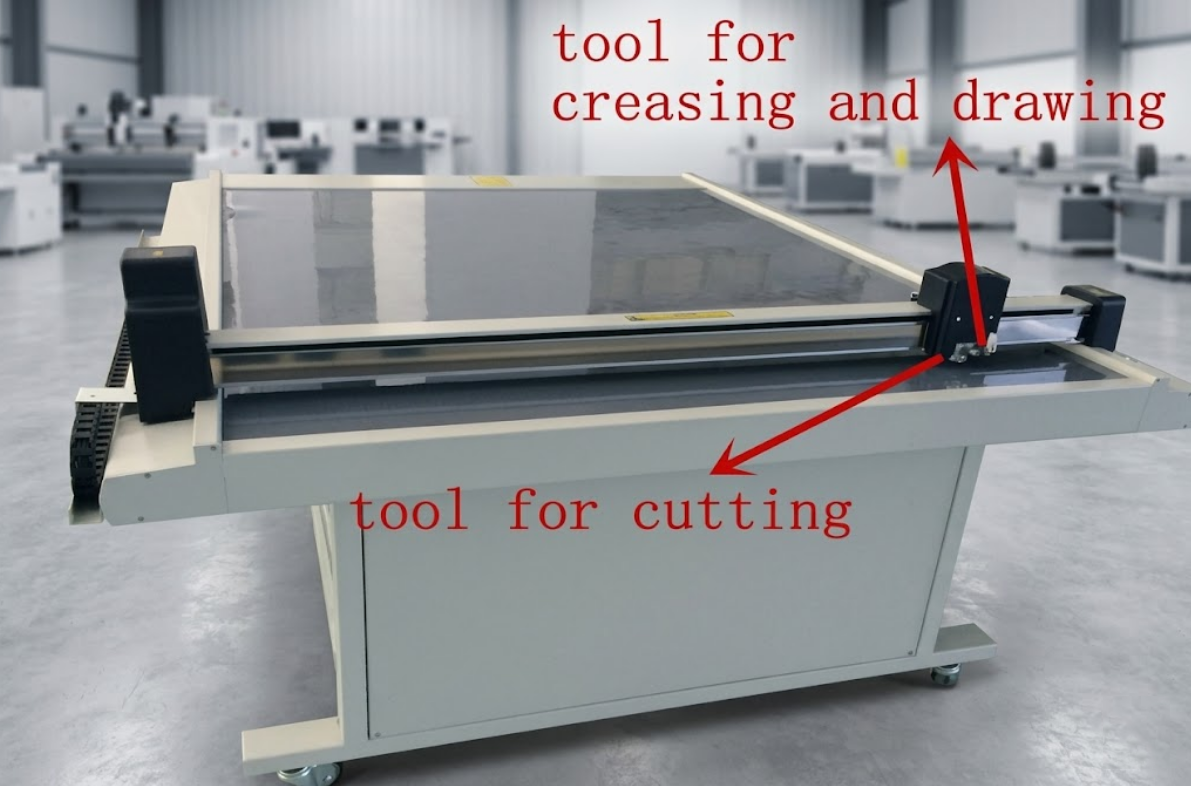
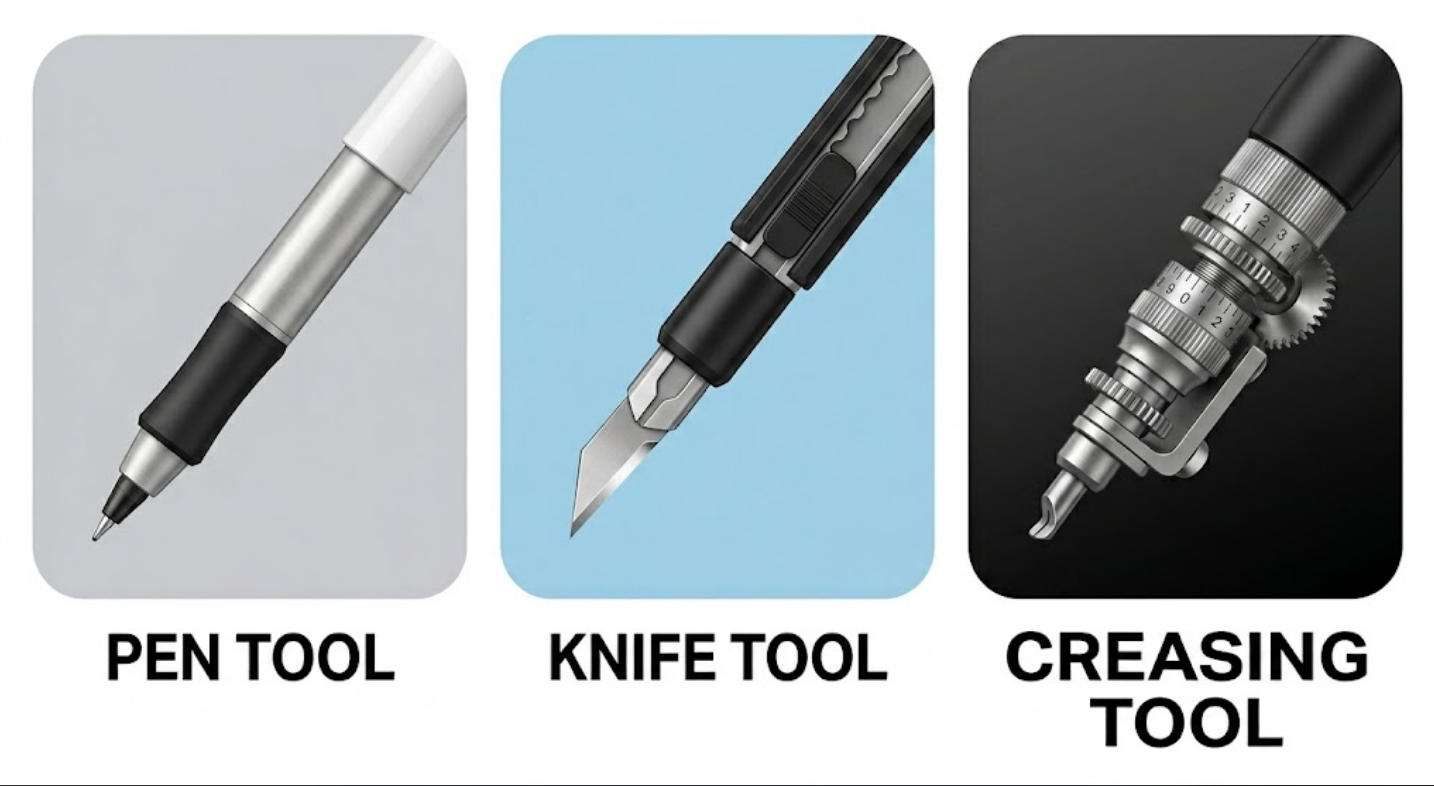
Pen · Knife · Creasing Wheel
One machine. Three tools. Complete control over every cutting, scoring, and drawing operation.
What the KY 30 Can Cut
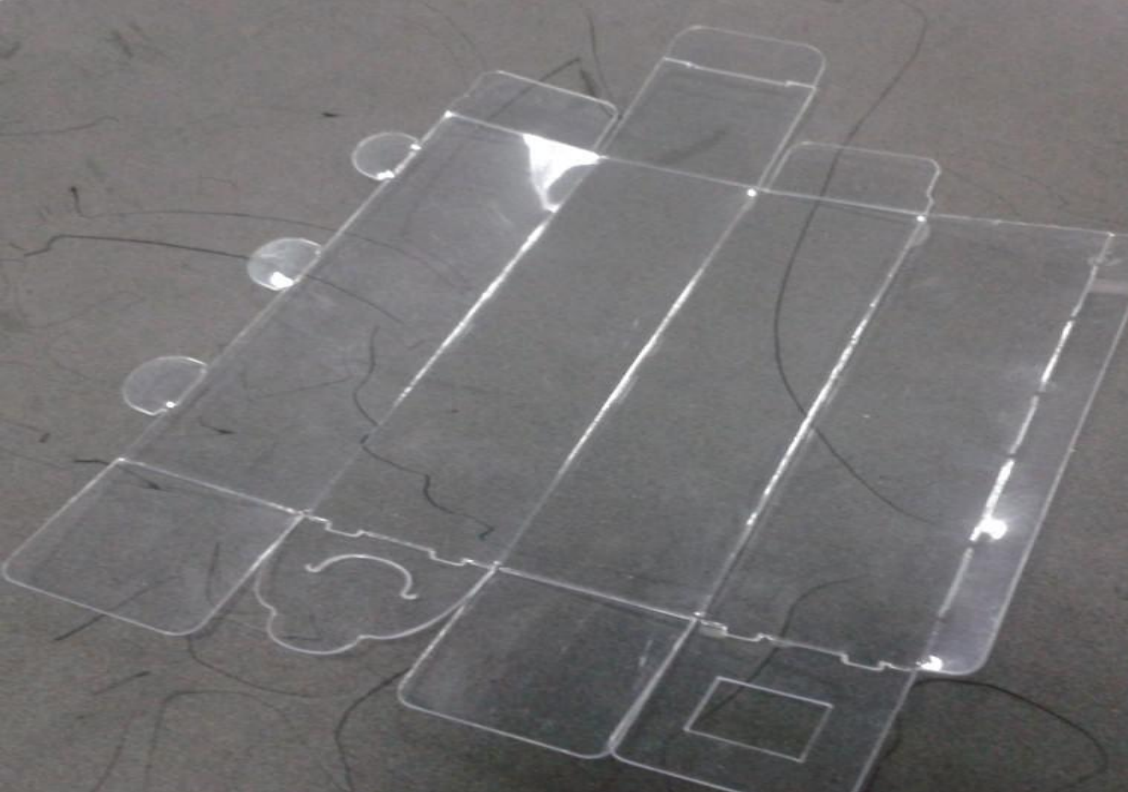
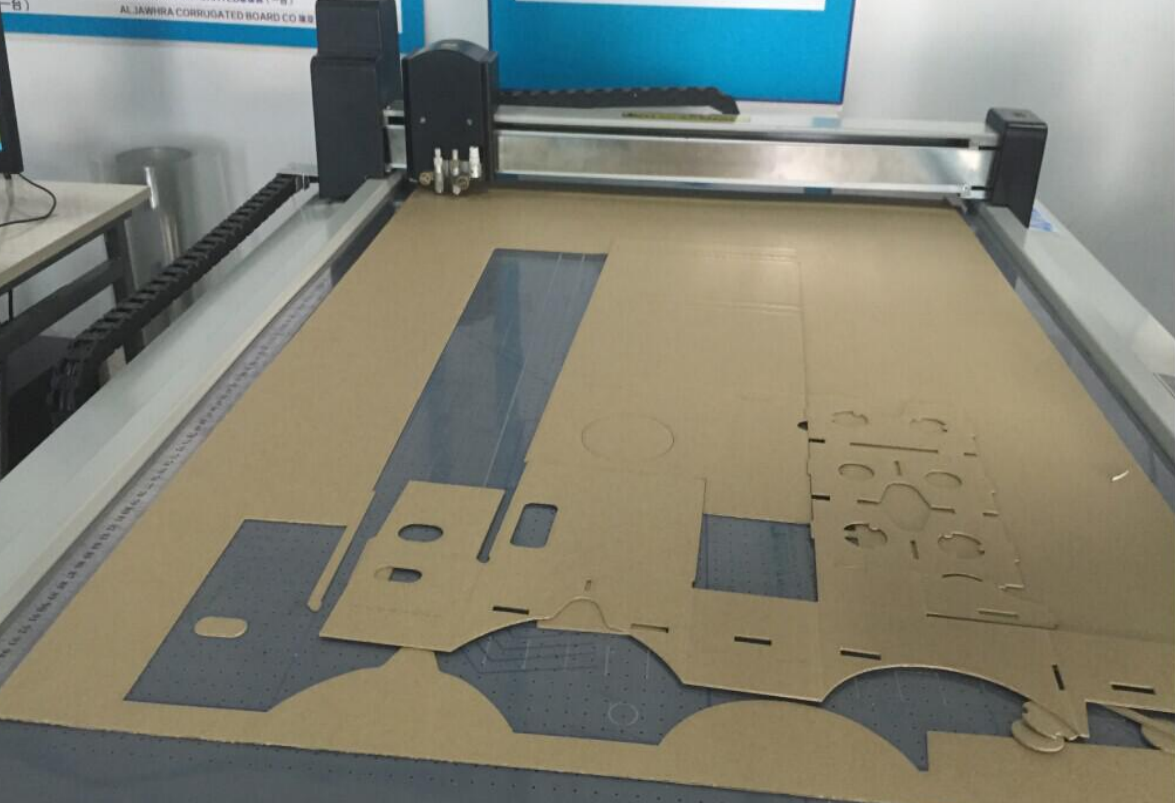
From thin label stocks to rigid corrugated board — the KY 30 handles the full range of packaging and label materials.
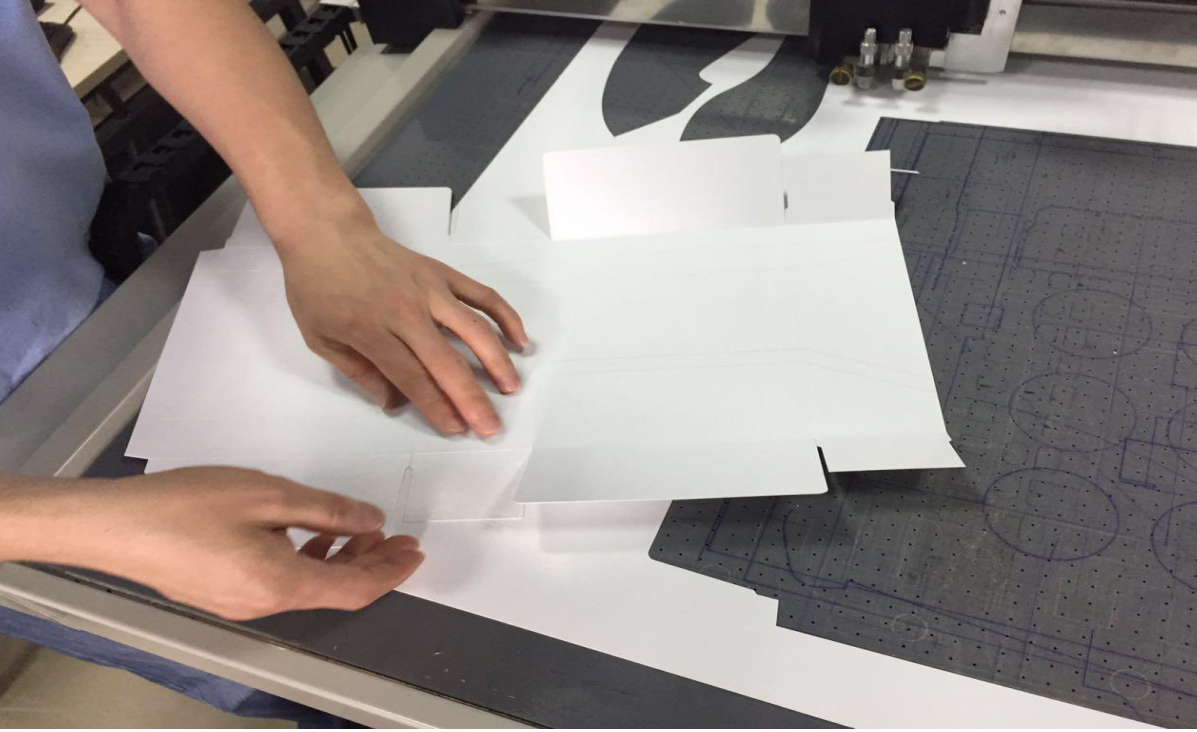
KY 30 Series Full Specifications
| Parameter | KY30 0906 | KY30 1209 | KY30 1509 | KY30 1512 |
|---|---|---|---|---|
| Cutting Area | 900 × 600 mm | 1200 × 900 mm | 1500 × 900 mm | 1500 × 1200 mm |
| Driving Material | Import Belt | |||
| Material Fixing Method | Vacuum Absorbing | |||
| Cut Materials | Card paper, sticker, vinyl, PVC, PP, film, electronic material, composite material, etc. | |||
| Cutting Functions | Drawing by pen, half cutting (kiss-cut), whole cutting, creasing, dotted-line perforation | |||
| Cutting Thickness | ≤ 2 mm (card paper, sticker, PVC) | |||
| Cutting Precision | ≤ 0.1 mm | |||
| Overlapping Precision | ≤ 0.1 mm | |||
| Resolution Ratio | 0.025 mm | |||
| Max Speed | 1,000 mm/s | |||
| Working Characteristics | Continuous work; CNC operation and cutting simultaneously; linear high-speed data transmission | |||
| Transmitting Port | International standards — Parallel Port / RSC232 Serial Port | |||
| Buffer Capacity | Large-capacity buffer area for high-speed one-time data transmission | |||
| Instruction Set | HP-GL or DM-PL — compatible with all CAD software (international standard) | |||
| Numerical Control Board | LCD, all-English operating menu, contact button | |||
| Tool Type | Special steel blade | |||
| Pen Type | General signing pen, oil pen, ball pen | |||
| Main Structure | Cutting platform, head, driving system, control cabinet, control micro computer, frame, vacuum pump | |||
| Voltage | AC 220V ± 10%, 50 Hz | |||
| Fuse Standard | 5A | |||
ℹ️ Note: The KY 30 does not include a computer. A compatible PC with CAD software should be sourced locally by the buyer.
See the KY 30 Perform Live
Watch the full demonstration: laser registration, multi-tool operation, vacuum hold-down, and precision cutting across packaging materials.
Frequently Asked Questions
Common questions from packaging manufacturers, print-finishing companies, and label converters evaluating the KY 30.
• KY30 0906 — 900×600mm: Ideal for label production, small carton samples, A2/A1 format sheets
• KY30 1209 — 1200×900mm: Popular for mid-format packaging prototypes and folding carton samples
• KY30 1509 — 1500×900mm: Suited for larger corrugated box blanks and wide-format rigid boxes
• KY30 1512 — 1500×1200mm: Maximum bed for large-format packaging, trade-show display, and POP material cutting
Contact us with your largest substrate sheet size to recommend the right model.
The Rise of Digital Flatbed Die Cutting in Short-Run Packaging
The global packaging industry is undergoing a fundamental transformation. As brand owners demand faster design-to-shelf timelines, shorter SKU lifecycles, and greater customisation, the conventional steel-rule die cutting process is increasingly a bottleneck. Digital flatbed die cutting machines — led by platforms like the KY 30 Series from Kylin Machines — are redefining what’s possible in on-demand packaging production.
“The ability to produce a finished, crease-and-cut corrugated prototype in under ten minutes — directly from a CAD file, without a single die — fundamentally changes the economics of packaging development.” — Packaging Technology Review, 2025
Why Tool-Free Cutting is Transforming Packaging Prototyping
Traditional die-cutting requires the fabrication of a bespoke steel-rule die for every new shape. These dies can cost anywhere from $200 for simple flat-bed configurations to over $1,200 for complex rotary or multi-station tooling. For packaging designers, sample rooms, and short-run converters, this cost is prohibitive — particularly when designs evolve through multiple revision cycles.
The KY 30 Digital Flatbed Die Cutter eliminates this entirely. By driving the cutting head directly from industry-standard HP-GL and DM-PL instruction files — the same output format used by Esko, ArtiosCAD, and Adobe Illustrator — operators can iterate through structural packaging designs at the speed of software.
Laser Registration: The Technology That Unlocks Pre-Printed Accuracy
One of the KY 30’s most commercially significant features is its integrated laser print-mark registration system. In conventional flatbed cutting, aligning a pre-printed sheet to a die requires skilled operators and still results in registration errors of 0.5–2mm. On a label or premium packaging application, this is commercially unacceptable.
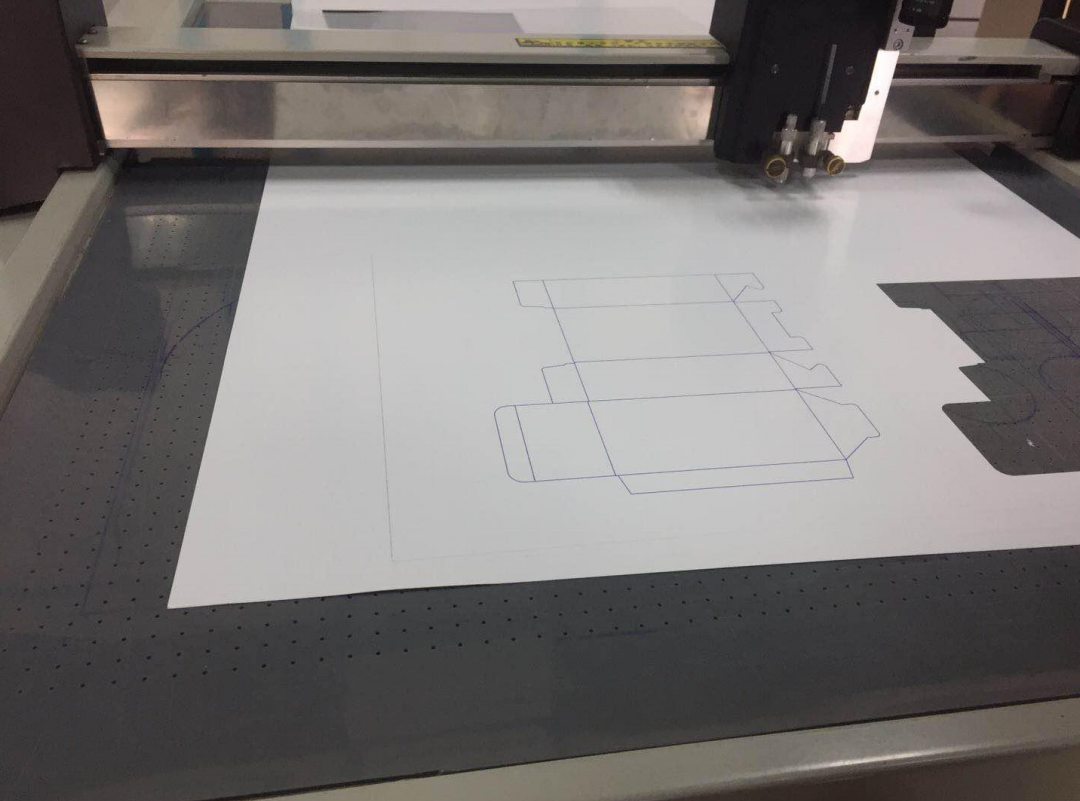
The KY 30 addresses this with a dedicated laser sensor mounted adjacent to the cutting head. The sensor reads printed registration (crop) marks on the substrate and communicates positional data to the CNC controller in real time. The cutting path is automatically offset and rotated to match the actual printed position — not the theoretical position. The result: ≤0.1mm cut-to-print alignment, consistently, without operator intervention.
Key Application: Label Kiss-Cutting
Kiss-cutting — cutting through the face stock and adhesive layer while leaving the backing liner intact — demands sub-millimetre precision at high speed. The KY 30’s 0.025mm resolution drive system, combined with laser registration, makes it one of the most accurate label kiss-cut machines available at its price point.
Multi-Tool Head: One Machine, Five Processes
The KY 30 is not simply a cutter — it is a complete packaging finishing workstation. The interchangeable tool head accepts:
- Pen (signing pen / oil pen / ball pen) — for drawing dielines directly onto substrate for manual verification
- Special steel blade — for full through-cutting of card paper, PVC, sticker, PP, and film up to ≤2mm thickness
- Creasing wheel — for scoring and fold-line creation on card and corrugated board without cutting through the material
In a single job file, the KY 30 can execute drawing, creasing, perforation, kiss-cutting, and full cutting by automatically selecting tool parameters — reducing multi-stage finishing to a single automated pass.
“For our packaging sample room, the KY 30 replaced three separate machines and two operator shifts. The ROI was evident within the first quarter of operation.” — Production Manager, European folding carton converter
Choosing the Right KY 30 Model for Your Production Line
Kylin Machines offers the KY 30 series in four bed configurations to suit different production scales and substrate formats. The smallest model, the KY30 0906 (900×600mm), is well-suited to label production facilities and structural design studios working primarily with A2-format or smaller sheets. The largest model, the KY30 1512 (1500×1200mm), handles B1-format corrugated blanks, large rigid box components, and wide-format PVC display material.
All four models share identical core specifications: ≤0.1mm precision, 1000mm/s maximum speed, vacuum hold-down, laser registration, and HP-GL/DM-PL CAD compatibility. The only variable is the usable cutting area and corresponding machine footprint.
Technical Reliability: Built for Continuous Industrial Operation
The KY 30’s imported belt drive system is engineered for continuous simultaneous CNC operation — the machine processes and transmits cut data while cutting, eliminating buffer pauses that slow productivity. The large-capacity onboard buffer ensures high-speed data from the host computer is absorbed without interruption, even on complex multi-path jobs.
The machine’s electrical specification (AC 220V ±10%, 50Hz, 5A fuse standard) conforms to international industrial standards, facilitating straightforward installation in manufacturing facilities across Europe, Asia-Pacific, and the Americas.
📩 Request a Quote — KY 30 Digital Flatbed Die Cutter
Customers said
Customers visitation
ADDITIONAL SERVICES
Customers Meeting&Machines Training
 Meeting in India
 Meeting in Dubai
 Trip to Turkey


To help you master the installation and operation of your equipment, Kylin provides authorized training programmes led by surface preparation specialists.
- How to set up your machine and optimize performance levels for your process.
- Key trouble-shooting tips that keep your machine(s) in prime condition to minimize downtime, minimize maintenance, and prevent future problems.
- How to optimize performance levels to maintain consistent quality and minimize waste
- The latest legislation and how to keep the machine safe.
We offer three years machine quality warrantty, we want You to be satisfied with the work we do and our Machine,
Every time. We Guarantee to perform all good services to your complete satisfaction at the agreed upon price.
If at any time within 30 days after completion of the job you're not completely satisfied, we will Re-Clean all required areas to your satisfaction.
If you 're still not satisfied we will refund the money paid.
Help from technician is only a phone call away.
We offer free over the phone tech support to help you troubleshoot any issue you may be having.
If you require onsite help we are able to send our technicians to you! Whether it’s for training or support we can meet your needs.
Our experienced factory technicians are eager for you to get the most from your Kylin Machine.
We also offer to do regular maintenance to your machinery to make sure it stays in the best condition throughout the lifetime of the product.
This will help guarantee that your machines will work well for as long as possible.
Initially one of our experienced operators will try and help you resolve the problem over the telephone.
If that is not successful then we would send a field engineer out to site.
Our engineers carry the most common spare parts so that most problems can be repaired on site.
In the unlikely event that the machine could not be repaired on site, we would either arrange another on site visit if appropriate,
or take the machine in to our state of the art workshop where we can deal with all types of repairs and refurbishments
10,000 customers in 30 countries using KYLIN MACHINES, meet our customers







What Client’s Say
Dear Jacob,
l am writing to thank you for the recent delivery of spare parts that we ordered
from your company.We have received the shipment in good condition and are pleased with the quality of the products you provided.26 Mar 2023
Boris BoguslavskiyCEO - Taropack
The machine is working now fine , beautiful … thank you so much and maybe if we need other kind of box making machines I will contact you
Nadine KodsyCEO - bassil bookbinding
Hi Jacob, thanks and i let you know…
Bit until now everythimg is perfect!Mit den besten Grüßen,
28 April 2023
Armin AkbarzadehCEO - X-PRESS Grafik & Druck GmbH
We had purchased two paper bag machines from Kylin last 3 year, untill now, the machines is using very well, and help us a lot in making luxury paper bag. Thanks Kylin DEM IMPEX PRIVATE LIMITED
John SmithCEO & Founder - SAP print
We have purchased case maker Ky-450 last year 2013, right now the machine is running very stable, we are going to order one more machine from Kylin.
EVER OLIVIA ENTERPRISE CO.,LTD
ALBERTO RINALDICEO & Founder - MEM company
We are the Agent of Kylin machine in UK, ky-40 Box stay machine and Ky-500 is very good comments, choose Kylin machine, choose the good quality Thanks

VIKAS TAWARCEO & Founder - Impack company
Good Morning JacobBusiness is going well!Your box corner taper has been running like a champion saving us time and money!!As we continue to grow we will definitely keep in touch and see if we can continue to our relationship with Kylin MachinesAll the best!!Jason
Jason HopkinsPrint & marketing execution experts - Ampersand