


Sustainable Packaging 2026: The Revolution Reshaping Print Industry
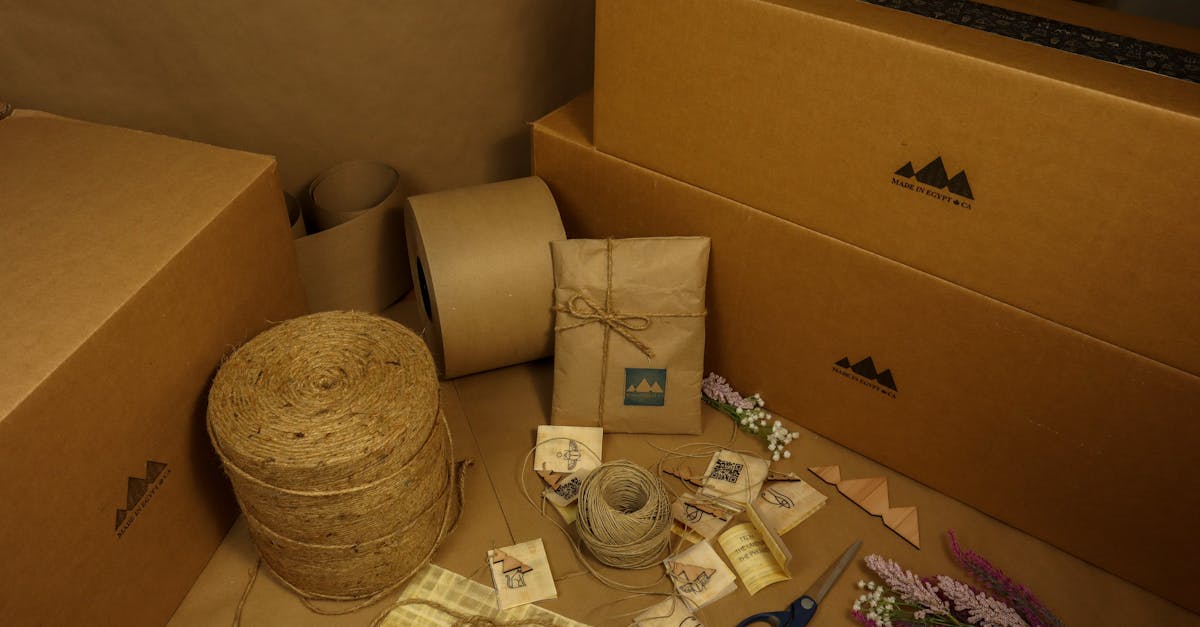
The global printing and packaging industry is at a historic turning point. In 2026, sustainability is no longer a selling point — it is the price of entry. From biodegradable substrates and water-based inks to AI-powered press automation and smart QR-connected packaging, a green revolution is rewriting the rules of every print shop, converter, and brand owner on the planet.
Driven by tightening global regulations, a seismic shift in consumer attitudes, and rapid technological advancement, the printing and packaging sector is undergoing its most consequential transformation in decades. This is the defining conversation of the industry in 2026 — and every stakeholder from brand manager to machine operator needs to understand what is coming, and why it matters now.
Why Sustainability Is Now the Baseline, Not the Bonus
Just a few years ago, a company could differentiate itself simply by offering a “green option.” Those days are over. According to the PRINTING United Alliance 2026 Packaging Outlook, sustainability has become the starting point of any client conversation — with brands in health, beauty, food, and life sciences leading the charge toward paperboard and recycled-content packaging.
Surveys across North America consistently show that 60–70% of consumers prefer recyclable or recycled packaging, and roughly 30–40% will switch brands if alternatives offer equal quality at a comparable price. This consumer pull is being amplified by powerful legislative push forces reshaping supply chains globally.

The Regulatory Earthquake: PPWR, EPR & EUDR Explained
Government policy is the single most immediate disruptor reshaping packaging supply chains in 2026. Three regulations stand above all others:
1. EU Packaging and Packaging Waste Regulation (PPWR)
By 2030, all packaging sold in the European Union must be recyclable in an economically viable way. The PPWR mandates the elimination of unnecessary packaging, minimum recycled content thresholds, and full lifecycle transparency. It is driving a massive “paperization” wave — replacing plastic components with paper-based solutions across cosmetics, pharmaceuticals, food, and consumer electronics packaging.
2. Extended Producer Responsibility (EPR)
EPR laws are now active in seven U.S. states, with twelve more considering legislation. Under EPR, packaging manufacturers bear direct financial responsibility for the end-of-life management of their products. This fundamentally changes procurement decisions: the recyclability profile of a package now affects operational costs, not just brand image.
3. EU Deforestation Regulation (EUDR)
The EUDR requires brands and printers to prove that paper substrates did not originate from deforested land — traceable to the specific plot of origin. This has created a dual-tier paper market: FSC- and PEFC-certified compliant stock commands a premium, but it is the entry ticket for global brand business. Printers without chain-of-custody certification are increasingly locked out of key accounts.
| Regulation | Region | Key Requirement | Deadline | Impact Level |
|---|---|---|---|---|
| PPWR (Packaging & Packaging Waste Regulation) | European Union | 100% recyclable packaging; minimum recycled content | 2030 | Critical |
| EUDR (EU Deforestation Regulation) | Global (EU-facing) | Traceable, deforestation-free paper supply chains | 2025–2026 | Critical |
| EPR Laws (Extended Producer Responsibility) | USA (7 states + growing) | Producer pays for end-of-life packaging management | 2024–2027 | High |
| EU 1935/2004 (Food Contact Materials) | EU / Global Export | Food-safe inks & coatings; Low-migration compliance | Ongoing | Moderate |
Smart Packaging: When the Box Becomes a Media Channel
Sustainability and technology are converging in a way that is changing the very definition of what a package does. In 2026, packaging is increasingly becoming a connected digital interface.

QR Codes & GS1 Digital Links Replace the Barcode
The traditional barcode is rapidly becoming obsolete. Global consumer brands — including Coca-Cola — are migrating to GS1 Digital Links and 2D QR codes that connect the physical package to a rich digital experience: product provenance, recycling instructions, loyalty programmes, and personalised content. For print service providers, the ability to print variable data QR codes at high speed and with reliable accuracy is no longer a value-add feature — it is a baseline requirement.
Battery-Free Sensors & Active Packaging
In food, pharmaceutical, and premium consumer goods, active intelligent packaging embedded with temperature-sensitive inks, humidity indicators, and NFC chips is gaining rapid traction. These systems operate without batteries — making them fully compatible with recyclability mandates — while providing real-time supply chain data that significantly reduces spoilage and counterfeiting.
Digital Printing & the Hyper-Personalization Wave
Digital printing has fully matured from a niche short-run solution into a core production technology. Industry data shows that 20–30% of production runs now fall under 1,000 units at leading converters — a dramatic shift from the long-run economics that defined the sector just five years ago.

| Printing Technology | Best Application | Run Length | Sustainability Profile | 2026 Trend |
|---|---|---|---|---|
| Digital Printing | Short-run, personalisation, variable data | < 5,000 units | Low waste, on-demand | ⬆ Accelerating |
| LED-UV Printing | Folding cartons, premium packaging | Mixed runs | 10–15% lower kWh | ⬆ Accelerating |
| Flexographic Printing | Flexible packaging, corrugated | Long runs | Water-based inks | → Stable |
| Offset Printing | Premium paperboard, wide colour gamut | Medium–long runs | Soy-based inks trending | → Stable |
| Hybrid Printing | Bridging digital & conventional | Flexible | Efficient changeovers | ⬆ Growing fast |
Materials Innovation: Beyond Paper and Plastic
Material science is delivering packaging solutions that were unimaginable a decade ago. The biodegradable paper and plastic packaging market reached USD 14.6 billion in 2025 and is forecast to hit USD 31.6 billion by 2033 at a CAGR of 9.8% (DataM Intelligence, 2026). Several breakthrough materials are leading this charge:
- Mycelium (mushroom) packaging — grown to shape, fully compostable, outperforming polystyrene for cushioning
- Seaweed-based films — water-soluble, biodegradable, suitable for sachets and food pouches
- Agricultural waste fibres (sugarcane bagasse, wheat straw) — replacing virgin fibre in folding carton
- PLA & PHA biopolymers — bio-based plastics with comparable barrier properties to conventional polymers
- High-recycled-content corrugated board — CO₂/pack reductions of 10–25% vs. virgin alternatives
Water-based inks and soy-based solvents have become the production standard for any substrate destined for recycling or food contact, replacing solvent-based systems that compromise recyclability and raise VOC compliance risks.
AI & Automation: The New Engine Room of Packaging Production
Artificial intelligence has moved beyond novelty into the operational core of print and packaging manufacturing. In 2026, Agentic AI systems — autonomous agents capable of planning and executing multi-step tasks without human prompts — are transforming pressroom efficiency in several critical ways:
Inline vision systems now scan for colour drift (ΔE < 2), registration errors, and defect detection in real time across Kraftliner, Paperboard, and Corrugated Board runs. Auto-calibrated colour management aligned to ISO 12647 and G7 standards is reducing waste rates to the 3–5% band on mixed-substrate shifts — a significant margin improvement for high-volume converters.
Right-sizing automation — systems that scan product dimensions and build a custom box in real time — is eliminating billions of units of void fill annually, slashing shipping weight, fuel consumption, and CO₂ emissions across global e-commerce fulfilment networks.
| Trend Area | 2025 Status | 2026 Advancement | Business Impact |
|---|---|---|---|
| Sustainability | Circular materials, biodegradable innovation | Recyclable resin mandates, compostable compliance | License to Operate |
| Smart Packaging | Active & intelligent systems pilot | Battery-free sensors, GS1 Digital Link rollout | New Revenue Stream |
| AI & Automation | AI-optimised design & scheduling | Agentic AI, autonomous press management | Cost Reduction |
| Digital Printing | Short-run personalisation growing | Variable data at scale, hyper-personalisation | Margin Improvement |
| Regulation | EPR early adoption; EUDR building | PPWR enforcement, mandatory recyclability | Compliance Critical |
What This Means for Print & Packaging Businesses in 2026
The companies that will define the next decade of print and packaging are those that treat sustainability and technology not as separate investments, but as a single integrated strategy. Based on 2026 market data and regulatory timelines, the action priorities are clear:
- 🔬 Audit your substrate supply chain — secure FSC/PEFC certified sources and document your chain of custody for EUDR compliance
- 🖨 Invest in digital and hybrid printing infrastructure — short-run and variable data capability is now a client expectation, not a differentiator
- ♻️ Eliminate non-recyclable finishing elements — metallised films, non-deinkable coatings, and multi-material laminates face regulatory elimination
- 🤖 Implement AI-driven quality control — inline inspection and agentic scheduling reduce waste rates and turnaround times simultaneously
- 📡 Offer smart packaging integration — QR/GS1 Digital Link capability transforms you from a commodity printer into an indispensable brand partner
Conclusion: Sustainability Is the New Competitive Advantage
The sustainable packaging revolution of 2026 is not a wave that businesses can choose to ride or sit out. It is a fundamental restructuring of the market. The regulatory framework is tightening, consumer expectations are hardening, and the technology to deliver — from precision digital presses to AI-controlled production lines — is accessible and proven.
For print and packaging businesses that move decisively, the opportunity is enormous. The global sustainable packaging market is on a trajectory from USD 334 billion in 2026 to nearly USD 595 billion by 2035. The question is not whether your business will be part of that growth story — it is whether you will be leading it or playing catch-up.
At Kylin Machine, we design and manufacture advanced printing and packaging machinery engineered for exactly this moment — combining precision, efficiency, and adaptability to help our global partners meet the demands of the sustainable packaging era head-on.
🚀 Power Your Sustainable Packaging Future
Explore Kylin Machine’s full range of professional printing & packaging equipment — engineered for precision, built for the green era.
Browse All Machines →
Leave a Reply