


Jewelry Box Machine Buying Guide 2026: How To Compare Small-Format Precision, Velvet Wrap Control, and Insert Fit
If you are sourcing a jewelry box machine in 2026, there is a good chance your biggest problem is not headline speed. It is whether the machine can hold precision on very small boxes, keep velvet or PU wraps clean, and maintain insert fit across repeated size changes. For ring boxes, earring boxes, pendant boxes, and other compact rigid formats, small errors are no longer small. A one-millimeter shift can turn a premium presentation box into a visible reject.
That is why this buying guide focuses on a narrower and more practical question than a generic machine overview: how to compare equipment for small-format jewelry boxes with delicate outer wraps and insert-sensitive dimensions. This is the buying logic many converters, luxury packaging factories, and brand-side sourcing teams actually need when evaluating real production risk.
Why Small Jewelry Boxes Need a Different Buying Standard
Jewelry packaging looks simple until production starts. A compact rigid box has less visual tolerance than a large gift box. The customer sees every wrap line, every corner, and every gap around the insert. If the box body is slightly off, the foam or velvet insert may buckle, sit loose, or create a visible edge shadow. That means the machine selection should start with precision and material control, not with a speed number alone.
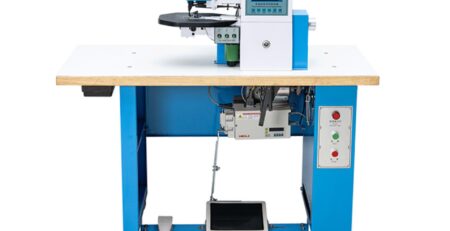
This is also where many buyers make the wrong comparison. A general rigid box setup may look flexible on paper, but very small jewelry formats often expose limits in positioning, glue control, and changeover repeatability. For production that includes ring boxes, stud earring boxes, bracelet boxes, or compact necklace packs, a dedicated jewelry box making machine is usually easier to justify than a broad machine that is only optimized for larger cartons.
Start With the Real Box Types You Produce
Ring and earring boxes
These are usually the most demanding formats because the box footprint is small and the insert fit is visually unforgiving. If your operation runs boxes around 50 x 50 mm, stable positioning and clean folding matter more than top-end maximum size. This is the segment where machine tolerance and wrap cleanliness show up immediately in the finished product.
Necklace and pendant boxes
These formats often use longer lids, deeper cavities, and specialty outer materials. The machine must keep box squareness stable so the lid sits correctly and the interior presentation remains centered. If your orders include rigid boxes with display inserts, dimensional repeatability is critical because the insert and the outer shell must match cleanly every time.
Watch and gift-set boxes
These are larger and heavier, often using thicker board and more complex inserts. In these jobs, the machine must support stronger board handling and dependable forming pressure. If you make both tiny ring boxes and larger presentation packs, your buying decision should focus on the usable range of the machine rather than only one ideal demo size.
Key Parameters To Compare Before You Buy
| Parameter | Why It Matters | KY-320A Reference |
|---|---|---|
| Minimum box size | Shows whether the machine can truly run compact ring and earring formats | 50 x 50 x 12 mm |
| Maximum box size | Determines whether larger necklace or watch boxes can share the same platform | 300 x 200 x 100 mm |
| Positioning tolerance | Directly affects insert fit, lid alignment, and wrap symmetry | About +/- 0.3 mm |
| Production speed | Useful for capacity planning, but should be checked on your real box style | 20-30 pcs/min |
| Glue system | Critical when switching between paper wrap, velvet, PU, and other delicate surfaces | Dual system: hot melt + cold glue |
| Board thickness range | Impacts rigidity, fold quality, and support for heavier premium boxes | Up to 3.0 mm greyboard reference |
| Control system | Recipe storage and touch control help reduce setup variation | PLC + HMI touch screen |
| Changeover time | Important for mixed jewelry SKUs and custom order work | Can be reduced to under 45 minutes with proper setup flow |
The table matters because small-format jewelry production is usually limited by precision, surface quality, and changeover waste before it is limited by theoretical speed. A machine can look productive in a catalog and still perform poorly when you move from paper-wrapped necklace boxes to velvet-covered ring boxes in the same shift.
Why Velvet, PU, and Specialty Wraps Change the Buying Decision
Luxury jewelry packaging often uses velvet, suede-look paper, PU, leatherette, textured stock, or laminated specialty papers. These materials do not behave like standard coated paper. Heat, pressure, glue thickness, and folding tension all need better control. Too much heat can mark or distort the surface. Uneven glue can create staining, bubbling, or edge contamination. Poor folding pressure can leave visible wrinkles on corners that are impossible to hide later.
That is why many buyers should ask more about the glue system than about the speed headline. A dual glue setup is useful because it lets the factory balance fast structural bonding with safer handling for delicate outer wraps. If material finish is one of the commercial selling points of your jewelry box, this part of the specification deserves as much attention as the size range.
Do Not Evaluate the Forming Machine in Isolation
The finished quality of a jewelry box depends on more than one station. If the board is not prepared correctly, the wrapper will show the problem later. If adhesive application is unstable, final pressing cannot fully recover the defect. For that reason, experienced buyers evaluate the full path, not only the final forming unit.
Board preparation
Compact jewelry boxes need sharp and repeatable fold lines. A dedicated V grooving machine helps create cleaner board geometry before wrapping, especially when the box design must hold crisp corners and accurate insert dimensions.
Corner stability
If your shell preparation is inconsistent, the final box will inherit that inconsistency. A reliable corner taping machine improves shell stability before the wrapping and forming stages, which is particularly helpful when the box size is too small to hide structural errors.
Adhesive consistency
For packaging plants where glue laydown is still the weak point, a dedicated glue machine for packaging can improve repeatability before expanding automation elsewhere. This matters because delicate wrap materials often fail visually before the box fails structurally.
Broader rigid box coverage
If your factory also produces cosmetics, electronics, or gift boxes, a broader rigid box making machine may still be part of the line. But for small-format jewelry work, buyers should confirm whether that broader platform can truly meet the same cosmetic and dimensional standard as a jewelry-specific solution.
Questions To Ask During a Sample Test
- Can the machine run your smallest ring box size repeatedly without manual correction?
- How cleanly does it handle your actual velvet, PU, or leatherette stock?
- What is the first-pass yield after a real size change?
- How long does it take to move from one jewelry SKU to the next and return to stable quality?
- Can the supplier show samples for both shallow and deep jewelry box structures?
- What training, spare parts, and remote support are included after installation?
These questions help buyers evaluate the real economics of the machine. Many factories lose margin on jewelry packaging not because they lack speed, but because they lose time and material during setup, early-batch instability, and cosmetic rejects that cannot be reworked.
FAQ
What is the main difference between a jewelry box machine and a standard rigid box machine?
The main difference is the ability to handle smaller formats, tighter tolerance, and more delicate wrap materials. Jewelry packaging usually demands better dimensional repeatability and cleaner cosmetic control.
Can one machine handle both ring boxes and larger watch boxes?
Some machines can, but the useful range should be verified with your actual samples. Buyers should test both the smallest and largest formats they expect to run, not only a middle-size demo box.
Why is glue system choice so important for jewelry packaging?
Because velvet, PU, and other premium outer materials react differently to heat and adhesive thickness. A machine with better glue flexibility helps protect surface quality and reduce visible rejects.
Is fast changeover important if my daily volume is not very high?
Yes. Jewelry packaging often includes many SKUs and premium materials, so wasted setup time can reduce daily profit even when order volume looks moderate on paper.
What should I send before asking for a quotation?
Send your box dimensions, board thickness, outer material, insert type, target daily output, and photos or physical samples. This makes the machine recommendation much more accurate.
Talk to Kylin Machines
If you are comparing options for ring boxes, earring boxes, necklace boxes, or other premium compact rigid formats, Kylin Machines can help you choose the right combination of board preparation, gluing, corner fixing, and final forming equipment. Contact us on WhatsApp at +86-13809820550 for machine advice, sample evaluation, and a factory-direct quotation.

Leave a Reply