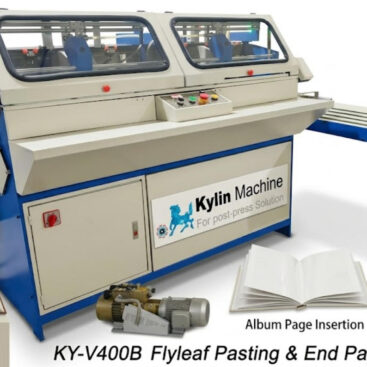
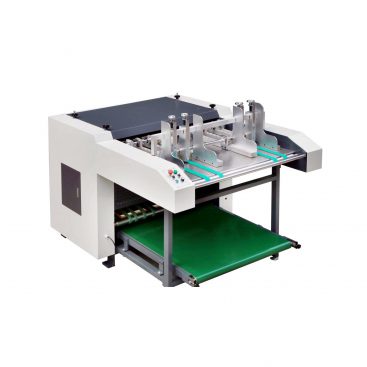
Model KY-13A
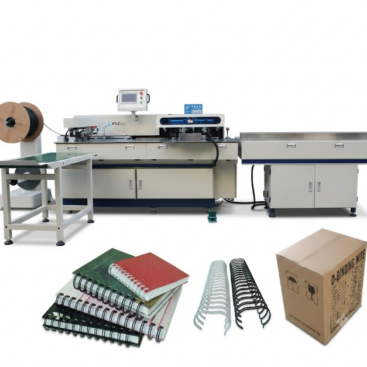
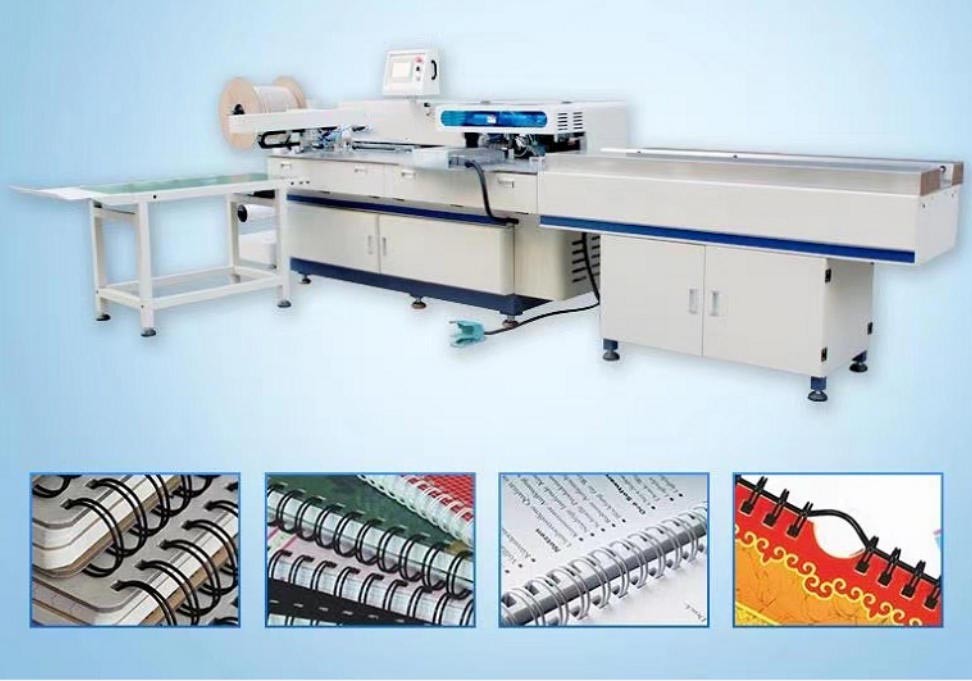
Automatic Double-Wire Binding Machine
Full-automation from punch to press — engineered for 800–2,000 books per hour with zero manual wire handling. 2:1 & 3:1 pitch. Width 100–800 mm.
127 verified reviews
Why Manual & Semi-Auto Lines Fall Behind
Five Key Advantages of the KY-13A
Every component is selected for long service life and minimal downtime in demanding 24/5 print and binding environments.
Auto Hook-Mounting Device
Automatic ring-hook loading reduces operator steps and eliminates fiddly manual hook placement that slows semi-auto lines.
Real-Time Fault Alerts
Onboard diagnostics detect jams, low-wire, and misalignment events instantly — triggering alarms and halting the cycle before defects propagate.
Multi-Language HMI
Standard Chinese/English touchscreen. Customer-specific languages compiled to firmware before dispatch — no third-party integration required.
Auto Book Conveyor
Automatic feed and discharge conveyor lets a single operator oversee the full binding cycle — dramatically cutting labour cost per 1,000 books.
Linear-Rail Drive System
All critical motion axes run on precision linear guide rails — not cam-and-follower mechanisms — ensuring decade-long dimensional stability.
Wide Format Range
Handles sheet widths from 100 mm (pocket notepad) up to 800 mm (A1 wall calendar) in 2:1 or 3:1 pitch without tooling changes.
How the KY-13A Works — 4 Automated Steps
Sheet Feed
Pre-collated book blocks are loaded onto the auto-feed conveyor. The machine registers each block and advances it to the punching station.
Precision Punch
Linear-rail punch heads perforate the spine in up to 5 sequential passes, accommodating stacks 1–6 mm thick per pass.
Auto Wire Feed
The double-wire coil is cut to length, threaded through every punch hole, and pressed closed — entirely without operator contact.
Finished Output
Completed books exit on the discharge conveyor, ready for trimming or packaging. Throughput verified up to 2,000 books/hour.
Books, Notebooks, Calendars & More
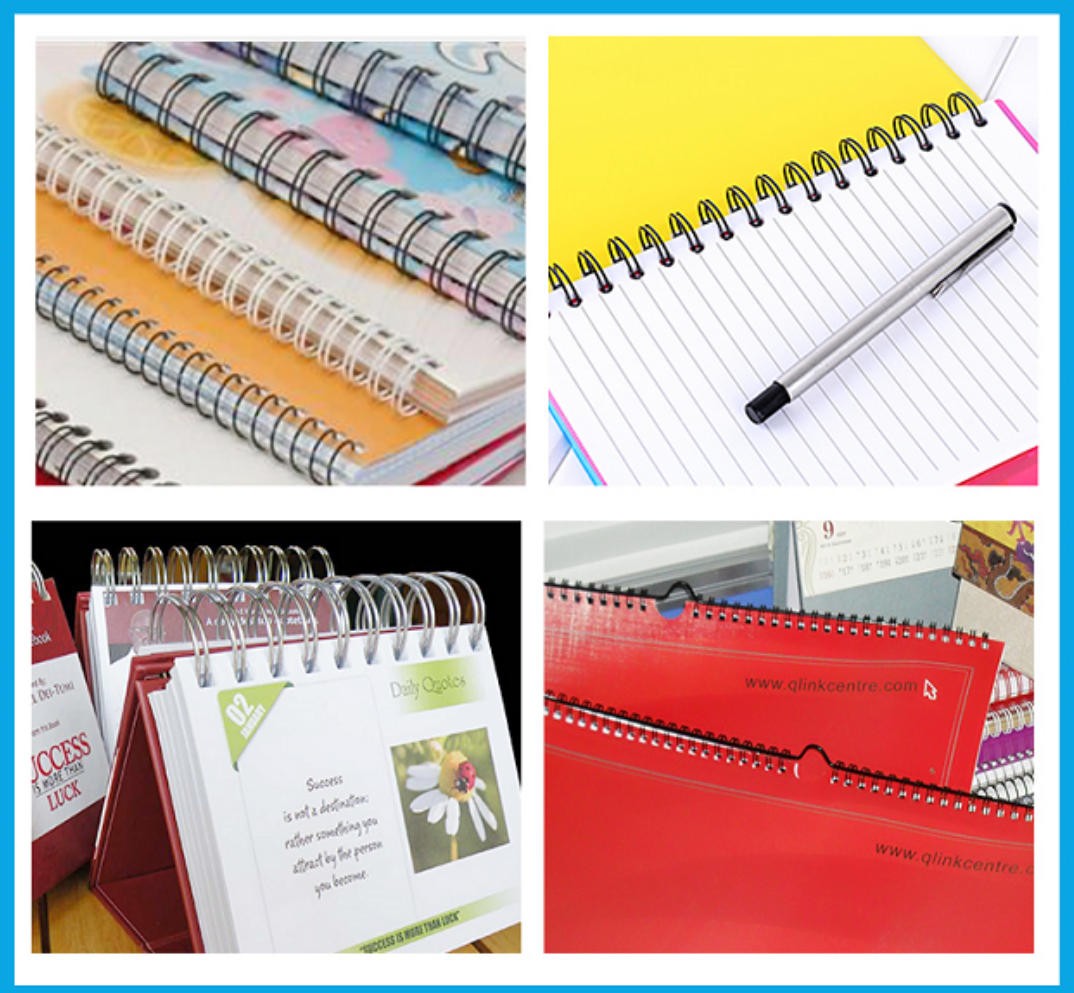
- ✔ Hardcover & softcover books
- ✔ Spiral-bound notebooks & notepads
- ✔ Wall calendars & desk calendars
- ✔ Agenda & planner books
- ✔ Loose-leaf binders & reports
Full Specification — Model KY-13A
| Parameter | Specification |
|---|---|
| Model | KY-13A |
| Punching Thickness (Single-Pass) | 1 – 6 mm |
| Punching Depth | 13 mm |
| Max Punching Stages / Book | Up to 5 |
| Wire Pitch | 2:1 & 3:1 |
| Binding Wire Size | 1/4″ – 7/8″ |
| Double-Wire Feeding | Auto cutting, threading & pressing |
| Max Sheet Width | 510 – 800 mm |
| Min Sheet Width | 100 – 140 mm |
| Working Speed | 800 – 2,000 books/hour |
| Air Compressor Power | 3 kW |
| Machine Dimensions (W×D×H) | 4,800 × 2,600 × 1,600 mm |
| Machine Weight | 1,250 – 1,500 kg |
Watch the KY-13A in Full Production
See auto wire feeding, precision punching, and finished-book output running at up to 2,000 books/hour on the factory floor.
Frequently Asked Questions — KY-13A
Answers to the questions procurement managers and production engineers ask most when evaluating this machine.
KY-13A: The Case for Full Automation in Double-Wire Binding
The global print-finishing equipment market continues to bifurcate between commodity semi-automatic machinery and high-throughput fully automatic systems. For binderies, calendar manufacturers, and notebook OEMs processing more than 500,000 units per year, the cost-per-book economics of manual or semi-automatic double-wire binding become untenable. The KY-13A automatic double-wire binding machine by Kylin Machines directly addresses this inflection point.
“Switching from a semi-auto line to the KY-13A reduced our wire-related labour cost by 58% in the first quarter alone — and defect rates dropped to near zero.”
— Production Manager, European Calendar Manufacturer
Why Wire Pitch Flexibility Matters for Export-Oriented Binderies
North American markets predominantly use 3:1 pitch (three wire holes per inch) for thinner products such as notebooks and notepads. European markets, particularly Germany, the UK, and the Nordic countries, frequently specify 2:1 pitch for heavier formats — desk calendars, agenda books, and academic planners. A machine that supports only one pitch forces binderies to maintain two separate lines or turn away orders. The KY-13A eliminates this constraint by accommodating both pitch standards with a fast die change, making it ideally suited to contract binderies serving multi-market clients.
Linear Rails: The Long-Term Reliability Argument
One of the most consequential engineering decisions in the KY-13A’s design is the replacement of conventional cam-and-follower punch mechanisms with precision linear guide rails across all critical motion axes. Linear rails dramatically reduce lateral play accumulation over time — the primary source of mis-punch drift in high-cycle binding equipment. A well-maintained linear-rail system retains sub-0.1 mm positional accuracy after ten million cycles; traditional cam systems typically require realignment within two million cycles under production conditions.
⚙️ Key Procurement Checklist — What to Verify Before Purchasing Any Binding Machine
- Does the machine support your target wire pitch (2:1 and/or 3:1)?
- What is the maximum single-pass punching thickness, and does it cover your thickest product?
- Is the wire feeding fully automatic, or does it require manual threading per coil change?
- What fault-detection capabilities are built in, and how quickly does the machine halt on a jam?
- Can the HMI be configured in your operators’ language before shipment?
- What are the real FOB shipping terms and lead times, and does the supplier provide ISPM-15 crating?
Automation ROI: A Conservative Estimate
A typical European bindery running a semi-auto line at 600 books/hour with two operators produces approximately 4,800 books per 8-hour shift. At €18/hour loaded labour cost, the labour cost per 1,000 books is €6.00. The KY-13A operating at 1,600 books/hour with one operator produces 12,800 books in the same shift — at a labour cost of €1.13 per 1,000 books. Over a 250-day working year, this delta represents a labour saving of over €120,000 annually on a single-shift operation, before accounting for waste reduction and quality improvements.
Application Suitability
The KY-13A’s adjustable width range — 100 mm to 800 mm — covers the complete spectrum of commercially bound products. At the narrow end, pocket-format notebooks (A6, B6) are processed without reductions in speed or accuracy. At the wide end, A1-format wall calendars are accommodated with the same mechanical setup used for narrower products. This format flexibility is particularly valuable for contract binderies where product mix changes frequently between clients and seasons.
The KY-13A is not simply a faster machine — it is a fundamentally different production model: one operator, full automation, and a verifiable path to sub-€1 binding cost per 1,000 books.
— Kylin Machines Technical Brief, 2025
For procurement managers evaluating binding equipment, the KY-13A presents a well-documented technical case: a 3 kW compressor requirement, 4,800 × 2,600 × 1,600 mm footprint, and 1,250–1,500 kg operating weight suit standard industrial floor loads. Combined with a 12-month warranty, multi-language HMI support, and global shipping from Guangdong, it represents a credible, scalable choice for print-aftermarket equipment buyers across Europe and North America.
Ready to Automate Your Binding Line?
Our engineers will prepare a personalised quote, application assessment, and ROI analysis within 24 business hours.
Customers said
Customers visitation
ADDITIONAL SERVICES
Customers Meeting&Machines Training
 Meeting in India
 Meeting in Dubai
 Trip to Turkey


To help you master the installation and operation of your equipment, Kylin provides authorized training programmes led by surface preparation specialists.
- How to set up your machine and optimize performance levels for your process.
- Key trouble-shooting tips that keep your machine(s) in prime condition to minimize downtime, minimize maintenance, and prevent future problems.
- How to optimize performance levels to maintain consistent quality and minimize waste
- The latest legislation and how to keep the machine safe.
We offer three years machine quality warrantty, we want You to be satisfied with the work we do and our Machine,
Every time. We Guarantee to perform all good services to your complete satisfaction at the agreed upon price.
If at any time within 30 days after completion of the job you're not completely satisfied, we will Re-Clean all required areas to your satisfaction.
If you 're still not satisfied we will refund the money paid.
Help from technician is only a phone call away.
We offer free over the phone tech support to help you troubleshoot any issue you may be having.
If you require onsite help we are able to send our technicians to you! Whether it’s for training or support we can meet your needs.
Our experienced factory technicians are eager for you to get the most from your Kylin Machine.
We also offer to do regular maintenance to your machinery to make sure it stays in the best condition throughout the lifetime of the product.
This will help guarantee that your machines will work well for as long as possible.
Initially one of our experienced operators will try and help you resolve the problem over the telephone.
If that is not successful then we would send a field engineer out to site.
Our engineers carry the most common spare parts so that most problems can be repaired on site.
In the unlikely event that the machine could not be repaired on site, we would either arrange another on site visit if appropriate,
or take the machine in to our state of the art workshop where we can deal with all types of repairs and refurbishments
10,000 customers in 30 countries using KYLIN MACHINES, meet our customers







What Client’s Say
Dear Jacob,
l am writing to thank you for the recent delivery of spare parts that we ordered
from your company.We have received the shipment in good condition and are pleased with the quality of the products you provided.26 Mar 2023
Boris BoguslavskiyCEO - Taropack
The machine is working now fine , beautiful … thank you so much and maybe if we need other kind of box making machines I will contact you
Nadine KodsyCEO - bassil bookbinding
Hi Jacob, thanks and i let you know…
Bit until now everythimg is perfect!Mit den besten Grüßen,
28 April 2023
Armin AkbarzadehCEO - X-PRESS Grafik & Druck GmbH
We had purchased two paper bag machines from Kylin last 3 year, untill now, the machines is using very well, and help us a lot in making luxury paper bag. Thanks Kylin DEM IMPEX PRIVATE LIMITED

John SmithCEO & Founder - SAP print
We have purchased case maker Ky-450 last year 2013, right now the machine is running very stable, we are going to order one more machine from Kylin.
EVER OLIVIA ENTERPRISE CO.,LTD
ALBERTO RINALDICEO & Founder - MEM company
We are the Agent of Kylin machine in UK, ky-40 Box stay machine and Ky-500 is very good comments, choose Kylin machine, choose the good quality Thanks

VIKAS TAWARCEO & Founder - Impack company
Good Morning JacobBusiness is going well!Your box corner taper has been running like a champion saving us time and money!!As we continue to grow we will definitely keep in touch and see if we can continue to our relationship with Kylin MachinesAll the best!!Jason
Jason HopkinsPrint & marketing execution experts - Ampersand