Fully Automatic
Book Block Ribbon
Inserting Machine
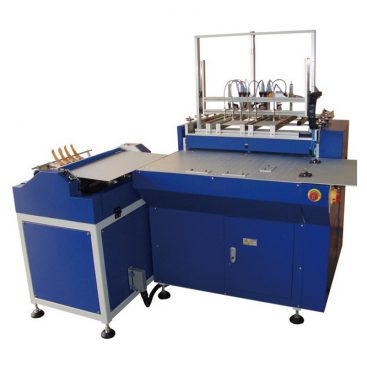
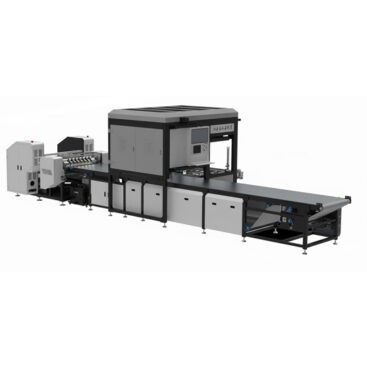
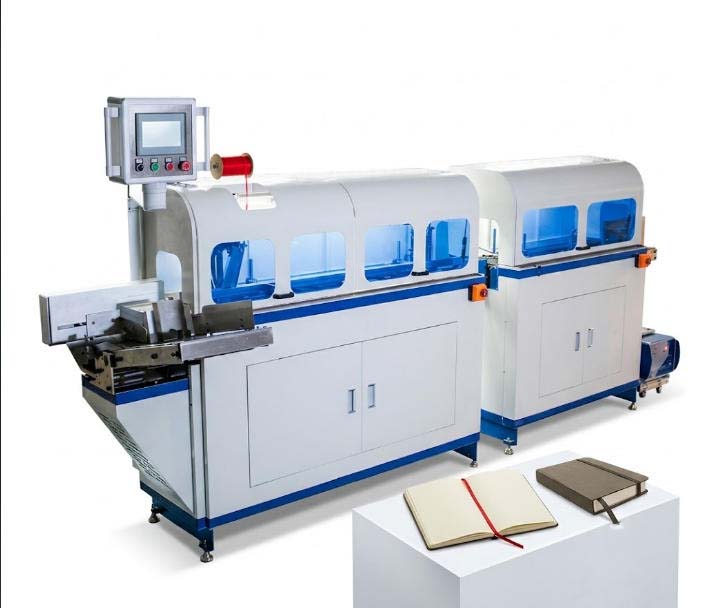
Feeds the block, threads the ribbon, cuts and tucks the tail, hot-melt fixes it at the spine head, then counts and stacks — 30–50 finished book blocks per minute, supervised by a single operator. The manual threading bottleneck on your hardcover line, eliminated.
Sustained working speed — up to 25× a manual threading station.
From 5 mm slim notebooks to 45 mm dictionaries — one machine.
One operator loads and supervises the entire ribbon process.
Remote engineering support, lifetime spare parts, 48 h consumable dispatch.
Hand threading is
capping your line
Every hardcover with a ribbon bookmark carries one hidden cost: the last manual station before casing-in. Here is what changes when it goes automatic.
- 80–120 books/hour per worker — a hard ceiling no shift pattern can break.
- Inconsistent ribbon length and placement — crooked ribbons, glue stains, rework at QC.
- Rising labor cost — repetitive work is the first station workers leave.
- Unpredictable daily output — overtime and missed shipment dates to compensate.
- WIP piles between stations — floor space and book-block damage risk.
- 30–50 books/minute — up to 25× a single manual operator, all shift long.
- Identical ribbon length on every book — servo-metered feed with ±1 mm repeatability.
- Clean hot-melt fix at the spine head — survives nipping and casing-in.
- One operator supervises — the rest of the crew moves to value-adding stations.
- Auto count & stack — finished blocks arrive batched, ready for casing-in.
ROI Payback Calculator
LIVE ESTIMATE// Illustrative model — one KY-2000 at default settings vs. manual threading stations on an 8-hour shift. Your exact figures confirmed in the quotation.
Engineered for the
ribbon station
Eight decisions in the machine design that decide your cost per thousand books.
One pass, five operations
A single in-line platform completes the entire ribbon process without re-handling the block — the reason one operator can run 3,000 books an hour.
Servo ribbon metering
Ribbon length is servo-controlled with ±1 mm repeatability — every bookmark hangs exactly as the spec sheet promises.
Motorized precision blade
A motorized blade delivers a clean, square cut at full cycle speed — no frayed ends, no partial cuts, no stops.
Automatic hot-melt fixing
A temperature-controlled glue unit meters a precise dot at the spine head; the tail is tucked into the block first for a mechanical + adhesive bond.
PLC + touchscreen HMI
Recipe memory stores thickness, ribbon length and glue settings per job — changeover is a two-tap recall, not a re-setup.
5–45 mm in one machine
Slim journals and heavy reference volumes run on the same frame — thickness adaptation without mechanical rebuild.
Auto counter & stacker
Finished blocks are counted and batch-stacked at the outfeed, feeding casing-in directly and clearing WIP from your floor.
CE-style safety guarding
Full perimeter guarding with interlocked doors, emergency stops at every station and a 1,000 kg rigid frame for vibration-free running.
Four stations,
zero re-handling
From loose block to counted stack in under two seconds per book — here is the path through the machine.
Automatic feeding
Book blocks are loaded onto the infeed conveyor and singulated automatically at cycle speed.
Ribbon threading
The separating blade opens the block and drives the ribbon through to the programmed depth.
Cut, tuck & glue
Motorized blade cuts to length, the tail is tucked in, and hot-melt fixes the ribbon at the spine head.
Count & stack
Finished blocks are counted and stacked in batches, ready to flow straight into casing-in.
| ▸Performance | |
| Model | KY-2000 |
| Working Speed | 30–50 books / minute |
| Maximum Book Thickness | 45 mm |
| Minimum Book Thickness | 5 mm |
| Maximum Book Length | 320 mm |
| ▸Utilities | |
| Power Supply | 380V / 50–60Hz / 5 kW (3-phase) |
| Air Compressor Requirement | 6 kW / 0.6–0.8 MPa |
| ▸Machine | |
| Overall Dimensions (L × W × H) | 4000 × 2760 × 1830 mm |
| Net Machine Weight | 1,000 kg |
| ▸Control & Tooling | |
| Control System | PLC + Touchscreen HMI |
| Ribbon Application | Automatic hot-melt adhesive |
| Cutting Method | Motorized precision blade |
Watch the KY-2000 run
Unedited line footage: feeding, threading, cutting, tucking, hot-melt fixing and stacking at working speed.
Full process in one pass — ribbon threading, motorized cutting, tail tucking, hot-melt fixing at the spine head, auto count & stack.
Finished the way
your buyers expect
Every ribbon at identical length, fixed clean at the spine head — from slim notebooks to heavy reference volumes.
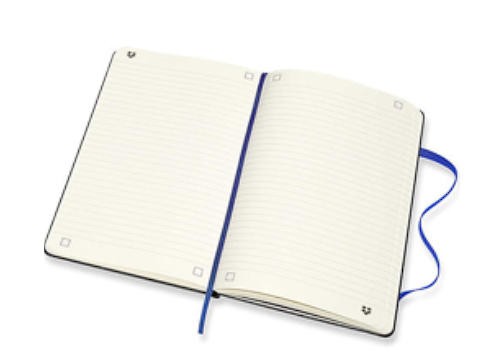
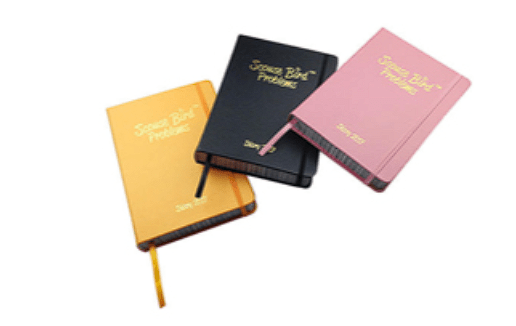
The Last Manual Station: How Automatic Ribbon Insertion Rewrites the Hardcover Line
Walk any hardcover bindery and you can find the bottleneck without asking: it is the table where operators pull ribbon through book blocks by hand, one book at a time, gluing as they go. The ribbon bookmark is a small component — a few cents of satin — yet it quietly sets the perceived value of a notebook, dictionary or planner, and the station that installs it has resisted automation longer than almost any other step in case making. That changed with machines like the KY-2000 fully automatic book block ribbon inserting machine, which folds feeding, threading, cutting, tucking and hot-melt fixing into a single in-line pass.
Why hand threading quietly capped your line
A trained operator threads 80–120 books an hour. A KY-2000 runs 30–50 books a minute. That is not an incremental improvement; it is a different order of magnitude, and it reshapes the economics of the whole line. Manual stations need four or five people to keep one casing-in machine fed; each person is a variable cost, a recruiting problem and a source of variability — ribbon lengths drift across a shift, glue dots land off-center, tails pull loose in nipping. Automated ribbon insertion holds ±1 mm on ribbon length because the feed is servo-metered, not hand-measured, and every bond is identical because the hot-melt unit meters the same dot every cycle.
“A hardcover line is only as fast as its slowest hand operation — and for most binderies in 2026, that operation is still ribbon threading.”— Kylin Engineering Desk
What full automation changes
The machine’s logic is simple: never let a human do what a mechanism can repeat. Blocks are singulated on the infeed conveyor, a separating blade opens each block, the ribbon is driven through to a programmed depth, a motorized precision blade cuts it, the tail is tucked into the text block, and a dot of hot-melt adhesive locks the ribbon at the spine head. Finished blocks are counted and batch-stacked for casing-in. If you are currently comparing equipment across binding styles and output classes, the section on output and changeover in our 2026 book binding machine buying guide places this class of machine in context.
The 2026 market context
Two forces make this the year the ribbon station goes automatic. First, the automation shift sweeping the book binding equipment market: labor costs keep climbing while book runs stay firm, so every manual station is re-examined. Second, the rise of short, fast runs — the short-run automation trend documented across the machinery market — means changeover speed matters as much as top speed. This is where PLC + touchscreen control earns its keep: thickness, ribbon length and glue temperature live in saved recipes, so switching from an 8 mm journal to a 30 mm reference volume is a two-tap recall rather than a mechanical re-setup.
The result is a station that behaves like the rest of a modern line: measurable, repeatable, and run by one person. Blocks arrive from gathering, leave batched for casing-in, and the ribbon — that few-cent strip of satin — is placed exactly the same way on book one and book ten thousand. For binderies producing hardcover at scale, the question is no longer whether ribbon insertion can be automated; it is how many manual stations you can afford to keep.
Pairs with the
rest of the line
Three machines our hardcover customers most often specify alongside the KY-2000.
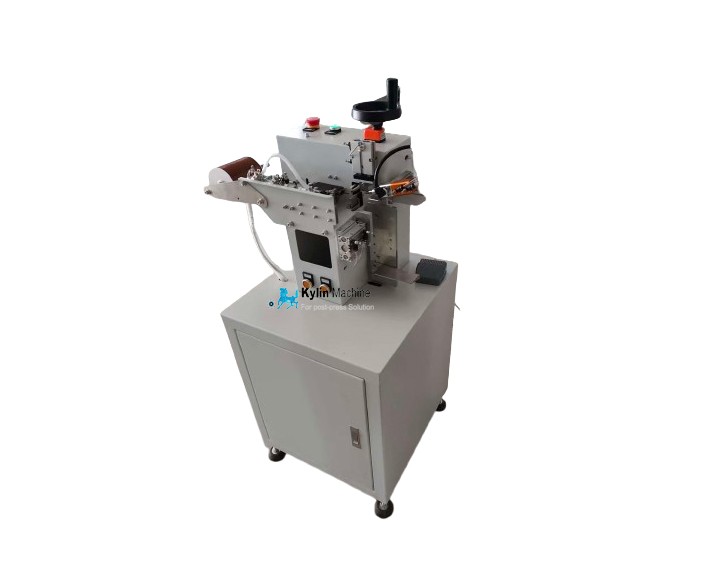
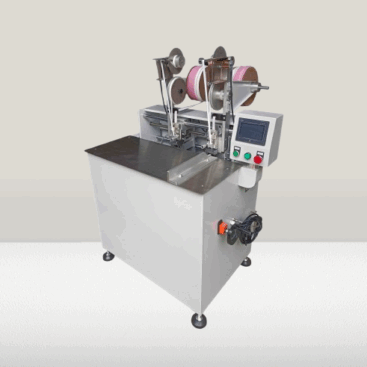
KY-320S Ribbon Bookmark Inserting Machine
Compact semi-automatic ribbon insertion for shorter runs and narrower blocks.
View machine →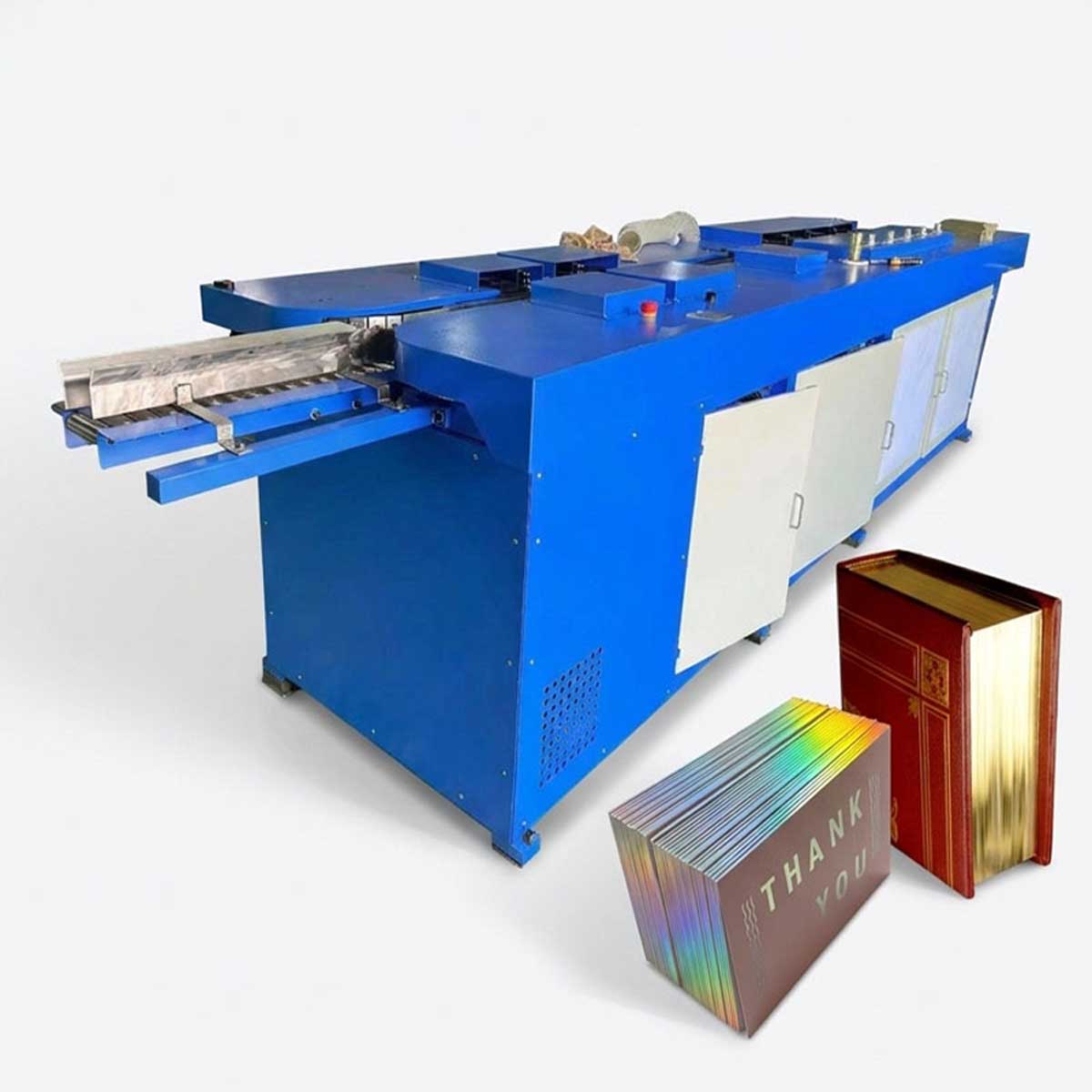
Fully Automatic Book Edge Gilding Machine
Gold and color edge finishing for premium editions — the natural next station after ribbon.
View machine →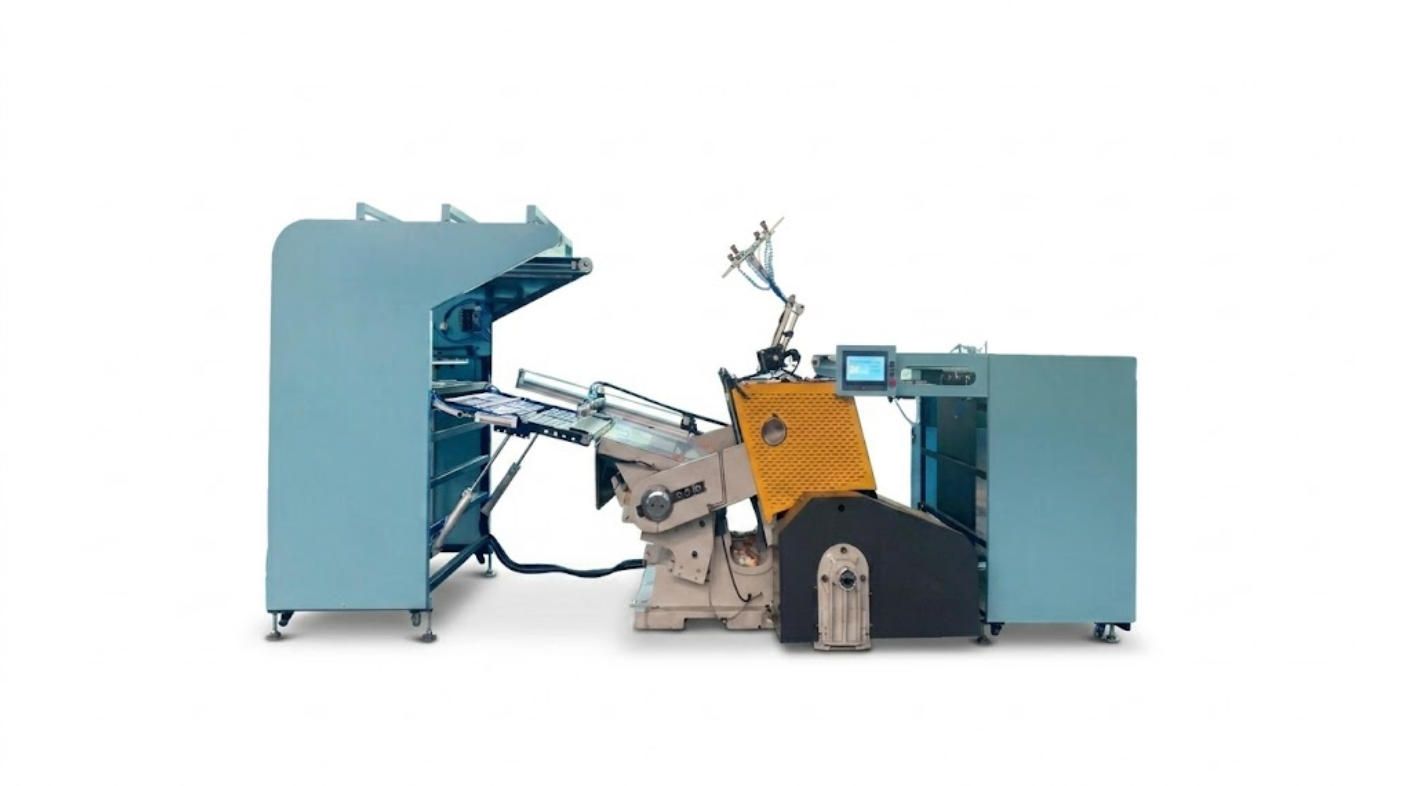
Automatic Die Cutter Upgrade Kit
With integrated waste stripping — automate the converting side of the same line.
View machine →Put a number on
your next shift.
Send your block range, ribbon spec and daily target — our export engineers reply with a configured quotation, layout drawing and video commissioning plan within one business day.
Request Quotation
Open Form in New Tab- Reply within 1 business day
- FOB / CIF / DDP terms available
- CE documentation & spec sheet included
- On-site or video commissioning
Customers said
Customers visitation
ADDITIONAL SERVICES
Customers Meeting&Machines Training
 Meeting in India
 Meeting in Dubai
 Trip to Turkey


To help you master the installation and operation of your equipment, Kylin provides authorized training programmes led by surface preparation specialists.
- How to set up your machine and optimize performance levels for your process.
- Key trouble-shooting tips that keep your machine(s) in prime condition to minimize downtime, minimize maintenance, and prevent future problems.
- How to optimize performance levels to maintain consistent quality and minimize waste
- The latest legislation and how to keep the machine safe.
We offer three years machine quality warrantty, we want You to be satisfied with the work we do and our Machine,
Every time. We Guarantee to perform all good services to your complete satisfaction at the agreed upon price.
If at any time within 30 days after completion of the job you're not completely satisfied, we will Re-Clean all required areas to your satisfaction.
If you 're still not satisfied we will refund the money paid.
Help from technician is only a phone call away.
We offer free over the phone tech support to help you troubleshoot any issue you may be having.
If you require onsite help we are able to send our technicians to you! Whether it’s for training or support we can meet your needs.
Our experienced factory technicians are eager for you to get the most from your Kylin Machine.
We also offer to do regular maintenance to your machinery to make sure it stays in the best condition throughout the lifetime of the product.
This will help guarantee that your machines will work well for as long as possible.
Initially one of our experienced operators will try and help you resolve the problem over the telephone.
If that is not successful then we would send a field engineer out to site.
Our engineers carry the most common spare parts so that most problems can be repaired on site.
In the unlikely event that the machine could not be repaired on site, we would either arrange another on site visit if appropriate,
or take the machine in to our state of the art workshop where we can deal with all types of repairs and refurbishments
10,000 customers in 30 countries using KYLIN MACHINES, meet our customers















What Client’s Say
Dear Jacob,
l am writing to thank you for the recent delivery of spare parts that we ordered
from your company.We have received the shipment in good condition and are pleased with the quality of the products you provided.26 Mar 2023
Boris BoguslavskiyCEO - Taropack
The machine is working now fine , beautiful … thank you so much and maybe if we need other kind of box making machines I will contact you
Nadine KodsyCEO - bassil bookbinding
Hi Jacob, thanks and i let you know…
Bit until now everythimg is perfect!Mit den besten Grüßen,
28 April 2023
Armin AkbarzadehCEO - X-PRESS Grafik & Druck GmbH
We had purchased two paper bag machines from Kylin last 3 year, untill now, the machines is using very well, and help us a lot in making luxury paper bag. Thanks Kylin DEM IMPEX PRIVATE LIMITED

John SmithCEO & Founder - SAP print
We have purchased case maker Ky-450 last year 2013, right now the machine is running very stable, we are going to order one more machine from Kylin.
EVER OLIVIA ENTERPRISE CO.,LTD
ALBERTO RINALDICEO & Founder - MEM company
We are the Agent of Kylin machine in UK, ky-40 Box stay machine and Ky-500 is very good comments, choose Kylin machine, choose the good quality Thanks

VIKAS TAWARCEO & Founder - Impack company
Good Morning JacobBusiness is going well!Your box corner taper has been running like a champion saving us time and money!!As we continue to grow we will definitely keep in touch and see if we can continue to our relationship with Kylin MachinesAll the best!!Jason
Jason HopkinsPrint & marketing execution experts - Ampersand